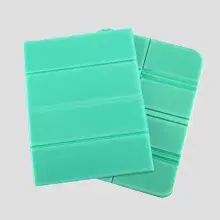
Slow rebound foam is an open-cell polyethylene foam that compresses under load and returns to its original thickness gradually rather than springing back. Bofeng Foam manufactures slow rebound foam in Zhuhai, China, at a 30× expansion ratio in thicknesses of 5–20 mm, with an open-cell rate of 60–90%.
This is the material behind the pressure-relieving, body-conforming products usually called memory foam. The value is not softness — it is that the foam spreads the contact pressure over the whole surface instead of concentrating it at the points where a body presses hardest, and it does so slowly enough to follow the shape it is given.
What is slow rebound foam?
The behaviour comes from the cell structure. Standard PE foam is closed-cell: each cell is a sealed bubble, and the trapped gas pushes the foam back quickly when the load comes off. A slow rebound foam is deliberately made open-cell, so the cells are connected to one another. When the foam is compressed, air has to move through the open structure to refill it, and that flow is what takes time. The foam returns over seconds rather than instantly.
Open cells bring a second property with them: the foam is permeable, so it breathes. That is desirable in a cushion where heat and moisture would otherwise build up against the body, and it is a real consideration for medical and body-contact products.
The trade-off is that an open-cell foam must be kept dry. Where the application involves water, cleaning cycles or a damp environment, a closed-cell grade is the better choice; the two are specified for different jobs rather than being interchangeable.
- Gradual recovery — the open-cell structure controls the rate of return, which is what produces the conforming feel.
- Open-cell rate 60–90% — the proportion of open cells sets how permeable and how slow the foam is.
- Pressure distribution — the foam spreads load across the contact area rather than concentrating it at high points.
- Breathable — a permeable structure lets heat and moisture move away from the body.
- Defined gauge — produced at 30× expansion in 5–20 mm thicknesses.
Foam materials used for slow rebound foam
Slow rebound is a distinct material rather than a setting on the standard grades, so it is specified on its own. Our other base materials are closed-cell and belong to the resilience side of the family.
- XPE foam — chemically cross-linked polyethylene foam. Closed-cell, produced at 3–40× expansion with a density range of 26.8–300 kg/m³, in single layers of 3–15 mm. The general-purpose grade for most industrial work. View XPE foam →
- IXPE foam — radiation (electron-beam) cross-linked polyethylene foam. The finer cell structure allows single layers down to 0.1 mm with a smoother, more uniform surface. View IXPE foam →
- IXPP foam — radiation cross-linked polypropylene foam. Stiffer and more heat resistant than PE foam, with a maximum service temperature up to 140 °C. View IXPP foam →
| Material | Cross-linking | Expansion ratio | Width | Single-layer thickness | Heat-bonded multi-layer |
|---|---|---|---|---|---|
| XPE foam | Chemical (peroxide) | 3–40× | 500–2000 mm | 3–15 mm | 15–200 mm |
| IXPE foam | Radiation (electron beam) | 3–40× | 500–2000 mm | 0.1–15 mm | 15–200 mm |
| IXPP foam | Radiation (electron beam) | 5–25× | 500–1500 mm | 1–6 mm | 6–100 mm |
Where a product needs quick recovery instead of slow conforming, see high resilience foam; where it needs a closed-cell barrier against water or air, see sealing foam. If the application is body-contact but also has to be washable or damp, tell us — a closed-cell grade with a different construction is usually the answer.
Slow rebound foam properties
| Property | Value |
|---|---|
| Cell structure | Open cell |
| Expansion ratio | 30× |
| Thickness | 5–20 mm |
| Open-cell rate | 60–90% |
| Recovery | Gradual, seconds rather than instant |
| Permeability | Breathable |
The open-cell rate is the figure that governs behaviour in service: a foam towards the 90% end of the range is more permeable and recovers more slowly than one near 60%. Tell us how firm the product should feel and we will confirm the grade. For the wider comparison between cell structures, see closed cell vs open cell foam.
Slow rebound foam products we manufacture
- Baby play mat — conforming, breathable surface for crawling areas
- Outdoor foam cushions — conforming cushioning for seating
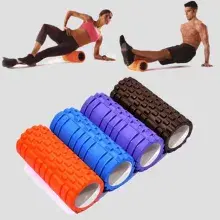
- Foam roller — body-contact foam for muscle release work
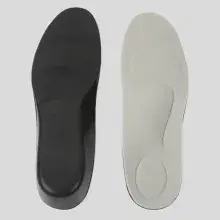
- Athletic insole foam — pressure-distributing layers underfoot
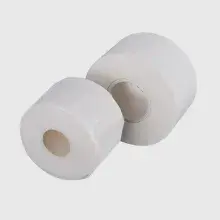
- Medical tape foam — open-cell foam carriers for medical adhesive products
- Custom foam inserts — die-cut parts where a conforming layer is needed
Typical applications
- Pressure-relieving cushions and mattress toppers
- Body-contact mats and comfort layers
- Orthopaedic and rehabilitation supports
- Protective padding where gradual conforming is wanted
- Acoustic and sealing components in dry assemblies
- Medical and body-contact product layers
Why choose Bofeng Foam?
Bofeng Foam is a direct factory manufacturer of cross-linked polyethylene foam in Zhuhai, China, with more than 10 years of experience in the foam industry. We run both chemical and radiation cross-linking in house, which means the material grade, density and surface finish can all be matched to your application rather than picked from a fixed catalogue.
- Both cross-linking routes in house — chemical (XPE) and electron-beam radiation (IXPE, IXPP), so you are not pushed towards one material for supply reasons.
- Wide grade coverage — expansion ratios from 3× to 40× and densities from 26.8 to 300 kg/m³, with single-layer thickness from 0.1 mm and heat-bonded multi-layer stock up to 200 mm.
- Converting under the same roof — die-cutting, CNC contouring, lamination, adhesive coating and slitting, so a finished part arrives instead of a roll.
- Functional grades when the application demands it — flame retardant (limiting oxygen index 27, meeting GB 8410 A0 and UL94 V2 requirements), heat resistant (110 °C, shrinkage ≤8%) and conductive (10³–10⁶ Ω) or anti-static (10⁶–10⁹ Ω).
- Engineering-led specification — send a drawing or a sample and our team will recommend the material, density, thickness and surface treatment that fit the load case, then confirm it against the GB/T test standards published on our material pages.
Request a quote for slow rebound foam →
Slow rebound foam is a distinct production run rather than an option on the standard grades, so tell us the feel you are aiming for and the thickness you have room for, and we will confirm the open-cell rate and the gauge that will deliver it.
Slow rebound foam FAQ
What is slow rebound foam used for?
It is used where a foam has to conform gradually to a body or an object rather than push back immediately — pressure-relieving cushions, mattress toppers, orthopaedic supports, body-contact mats and comfort layers. The gradual return is what spreads contact pressure and reduces the high points where a firmer foam would press hardest.
Is slow rebound the same as memory foam?
It is the polyethylene version of the same behaviour. Memory foam is usually a viscoelastic polyurethane; slow rebound PE foam achieves the gradual recovery through an open-cell structure at a 30× expansion ratio with an open-cell rate of 60–90%. Both conform gradually and both are breathable; the polyethylene version is the one to specify where a cross-linked PE material is required.
Does slow rebound foam absorb water?
Yes, and this is the key limitation to design around. It is open-cell and permeable, so moisture can enter the structure. It must be kept dry in service, which rules it out for outdoor use, damp locations and applications with regular washing. Where those conditions apply, a closed-cell grade is the correct choice — see cushioning foam.
How thick is slow rebound foam supplied?
It is produced at a 30× expansion ratio in thicknesses of 5–20 mm. Thickness is chosen against the load and the amount of travel the application needs; a thicker layer conforms further before it bottoms out, which is why body-contact products tend towards the upper end of the range.
Can slow rebound foam be laminated or die-cut?
It can be die-cut and contoured. Lamination needs more care than with a closed-cell foam because the open surface takes adhesive differently, so tell us the build-up you have in mind and we will confirm what the process can hold.
Related reading
See also: Closed cell vs open cell foam · Medical grade foam: what to look for · How to choose foam density and thickness.