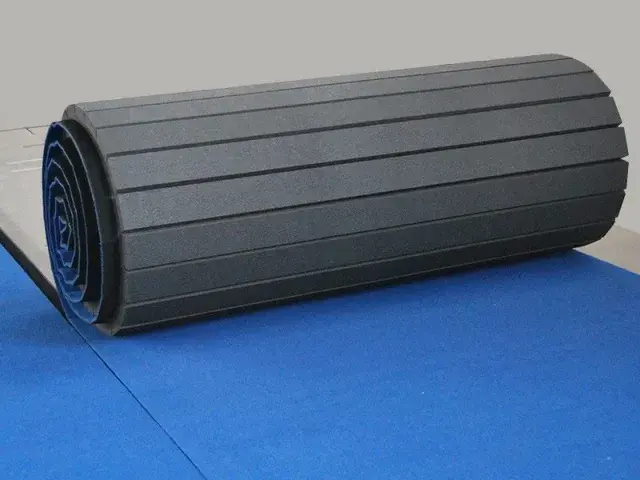
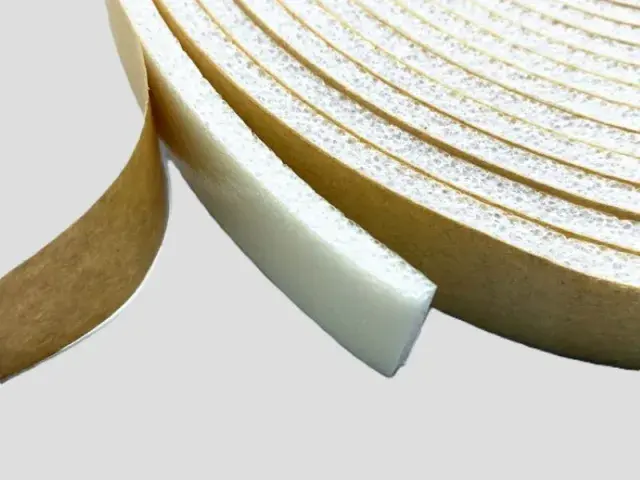
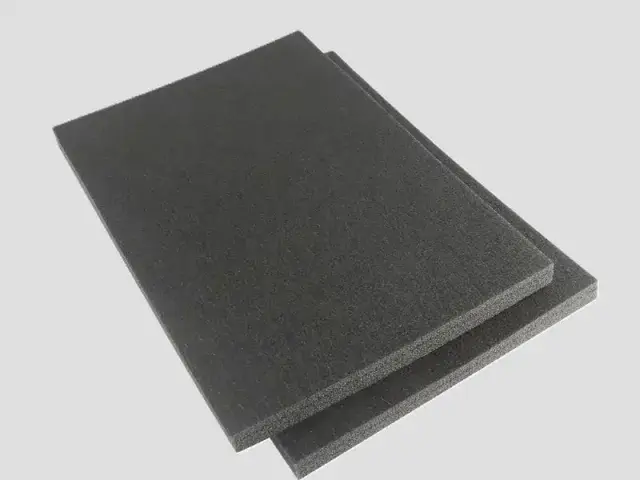
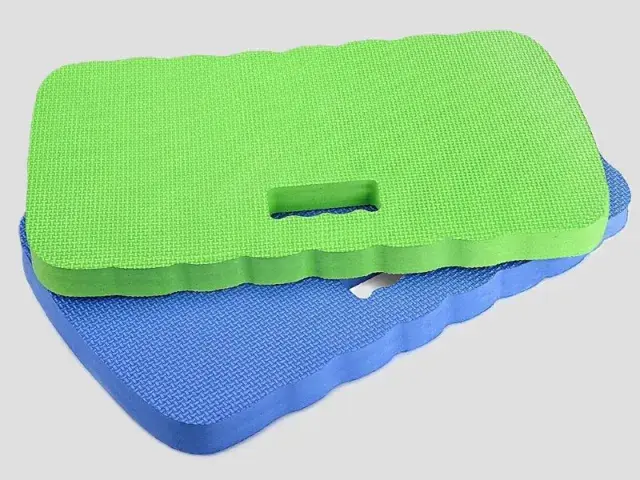
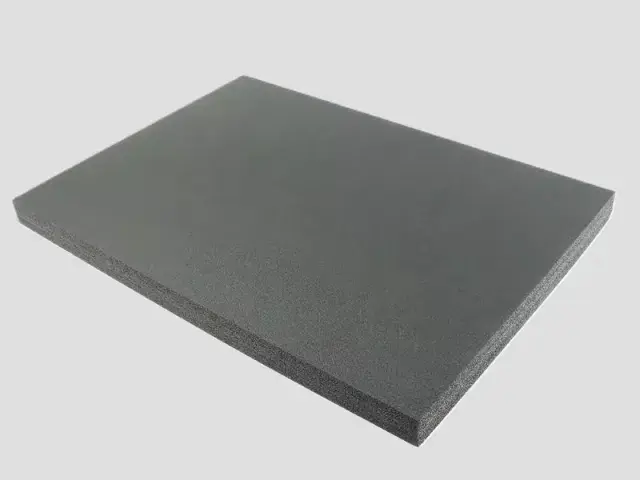
- Material: XPE foam (chemical cross-linked), IXPE foam (irradiation cross-linked)
- Expansion ratio: 3–40 times
- Thickness: single-layer 3–15 mm (XPE) / 0.1–15 mm (IXPE); thermally laminated (multi-layer) 15–200 mm
- Width: 500–2000 mm (XPE) / 500–2000 mm (IXPE); width can be customized
- Colour: black, white, gray (colour can be customized)
Customization
Made to order: density, thickness, colour and shape to your drawing. Die-cutting, CNC routing, lamination to film or fabric, slitting and adhesive coating all run in-house, so the part we quote is a finished part, not just a sheet. How a custom part is cut and routed explains what to send with the drawing.
Regular material: MOQ 1,000 m², lead time 15–20 days from order confirmation. Custom parts are quoted from the drawing. A4 samples are free, shipping included.
A foam roller is a cylinder a person rolls their own bodyweight over to release muscle tension and aid recovery. What the roller does depends almost entirely on how firm its foam is and how its surface is shaped, and both of those come from the sheet it is built from. Bofeng Foam produces that sheet in XPE and IXPE across the standard density range.
Features
- Density sets the intensity: a lower density compresses more and gives a gentler roll; a higher density stays firm and concentrates the pressure, which is the main variable in choosing a roller.
- Two cross-linking routes: XPE is chemically cross-linked and IXPE by irradiation, which gives a finer cell structure at thin gauges.
- Wide density range: 3× to 40× foaming, so the same material can be produced as a soft recovery roller or a firm one.
- Surface can be shaped: the foam takes an embossed or cut texture, which is how the grid and ridge patterns that increase stimulation are produced.
- Laminated build-ups: single-layer sheet from 3 mm to 15 mm (XPE) or 0.1 mm to 15 mm (IXPE), thermally laminated from 15 mm to 200 mm.
- Light and durable: the roller is easy to carry and does not flatten with repeated use.
Applications
- Self-myofascial release and muscle recovery
- Pre- and post-training routines
- Physiotherapy and rehabilitation
- Yoga, Pilates and mobility work
- Balance and core training
Specifications for foam roller
A foam roller has to hold its diameter under body weight and recover after every use.
| Foam | Expansion | Apparent density | Single-layer thickness | Why this grade |
|---|---|---|---|---|
| XPE | 8–15× | 66.7–125 kg/m³ | 3–15 mm (heat-bonded 15–200 mm) | Firm and dimensionally stable, so the roller does not flatten where it is used most. Heat bonding builds the diameter. |
| IXPE | 15–25× | 40–66.7 kg/m³ | 0.1–15 mm | Softer roller for a gentler pressure. |
Base material specifications are on the XPE, IXPE and IXPP material pages; finished products are on the XPE foam and IXPE foam pages. Tell us the load, the space available and the service temperature and we will confirm the grade against your drawing.
Why Choose Bofeng Foam
We supply roller foam in XPE and IXPE, from 3× to 40× foaming, as single-layer sheet from 3 mm to 15 mm (XPE) or 0.1 mm to 15 mm (IXPE) and as thermally laminated board from 15 mm to 200 mm, in widths of 500 mm to 2000 mm (XPE) or 500 mm to 2000 mm (IXPE), in black, white or gray with colour made to order. The two materials are compared on the IXPE foam page, and the base grade is on the XPE foam page.
Density and thickness for a part that is compressed again and again are compared in our mat guide.
Foam Roller Stock: Confirm the Core Construction and Finished Surface
Identify the Roller Design
A solid foam cylinder, layered construction and foam around a separate core are different products. State the diameter, length, internal construction and intended end use. A generic density cannot establish the behaviour of every roller design. Material supply must not be described as a therapeutic or medical-effect approval.
Review Shape and Bonding
Specify how the part is formed or cut and where any joined layer lies. Check the actual roundness, seam, end face and any rigid internal part on a finished sample. Where customer-specified alternative materials are considered for processing, confirm their specification separately rather than assuming in-house manufacture or using PE data.
Check Texture and Care
Surface pattern, facing and cleaner should be reviewed together. A textured face does not automatically demonstrate grip or comfort for every user. Define acceptable appearance, deformation and bond condition after the agreed handling. Keep the complete sample, not only a raw foam swatch, as the reference.
State the Supply Boundary
We can review the material and converting drawing without claiming treatment effects, injury prevention or a fixed number of use cycles. Retain the approved grade, construction and finish for repeat orders and review changes to core geometry or material source.
For sample identity, dimensions and the acceptance record, use the first-article review checklist with the application-specific checks above.
Conclusion & Inquiry
Tell us the roller diameter, the firmness you want and the surface pattern, and we will confirm the density and sheet build. Contact us for samples or a quotation.