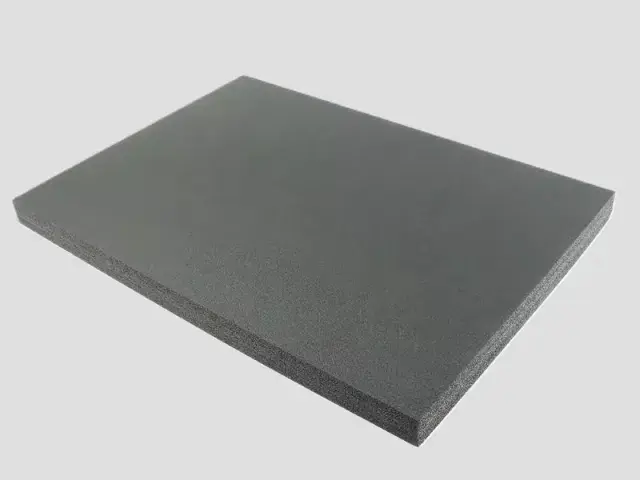

- Material: XPE foam (chemical cross-linked polyethylene)
- Expansion ratio: 3–40 times (26.8–300 kg/m³)
- Thickness: single-layer 3–15 mm; thermally laminated (multi-layer) 15–200 mm
- Width: 500–2000 mm (width can be customized)
- Colour: black, white, gray (colour can be customized)
- Cross-linking: chemical
Customization
Made to order: density, thickness, colour and shape to your drawing. Die-cutting, CNC routing, lamination to film or fabric, slitting and adhesive coating all run in-house, so the part we quote is a finished part, not just a sheet. How a custom part is cut and routed explains what to send with the drawing.
Regular material: MOQ 1,000 m², lead time 15–20 days from order confirmation. Custom parts are quoted from the drawing. A4 samples are free, shipping included.
A garden kneeling pad is a small foam mat carried out to the border or the vegetable bed and knelt on. It solves two problems at once: the hardness of paving and compacted soil under a kneecap, and the wet that soaks through anything absorbent. Bofeng Foam produces the sheet it is made from in cross-linked polyethylene.
Features
- Cushions a hard surface: the foam takes the pressure of a kneecap off paving, gravel or compacted ground, which is what makes a long session in the border bearable.
- Closed-cell, so it stays dry: the foam absorbs very little water, so a pad left on wet grass comes up dry and does not become heavy or muddy.
- Resistant to soil and moisture: the material does not rot or degrade in the way a fabric pad does.
- Light and portable: easy to carry out with the tools and to hang up afterwards.
- Easy to clean: mud and soil wipe or hose off the closed-cell surface.
- Available in colour: supplied in colour so the pad is easy to find in the border.
Applications
- Home gardening and allotments
- Professional landscaping and grounds maintenance
- Outdoor seating and picnic use
- Children's play on hard ground
- Kneeling pads for maintenance and repair work
Specifications for garden kneeling pad foam
A kneeling pad takes a concentrated point load from a knee on hard ground.
| Foam | Expansion | Apparent density | Single-layer thickness | Why this grade |
|---|---|---|---|---|
| XPE | 8–15× | 66.7–125 kg/m³ | 3–15 mm (heat-bonded 15–200 mm) | The firm end of the range, so the pad does not bottom out under a knee on gravel. Heat bonding reaches the 30–50 mm pads. |
| IXPE | 20–30× | 33.3–50 kg/m³ | 0.1–15 mm | Thinner, softer pad for light garden use. |
Base material specifications are on the XPE, IXPE and IXPP material pages; finished products are on the XPE foam and IXPE foam pages. Tell us the load, the space available and the service temperature and we will confirm the grade against your drawing.
Why Choose Bofeng Foam
We supply kneeling pad foam in the standard XPE range – 3× to 40× foaming (26.8 to 300 kg/m³), single-layer sheet from 3 mm to 15 mm or thermally laminated from 15 mm to 200 mm, in widths of 500 mm to 2000 mm, in black, white or gray, with chemical cross-linking. Width, thickness and colour are made to order. The base material is described on the XPE foam page, and the same sheet is used for the camping mat.
Density and thickness for a pad that has to recover after being knelt on are set out in our mat guide.
Garden Kneeling Pads: Check Local Compression and the Carrying Detail
Use the Intended Support Surface
Provide the pad outline, thickness, face layers and likely ground conditions. A sample that feels soft between fingers does not show whether concentrated contact reaches the hard support. Agree an evaluation using the complete pad on the intended surface, without treating the foam name as an injury-prevention or ergonomic approval.
Review the Layer Stack and Edge
If the pad has different faces or grades, specify each layer and its bond. Check corners, exposed edges and any handle cut-out. A carry opening may introduce a narrow bridge loaded differently from the central pad. Evaluate removal and carrying as well as the kneeling contact.
Define Outdoor Care
Record whether the pad is used temporarily outside or remains exposed. Low core water uptake does not establish that a textile face dries, that a seam excludes water or that the bond resists every cleaner. Confirm the care process on the full construction and request evidence for any claimed weathering life.
Keep an Acceptance Reference
Retain the outline, grade, faces and finished sample. Define what permanent deformation, damaged cover or delamination means for acceptance and replacement. Compression set is a laboratory comparison, not a predicted number of uses. Send the whole pad specification and quantity with the enquiry.
For sample identity, dimensions and the acceptance record, use the first-article review checklist with the application-specific checks above.
Approving a kneeling pad for the intended task
Describe where and how it is used
A garden kneeling pad should be reviewed in the tasks for which the product owner intends to sell it. Identify the working surface, the way the user places and lifts the pad and whether the article is also intended as a portable seat. These are different use arrangements and should not be approved by a single hand feel comparison. Supply the intended outline and any handle, cover or strap as part of the sample brief.
Mark the area expected to support the user and identify openings that reduce that area. A carrying slot is useful for handling, but it is also part of the finished geometry and should be included in the review. If several pad sizes are proposed, state which users and tasks each size is intended to accommodate. The foam supplier cannot determine a universal comfort level or medical benefit from an overall size and density alone.
Review the complete surface construction
Where the product has a cover, texture or bonded facing, evaluate it together with the foam. Identify which side contacts the ground and whether the pad has a required orientation. Review the edges, handle opening and any seams during normal placement and removal. A comfortable foam sample does not establish whether a finished edge catches on clothing or whether the cover stays correctly positioned.
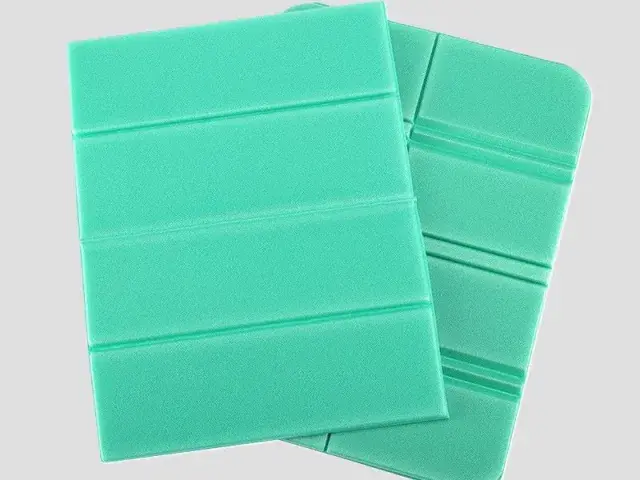
For a foldable or layered construction, show the hinge or joining arrangement. Trial the intended folding and carrying sequence using the first article. Record visible damage, awkward handling and any separation between layers as distinct observations. Do not convert a simple fold demonstration into a claimed number of use cycles. If repeat operation is part of the product claim, the product owner needs a defined assessment for the relevant construction.
Set care and storage instructions from evidence
Provide the proposed cleaning method and the outdoor exposure expected by the product owner for compatibility review. Closed cell foam does not by itself demonstrate that a complete pad is weatherproof, mould resistant or suitable for every cleaning agent. Include the cover, printing and attachments when checking the proposed care process. Record how the pad is intended to dry and be stored rather than assuming it can remain outside indefinitely.
Inspect a sample after the agreed use and care evaluation, keeping appearance, fit of the cover and the condition of attachment points separate. If a change is observed, identify the location and the process associated with it. This helps determine whether a revision to the core, surface, edge or instructions is relevant. A general statement that the pad is durable provides less information than an agreed construction and a clear acceptance record.
Make repeat orders reproducible
The approved specification should include the outline, thickness, foam grade, surface construction and any handle or carrying feature. Retain the first article and identify which care instructions were reviewed with it. If the cover or bonding method changes, review the resulting article before treating it as an equivalent reorder. Where a buyer requests skin contact, environmental or other product documentation, confirm the actual available evidence rather than inferring it from the use of PE foam.
If a pad is sold with a hanging or carrying feature, review that feature in the intended storage arrangement. Identify whether it is part of the foam shape, the cover or a separate fitting. Check its condition after the agreed handling trial. A convenient grip does not establish a rated lifting point or approval for a use beyond the product owner's instructions. Identify the intended carrying arrangement in the product specification.
Conclusion & Inquiry
Tell us the pad size, the thickness and the colour, and we will quote against your volume. Contact us for samples.