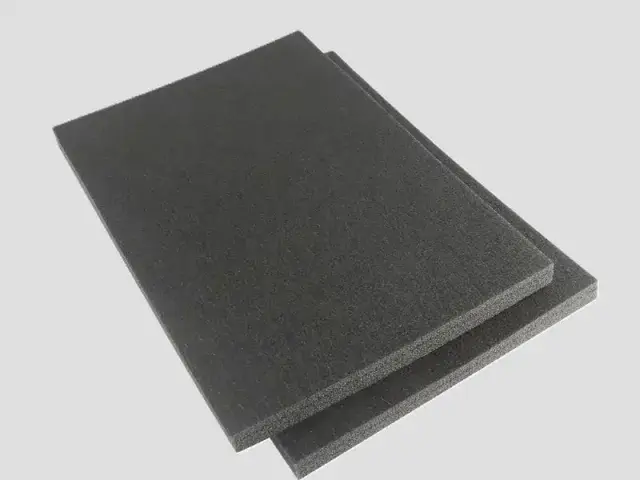
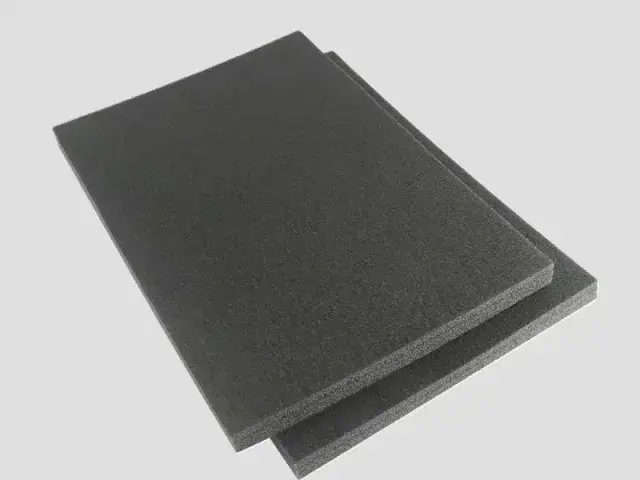
- Material: XPE foam
- Expansion ratio: 30 times (33.3±3 kg/m³), 35 times (28.6±2 kg/m³)
- Thickness: 30 mm, 40 mm (thickness can be customized)
- Width: 1 m, 1.2 m, 1.5 m (width can be customized)
- Colour: black, white, gray (colour can be customized)
Customization
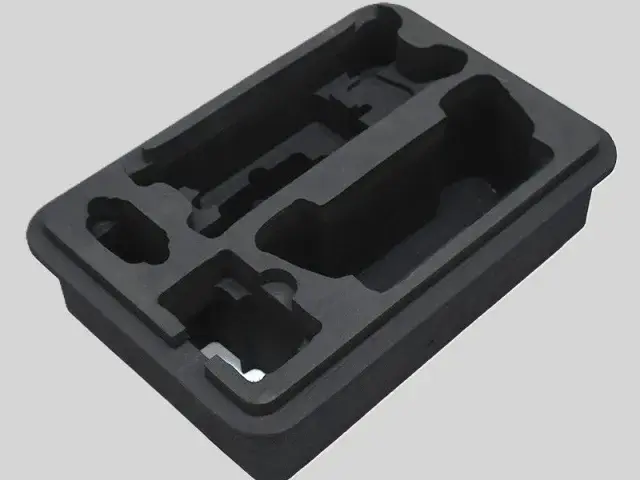
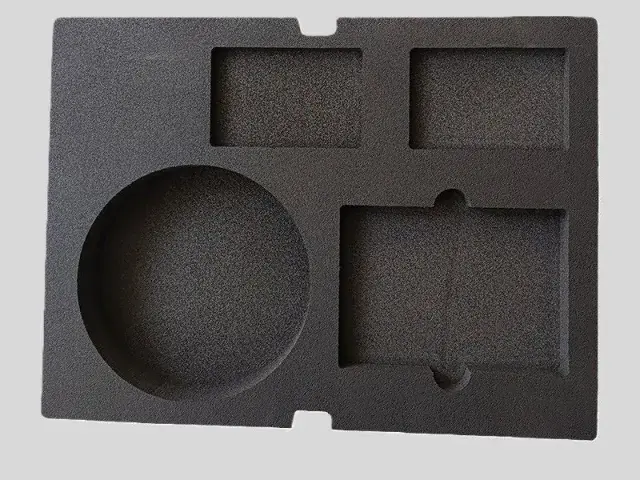
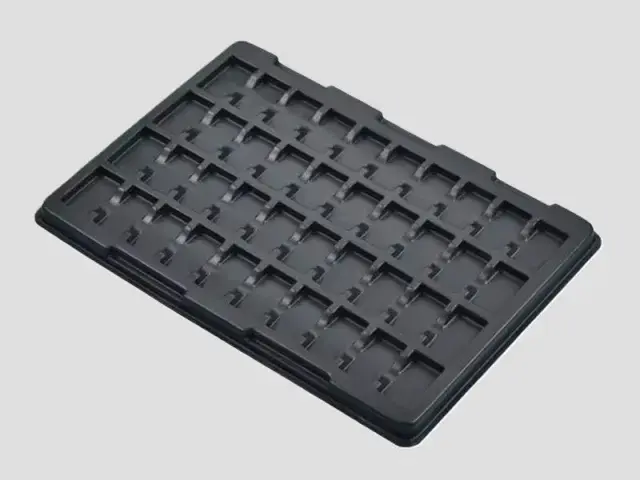
Made to order: density, thickness, colour and shape to your drawing. Die-cutting, CNC routing, lamination to film or fabric, slitting and adhesive coating all run in-house, so the part we quote is a finished part, not just a sheet. How a custom part is cut and routed explains what to send with the drawing.
Regular material: MOQ 1,000 m², lead time 15–20 days from order confirmation. Custom parts are quoted from the drawing. A4 samples are free, shipping included.
A martial arts mat has to do something a general sports mat does not: absorb a body being thrown onto it, repeatedly, in the same place. Bofeng Foam produces the foam for wushu training and competition floors in cross-linked polyethylene at 30 mm and 40 mm, where the closed-cell structure takes the impact and returns to thickness.
Features
- Impact absorption: the foam deforms under a thrown body and spreads the load over a wider area, which is what reduces injury on landing.
- Recovery after impact: cross-linking means the cell structure returns to shape rather than staying compressed, so a mat does not develop dead patches where throws are practised.
- Firm enough to push off: unlike a soft mat, this density gives the athlete a stable surface for the footwork and pivots that wushu requires.
- Closed-cell, so it wipes clean: the surface does not absorb sweat or spillage, which matters in a shared training space.
- Two densities: 30× (33.3±3 kg/m³) and 35× (28.6±2 kg/m³), to balance cushioning against support.
- Cut to the floor: the sheet is supplied in the widths a mat build needs, so a training area can be covered with minimal seams.
Applications
- Wushu training halls and competition floors
- Martial arts dojos
- School physical education spaces
- Home training areas
- Multi-purpose sports halls
Specifications for martial arts mat foam
A martial arts mat has to spread a fall impact over a wide area and then return to shape.
| Foam | Expansion | Apparent density | Single-layer thickness | Why this grade |
|---|---|---|---|---|
| XPE | 30–35× | 28.6–33.3 kg/m³ | 3–15 mm (heat-bonded 15–200 mm) | At 30x and 35x, the published compression-set limits are respectively 10% and 11% under GB/T 6669 at 23±2 °C for 22 h. These laboratory values do not establish repeated-impact performance of the finished mat. |
| IXPE | 30–35× | 28.6–33.3 kg/m³ | 0.1–15 mm | Soft top layer over a firm core, which is how the two-layer competition mats are built. |
Base material specifications are on the XPE, IXPE and IXPP material pages; finished products are on the XPE foam and IXPE foam pages. Tell us the load, the space available and the service temperature and we will confirm the grade against your drawing.
Why Choose Bofeng Foam
We supply martial arts mat foam at 30× or 35× foaming in 30 mm and 40 mm, in widths of 1 m, 1.2 m and 1.5 m, in black, white or gray with colour made to order. The base material is described on the XPE foam page, and a related grade is used for the gym mat.
In-house conversion. Competition mats are a two-layer build – a softer IXPE top over a firmer XPE core – and we heat-bond the layers before cutting to the mat size. Regular sheet starts at 1,000 m²; a two-layer mat is quoted from the drawing.
Density and thickness for a mat that takes repeated impact are compared in our yoga and gym mat guide.
Martial Arts Mat Cores: Review Repeated-Use Evidence for the Finished Mat
Specify the Complete Mat
Identify the activity, substrate, cover, core layers, joints and edge restraint. Foam thickness alone cannot establish suitability for a training discipline. The finished-mat manufacturer must define the required impact and movement performance. A core material quotation is not approval of the facility or a statement that a fall will not cause injury.
Check Repeated Loading at the Same Location
Evaluate the intended finished construction under an agreed repeated-use assessment, including recovery and any local change in firmness. Laboratory compression set is useful material information but does not establish the number or severity of impacts a mat can accept. Keep the test conditions with the result rather than translating them into an unrestricted durability claim.
Review Bonds, Seams and the Cover
Thick cores can use bonded layers. Inspect perimeter bonds and the transitions between mats on an actual sample arrangement. The cover, texture and cleaning process influence grip and handling; a softer core does not establish a non-slip surface. Examine the underside and edge restraint as well as the top contact face.
Set Inspection and Replacement Criteria
Agree how damaged covers, opened seams, permanent deformation and changing response will be reported and assessed. Keep an approved reference, grade and complete layer stack for repeat orders. Do not infer sports certification, injury prevention or a fixed service life from a material flame or recovery test. Send the finished-mat drawing and applicable performance requirements for the core enquiry.
For sample identity, dimensions and the acceptance record, use the first-article review checklist with the application-specific checks above.
Finished Training Mat Review: Keep the Core Decision With the Cover and Floor
Define the Product Before Comparing Material Samples
Describe the intended mat, its installation and the performance requirements identified by the finished-product maker. A core sheet, a covered mat and an installed training surface are different scopes. Record which faces contact the user and floor, how neighbouring mats meet and how the perimeter is held. A generic request for the softest or thickest foam leaves those important details unresolved.
Ask the responsible party which tests and acceptance conditions apply to the finished mat. Do not infer them from another discipline or an unrelated cover construction. The material supplier can provide the identified core and available data, but the product maker must establish what that core does in the actual assembly. A material quotation should state that boundary instead of appearing to approve the activity or facility.
Review Repeated Contact Without Assigning an Arbitrary Lifetime
Keep the sample construction and evaluation sequence identifiable. Check the location receiving repeated contact, the recovery observations and any change visible after the agreed conditioning. A result on an unbonded specimen cannot automatically describe the covered multilayer mat. If the cover or bonding arrangement changes, review whether the original assessment still applies.
Compression-set limits are tied to a grade and method. They do not translate into a number of throws, a fall severity or an injury threshold. Where those functions are specified, they need the relevant finished-product assessment. If evidence is unavailable, record the requirement as unverified rather than turning a low laboratory value into a safety or durability claim.
Include Joining and Maintenance in the Sample Review
A sample arrangement should include a representative joint and edge. Inspect the cover, core, underside and restraint together. Check that the accepted layout remains identifiable after routine assembly and removal, if those are intended operations. A centre swatch may be useful for comparing texture but does not establish the behaviour of a joined surface.
Agree how damage is assessed. Open bonds, damaged covers, shifted edges and persistent deformation can require different investigations. Retain photographs and the material reference rather than assuming every defect is resolved by changing density. Define who can inspect the construction and approve a repair or replacement while preserving the accepted detail.
Specify Repeat Supply Clearly
Keep the core grade, layer thicknesses, facing, bond and finished dimensions with the approved drawing. Describe whether the quotation covers foam stock, converted cores or another agreed component. Printing, covers, final assembly and product testing should not silently be treated as included simply because a core sample was accepted.
For repeat orders, compare the complete construction with the reference, including material and cover changes. A familiar colour is not proof of an unchanged product. This purchasing record supports consistent supply while leaving impact classification, injury prevention and safe-use requirements with the responsible finished-mat party. No fixed service life is provided by the material data alone.
If the mat is rolled or folded for storage, include that actual format in the sample trial. Show the direction of rolling, the intended closure and the way the mat is carried. Review the condition when it is laid out again rather than checking only the new flat sample. A successful demonstration supports the specified handling arrangement; it does not establish a claimed number of cycles or a universal replacement interval. Include the intended storage strap in the approved supply description.
Conclusion & Inquiry
Tell us the floor area, the thickness and the density you need, and we will confirm the sheet size and quantity. Contact us for samples or a quotation.