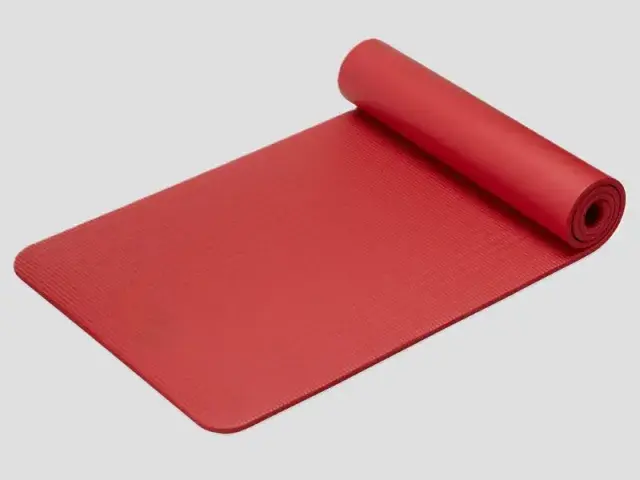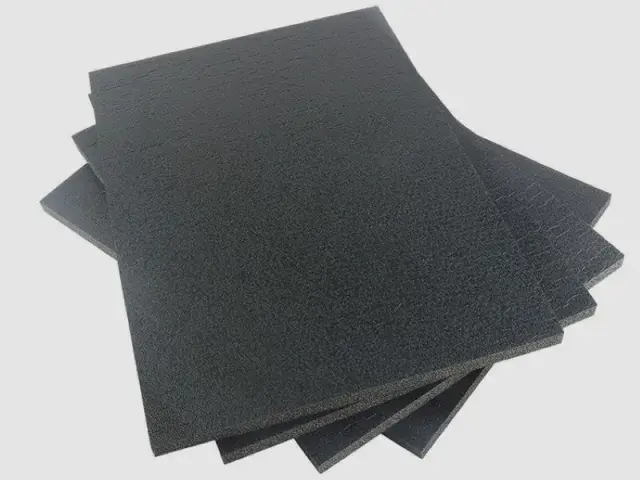

- Material: XPE foam
- Expansion ratio: 30 times (33.3±3 kg/m³), 35 times (28.6±2 kg/m³)
- Thickness: 20 mm, 25 mm (thickness can be customized)
- Width: 1.5 m, 1.8 m, 2 m (width can be customized)
- Colour: two layers of colour lamination (colour can be customized)
Customization
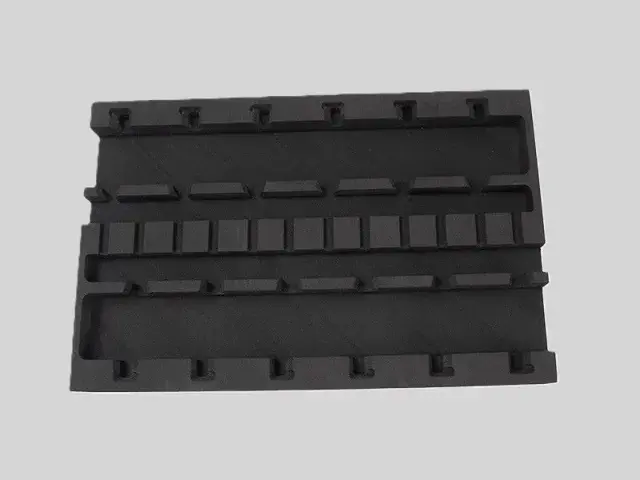
Made to order: density, thickness, colour and shape to your drawing. Die-cutting, CNC routing, lamination to film or fabric, slitting and adhesive coating all run in-house, so the part we quote is a finished part, not just a sheet. How a custom part is cut and routed explains what to send with the drawing.
Regular material: MOQ 1,000 m², lead time 15–20 days from order confirmation. Custom parts are quoted from the drawing. A4 samples are free, shipping included.
A pool bed float is the floating mat a swimmer lies on – in a hotel pool, a resort lagoon or a lake. Bofeng Foam produces the sheet it is made from in cross-linked polyethylene at 20 mm and 25 mm, in widths up to 2 m, which is what allows a float to be cut as one piece rather than assembled from narrower strips.
Features
- Buoyancy that lasts: the closed-cell structure holds air in cells water cannot enter, so the float keeps supporting a person rather than becoming waterlogged over a season.
- Wide sheet: widths of 1.5 m, 1.8 m and 2 m mean a float body can be cut in one piece, without a seam down the middle where a float would fold or tear.
- Two-colour lamination: the sheet is supplied as two laminated colour layers, which gives the float a finished two-tone edge without a separate trim.
- Soft, comfortable surface: the foam is comfortable against skin for long periods in the water.
- Resistant to pool chemistry: unaffected by chlorine or seawater, so it suits commercial pool and resort use.
- Wipe-clean: the closed-cell surface rinses clean without absorbing anything.
Applications
- Hotel and resort pool floats
- Recreational lake and sea bathing mats
- Swimming aid and learn-to-swim platforms
- Aqua fitness equipment
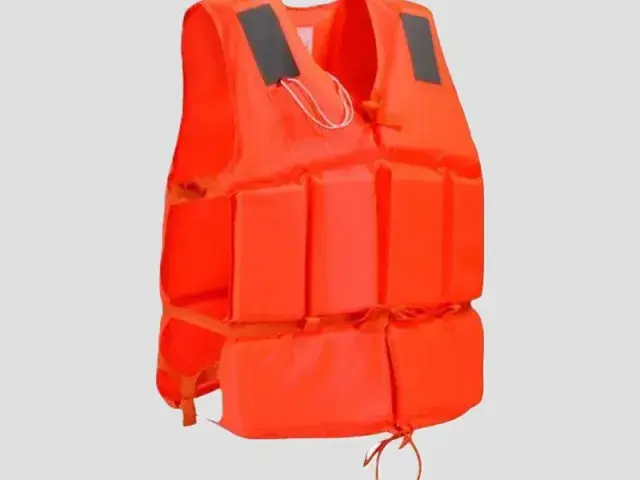
- Rescue and training floats
Specifications for pool bed float foam
A pool float is a large, low-density part that has to stay buoyant and hold its shape on water.
| Foam | Expansion | Apparent density | Single-layer thickness | Why this grade |
|---|---|---|---|---|
| XPE | 30–35× | 28.6–33.3 kg/m³ | 3–15 mm (heat-bonded 15–200 mm) | Low density for buoyancy with a water absorption of ≤0.4% (GB/T 1034), so it does not get heavier over a season. |
| IXPE | 30–35× | 28.6–33.3 kg/m³ | 0.1–15 mm | Thin facing sheet over a lighter core. |
Base material specifications are on the XPE, IXPE and IXPP material pages; finished products are on the XPE foam and IXPE foam pages. Tell us the load, the space available and the service temperature and we will confirm the grade against your drawing.
Why Choose Bofeng Foam
We supply pool float foam at 30× (33.3±3 kg/m³) or 35× (28.6±2 kg/m³) foaming in 20 mm and 25 mm, in widths of 1.5 m, 1.8 m and 2 m, laminated in two colours with the colours made to order. The base material is described on the XPE foam page; the smaller flotation products use the same foam – see swimming flotation board.
Why closed-cell foam floats, and what density does to buoyancy, is covered in our flotation foam guide.
Pool Float Sheets: Plan the Full Width and the Loaded Bend
Resolve the Panel Layout
Give the finished width, length, shape and whether any joint is permitted. Review the cutting layout before assuming a large float can be assembled from smaller pieces. A seam, bonded layer and unjoined full-width sheet have different details and require their own sample review.
Test the Complete Bend
A pool float is not loaded like a flat material coupon. Review the intended load distribution, bending and edge restraint on the finished product. Layer interfaces and joined panels must be part of the assessment. Neither a density value nor a thick centre section establishes stability or an allowable user load.
Inspect After Wet Use and Storage
Record the agreed exposure and packed or rolled condition. Examine edges, bonds, surface changes and retained water around the construction. Foam water uptake does not measure water caught between layers or at a damaged joint. Cleaning and sunlight requirements apply to the complete float, not only to the core.
Separate Leisure Material From Flotation Approval
This page supplies no life-saving approval or rescue-device claim. The finished maker must determine the applicable product requirements and warnings. Retain the grade, total build, seam arrangement and reference sample, and review width or layer changes before repeat production.
For sample identity, dimensions and the acceptance record, use the first-article review checklist with the application-specific checks above.
Large Leisure Floats: Record the Loaded Shape and Every Joined Interface
Specify the Panel Rather Than an Area of Foam
Give the complete outline, width, length and layer construction, together with the intended product requirement. Clarify whether joints are permitted and whether a quoted piece represents the whole panel or material for later assembly. A roll-area estimate does not define a finished float. The product maker should identify the accepted support and handling conditions.
A full-width cut and a joined panel may appear similar from above while having different interfaces below the face. Keep those interfaces visible in the drawing. If a panel must be assembled from parts, the join and its evaluation belong in the specification; they should not be assumed to inherit performance from an unjoined sheet.
Keep Load and Bending in the Product Review
Review the actual finished construction under the conditions set for it. Local contact, the overall loaded shape and the perimeter can differ from the response of a flat material coupon. A foam density value does not establish product stability or a permissible number of users. Do not convert it into a general flotation category.
Check bonded layers and joined regions after the agreed bending or handling evaluation. Record what was observed, where and on which sample. An opened interface needs a different investigation from a surface mark or a deformed edge. Preserve representative material and construction records instead of treating every change as a reason to choose a softer grade.
Include Storage and Care
If the float is rolled or folded for storage, identify the intended arrangement and assess the sample afterwards. Review the face, edges and bonds, not only whether the panel can be laid flat. Retained water at an interface or in an added cover is different from uptake by the foam body. A core test cannot establish the drying behaviour of the full product.
State exposure to sunlight and the intended cleaning process if they are part of the requirement. Request applicable evidence for the grade, facing and bond rather than assuming a generic outdoor life. Keep the cleaner or care process with the accepted sample so a later change is reviewable.
Retain the Product Boundary
Approve the material, outline, seams and layer stack together. Record which conditions were tested and which were not. A leisure float is not made into a life-saving product by selecting closed-cell foam. This page provides no rescue-device approval, unrestricted user-load guarantee or universal service life. Those responsibilities require the relevant finished-product design and evidence.
Include any strapping, cover or carrying feature in the floating mat drawing and sample review. State whether each feature is intended only for handling the unoccupied article or has another confirmed role. Do not infer an attachment load rating from the foam's material data. The finished product owner must evaluate the proposed assembly and communicate its permitted use; component supply does not establish that a floating mat is a lifesaving product. Include the approved attachment schedule with the finished article drawing.
Conclusion & Inquiry
Send the float dimensions, the thickness and the colour combination, and we will quote against your volume. Contact us for samples.