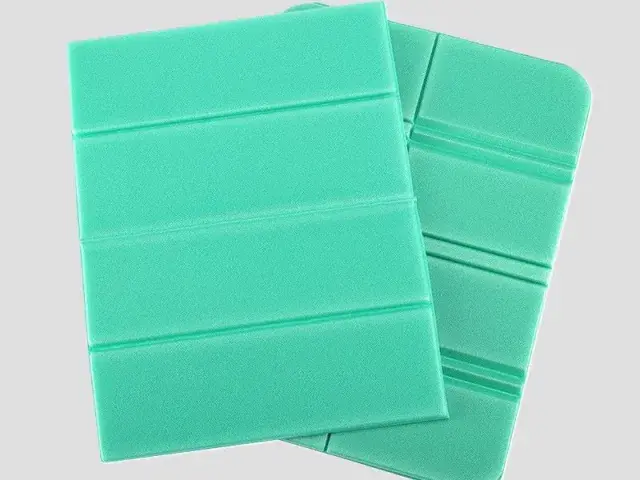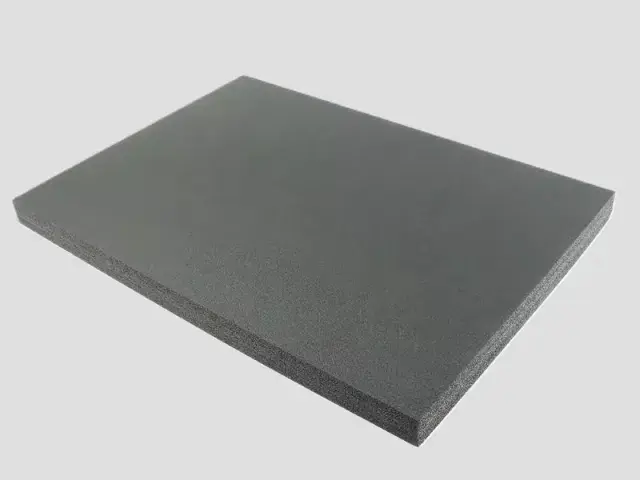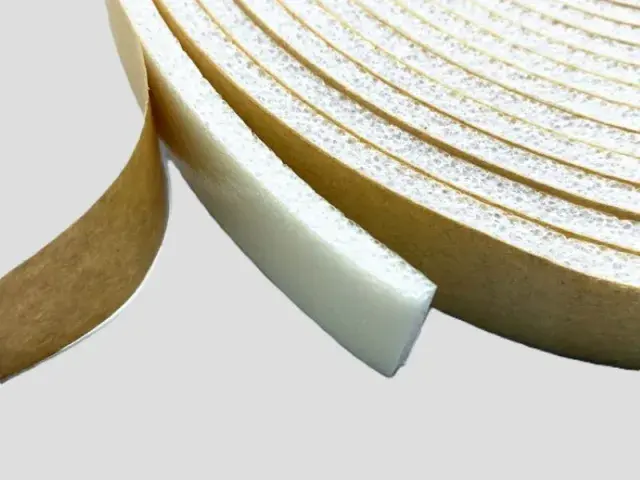

- Material: XPE foam + PVC artificial leather
- Expansion ratio: 25 times (40±4 kg/m³), 30 times (33.3±3 kg/m³)
- Size: 1 m × 2 m (width customizable)
- Thickness: 20 / 25 / 30 mm (customizable)
- Colour: white (customizable)
- Flame retardant: UL94 HF-1, GB8624-B1
Customization
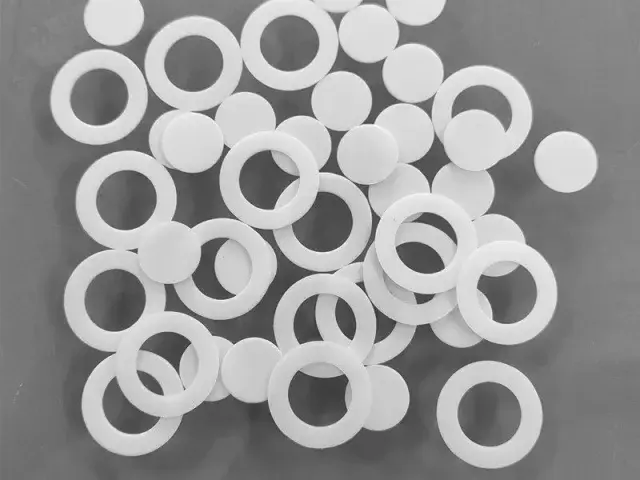
Made to order: density, thickness, colour and shape to your drawing. Die-cutting, CNC routing, lamination to film or fabric, slitting and adhesive coating all run in-house, so the part we quote is a finished part, not just a sheet. How a custom part is cut and routed explains what to send with the drawing.
Regular material: MOQ 1,000 m², lead time 15–20 days from order confirmation. Custom parts are quoted from the drawing. A4 samples are free, shipping included.
Police vehicles, holding rooms and training facilities all need surfaces that absorb impact and protect people and equipment during collisions or restraint situations. Bofeng's police anti-collision foam is an XPE/IXPE-based cushioning material that disperses impact energy, reduces injury risk and holds up under daily use.
Features
- High resilience – recovers its shape quickly after repeated compression, keeping its cushioning performance over time.
- Shock absorption – absorbs and disperses impact energy to reduce injury to people and damage to objects.
- Lightweight yet durable – strong enough for long service while staying easy to handle and install.
- Water-resistant and moisture resistant – remains stable in humid environments and is easy to clean.
- Chemical resistant – tolerates the oils, acids and alkalis commonly found in vehicles and law-enforcement facilities.
- Easy to process – can be cut, die-cut or molded into custom shapes and sizes for different installation points.
Applications
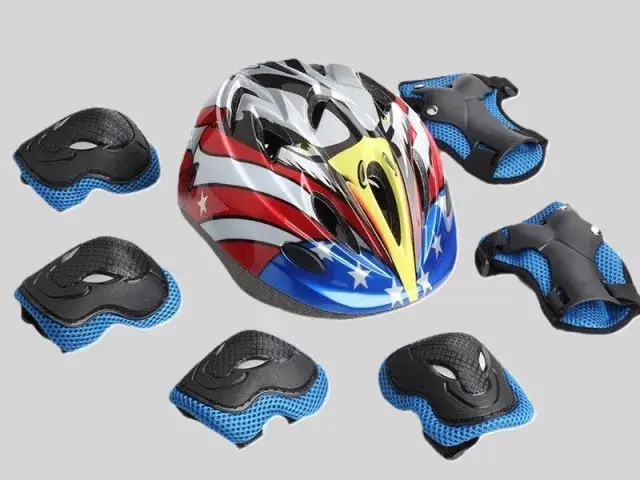
- Helmet liners – a cushioning layer inside helmets for riders and professionals.
- Training equipment – surface padding on boxing bags and other police training gear for better feel and shock absorption.
- Holding and interrogation rooms – anti-impact wall and furniture padding in law-enforcement facilities.
- Cell and detention walls – soft lining that reduces self-harm risk in confined spaces.
- Public safety signs – a backing layer on roadside and school-area signs that provides protection.
Specifications for police anti-collision foam
Anti-collision padding for vehicles, holding rooms and training equipment needs a foam that recovers after repeated impact and holds its shape on a wall panel.
| Foam | Expansion | Apparent density | Single-layer thickness | Why this grade |
|---|---|---|---|---|
| XPE | 25–30× | 33.3–40 kg/m³ | 3–15 mm (heat-bonded 15–200 mm) | High resilience under repeated compression, so wall and cell linings keep their cushioning instead of settling. The heat-bonded build reaches the 20–30 mm sections used on impact surfaces. |
| IXPE | 25–30× | 33.3–40 kg/m³ | 0.1–15 mm | Finer, more uniform cells give a smoother surface for helmet liners and equipment padding, where a uniform feel matters more than load bearing. |
Base material specifications are on the XPE, IXPE and IXPP material pages; finished products are on the XPE foam and IXPE foam pages. Tell us the load, the space available and the service temperature and we will confirm the grade against your drawing.
Why Choose Bofeng Foam
- Flame-retardant grades available – UL94 HF-1 and GB8624-B1.
- Custom thickness (20–30 mm), size and color options.
- Fast sampling, consistent production quality and on-time delivery.
Why a protective part is specified by density rather than by thickness, and which compression-set row to read under a sustained load, is set out in our guide to high density XPE foam.
Controlled-Space Padding: Review the Fixed Panel and the Replaceable Core
Map Repeated-Contact Locations
Start with the location of contact, not a softness label. A wall panel, a vehicle lining and an equipment pad have different supports, exposed edges and cleaning access. Mark corners, hinges, handles and adjacent hard surfaces on the layout. A thick centre panel does not address an uncovered hard edge beside it. Identify the area intended to deform and the parts that must remain fixed during contact.
Distinguish Recovery From an Impact Approval
Compression-set figures describe a specimen after the stated laboratory exposure; they do not establish an injury threshold, an impact rating or the number of repeated contacts a panel can withstand. Compare candidate grades with the same facing and backing, then agree an assembly evaluation for the intended setting. A softer first impression is not evidence that the installed panel remains suitable after wear, cleaning or local damage.
Inspect the Laminate and Its Fixing
Thicker padding may use a multilayer construction. State the total build, facing, bond and fixing arrangement together. Check exposed cut edges, fastener locations and the perimeter on a representative panel. If adhesive positions a panel, do not assume it also provides every retention function. Ask the project designer to define retention and accessibility requirements, including how a damaged panel can be removed without leaving a hazardous projection.
Define Inspection and Replacement
Keep an approved sample and photographs of the installation. Agree how indentation, torn facings, loose edges, exposed fixings and persistent deformation will be assessed. Check compatibility with the actual cleaner on a sample of the complete facing and bond. Neither the foam data sheet nor a flame-retardant grade approves the room, vehicle or protective equipment. Supply the layout, support, expected contact, cleaning process and required documentation before ordering.
For sample identity, dimensions and the acceptance record, use the first-article review checklist with the application-specific checks above.
Build a Panel Acceptance Record Around the Installed Risks
Specify What the Panel Includes
List the core, cover, bond, backing, fixing and edge restraint as separate supplied or installed items. Confirm who supplies each and which sample represents the finished panel. If a specification names only foam thickness, a quotation may cover the core while the buyer expects a completed lining. Resolve that difference before agreeing price or quantity. Keep a marked layout showing the contact area and neighbouring hard features.
Review Damage Without Assuming the Cause
If an installed panel develops an indentation, an open edge or a torn cover, retain the whole affected section where practicable and photograph its original location. An indentation can require a different investigation from a failed bond or a loose fixing. Record the surrounding support and any cleaning or maintenance history. Do not treat every visible mark as proof that a softer or denser sheet will solve the problem; the complete construction and duty must be reviewed.
Confirm the Cleaning Construction
A wipeable facing and a compatible adhesive are separate requirements. Trial the actual cleaner, application method and finished edge on an approved sample. Inspect the face and bond afterwards against the agreed criteria, rather than declaring all materials suitable because the core takes up little water. Retain the cleaner identification with the result so a later change can be assessed. The foam material data do not establish a universal disinfection process.
Keep Maintenance Within the Approved Detail
Define how damage is reported, how a panel is made accessible and what must be inspected before replacement. A replacement should preserve the accepted edge and fixing detail, not just the visible colour. If the facing, substrate or attachment changes, review whether the original acceptance still applies. This record supports procurement and maintenance of the defined component; it is not evidence of an injury threshold, detention-room approval or a protective-equipment rating.
If panels are installed beside doors or moving equipment, include their full travel in the clearance review. The pad should be assessed in its mounted position with the actual edge finish.
Conclusion & Inquiry
From vehicle interiors to training rooms and detention facilities, police anti-collision foam helps create safer, more resilient environments. Automotive foam – sound deadening, insulation & sealing covers related applications. Contact us for samples or a quote tailored to your specification.