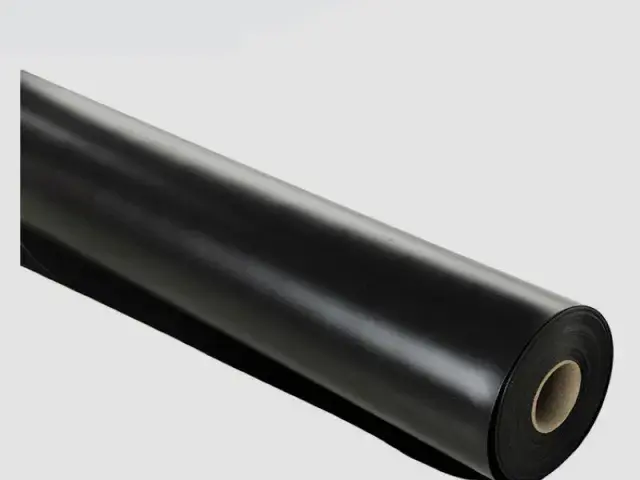
- Material: XPE foam
- Expansion ratio: 30 times (33 kg/m³), 35 times (28 kg/m³)
- Thickness: 30 mm, 40 mm, 50 mm (thickness can be customized)
- Width: 1 m, 1.2 m, 1.5 m (width can be customized)
- Colour: black (colour can be customized)
Customization
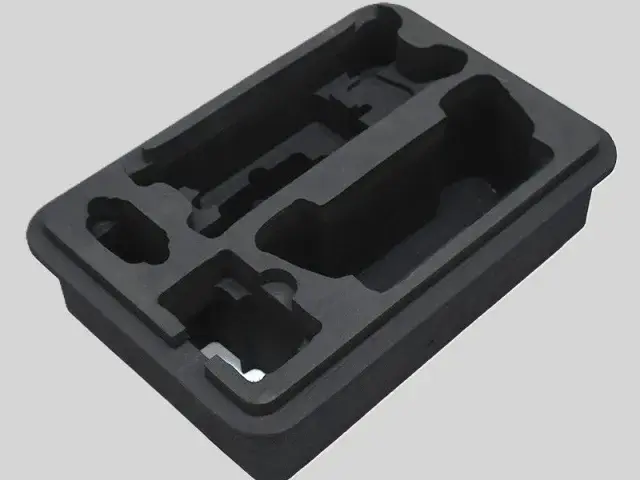
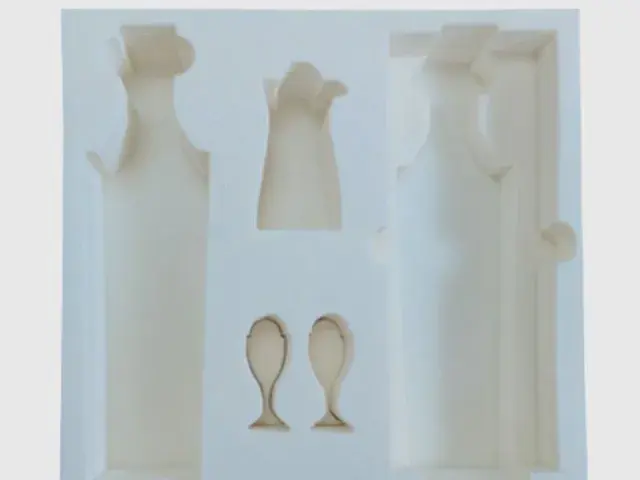
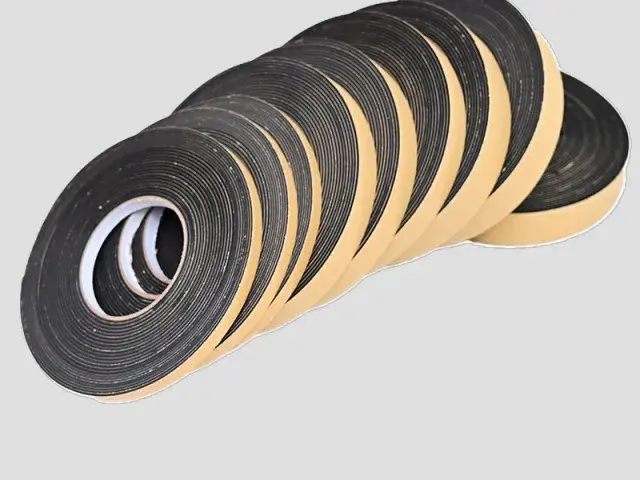
Made to order: density, thickness, colour and shape to your drawing. Die-cutting, CNC routing, lamination to film or fabric, slitting and adhesive coating all run in-house, so the part we quote is a finished part, not just a sheet. How a custom part is cut and routed explains what to send with the drawing.
Regular material: MOQ 1,000 m², lead time 15–20 days from order confirmation. Custom parts are quoted from the drawing. A4 samples are free, shipping included.
An archery target core has to stop an arrow without destroying it, hold that arrow straight, and close up again afterwards. Bofeng Foam produces the core material in cross-linked polyethylene at 30 mm to 50 mm, where the density is high enough to arrest a shaft and the closed-cell structure lets the foam recover around the hole.
Features
- Energy absorption: the foam takes the kinetic energy out of the arrow over a short distance, which stops the shaft while limiting the stress on it.
- Self-healing: because the cell walls are cross-linked, the foam closes back around the entry point instead of leaving a permanent channel, so the target keeps its stopping power.
- Protects the arrows: a core that gives progressively damages fewer shafts than a hard backstop, which matters when arrows are the expensive part of the sport.
- No splintering: unlike timber, the foam does not break up on impact, so there are no fragments in the shooting line.
- Light and portable: a foam core can be moved and re-stacked by hand, which suits a club that sets up and packs down each session.
- Replaceable in sections: because the core is built from layers, a worn face can be swapped without replacing the whole target.
Applications
- Competition and club target butts
- School and youth archery programmes
- Backyard practice ranges
- Archery experience and rental venues
- Layered backstops behind a target face
Specifications for archery target core foam
A target core has to stop an arrow, hold it and then close the hole behind it.
| Foam | Expansion | Apparent density | Single-layer thickness | Why this grade |
|---|---|---|---|---|
| XPE | 3–8× | 125–300 kg/m³ | 3–15 mm (heat-bonded 15–200 mm) | The densest band in the range at 125–300 kg/m³, with tear strength of at least 9 kN/m, which is what stops the shaft. |
| IXPE | 10–20× | 50–100 kg/m³ | 0.1–15 mm | Used as the outer layer of a layered target core. |
Base material specifications are on the XPE, IXPE and IXPP material pages; finished products are on the XPE foam and IXPE foam pages. Tell us the load, the space available and the service temperature and we will confirm the grade against your drawing.
Why Choose Bofeng Foam
We supply target core foam at 30× (33 kg/m³) or 35× (28 kg/m³) foaming in 30 mm, 40 mm and 50 mm, in widths of 1 m, 1.2 m and 1.5 m, in black with colour made to order, cut to the target size required. The base material is described on the XPE foam page, and how density affects stopping power is covered in the guide to choosing foam density and thickness.
In-house conversion. An archery core is a stack of dense XPE sheets, heat-bonded to the 30–50 mm the target needs and cut to its profile. We do the layer bonding and the cutting; the target face and the finished target are assembled by the brand. Regular sheet starts at 1,000 m²; a bonded core is quoted from the drawing.
Archery Target Foam: Define the Tested Target, Not Just the Sheet Grade
Describe the Complete Target Assembly
Identify the target type, frame, core construction, total build and intended operating envelope with the responsible target designer. Material density alone does not establish stopping performance. Foam supply must not be presented as proof that a target safely contains every projectile or can be used without a suitable range arrangement.
Keep Bonded Layers Distinct From Stacked Layers
A thermally bonded block and a mechanically held stack are different constructions. State which interfaces are bonded and how the core is retained, then evaluate the actual assembly. Do not infer a suitable compression or layer arrangement from a generic thickness table; the target maker must establish the accepted design.
Agree Wear and Removal Criteria
A target core is subject to local damage. The finished-product specification should define inspection, rotation where applicable, replacement and any disqualifying condition. A recovery result on an undamaged laboratory specimen does not establish repeated penetration life, extraction force or stopping distance. Use evidence for the actual target rather than assigning a service life to the foam name.
Retain the Approved Configuration
Keep the material grade, layer construction, frame and evaluation record together. Review changes to bonding, dimensions or materials before treating a new core as equivalent. We can quote cut or laminated foam to the approved drawing; safe-use, range and target-performance requirements remain with the responsible finished-target party.
For sample identity, dimensions and the acceptance record, use the first-article review checklist with the application-specific checks above.
Designing the replaceable target assembly
Describe the complete target rather than a block of foam
An archery target enquiry needs a description of the intended assembly. Show the target face, backing, frame, restraint and any replaceable centre on the same drawing. Identify which pieces are supplied as foam blanks and which are assembled elsewhere. A dimensioned block alone leaves the supplier unable to distinguish a sacrificial centre from a structural outer section. If an existing target is being copied, supply a used sample as well as a new one and explain why the existing design is being changed.
Describe the bow and arrow combinations that the finished target is intended to accommodate, including the point types permitted by the target maker. This information defines the validation programme; it does not establish that an untested foam grade will stop an arrow. The page's material properties are selection references, not a stopping distance, a permitted shooting distance or a safety classification. Those decisions belong to the finished target design and its controlled assessment.
Approve the layer direction and replacement method
For a layered construction, mark the direction of the layers relative to the target face. Record how the layers are held, where the fasteners sit and whether the centre can be replaced without releasing the whole assembly. Compare samples in the intended restraint, since a loose stack on a bench is not the same article as a framed target. Include the proposed face covering and backing in the sample description so later orders reproduce the evaluated assembly.
A replacement insert also needs an agreed interface. State which dimensions locate it, which surfaces may be compressed during fitting and how a customer knows that it is seated correctly. Ask the target maker to define the replacement trigger and inspection method from its own evaluation. Do not convert a foam compression result into a number of arrows, a service period or an assurance that a damaged target remains usable.
Record performance and handling separately
The validation record should distinguish penetration behaviour, arrow removal, visible damage and the condition of the supporting frame. Record the arrangement used for each observation rather than summarising the result as simply durable. If several arrow types or target constructions are evaluated, retain separate records. A favourable result for one combination should not silently approve the others. Testing must be organised by people competent to assess the finished target under controlled conditions.
Handling checks address a different question. Confirm how the target is lifted, moved and stored, and whether carrying points are part of the frame or part of the foam construction. Look for damage at the places that are repeatedly gripped or restrained. These checks support a practical product specification but do not replace the assessment of the target during shooting. Keep any proposed indoor or outdoor conditions in the specification for review.
Release a reproducible order
Once the target design has been approved, retain the foam grade, layer arrangement, cutting drawing and an identified first article together. If the maker changes the frame, backing, point restrictions or replacement arrangement, review whether the previous evidence still applies. A reorder should reference that approved configuration rather than only a colour and an overall size. This gives the purchaser a usable basis for investigating damage without claiming an unmeasured target life.
Identify what happens when the target is serviced
Document the sequence for opening the frame, removing a worn centre and installing the replacement. Identify which parts are retained and which are supplied anew. Check that the intended orientation remains recognisable after the face covering is removed, and that the replacement can be fitted without unplanned cuts. If the frame has a defined restraint setting, let the target designer specify it and retain it with the assembly instructions. A replacement centre should reference the approved target configuration rather than being sold as an interchangeable block for any frame. Where a service operation changes the restraint, backing or layer arrangement, refer the assembled target for the review appropriate to that change. The service record should identify the configuration restored, without making an unmeasured claim about how much shooting life the operation adds.
Conclusion & Inquiry
Tell us the bow type, the draw weight and the target dimensions, and we will recommend a density and layer build. Contact us for samples or a quotation.