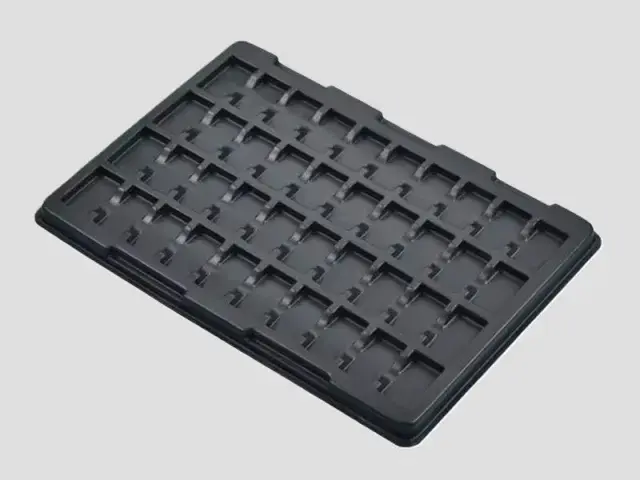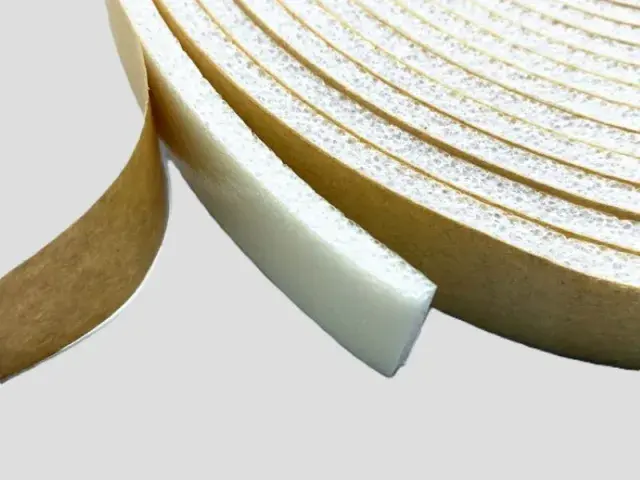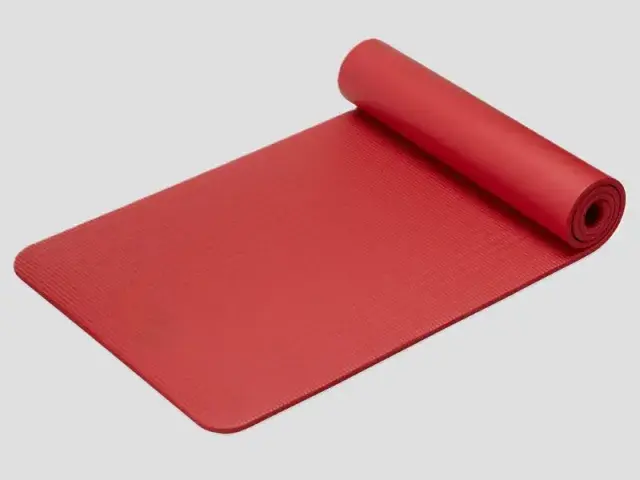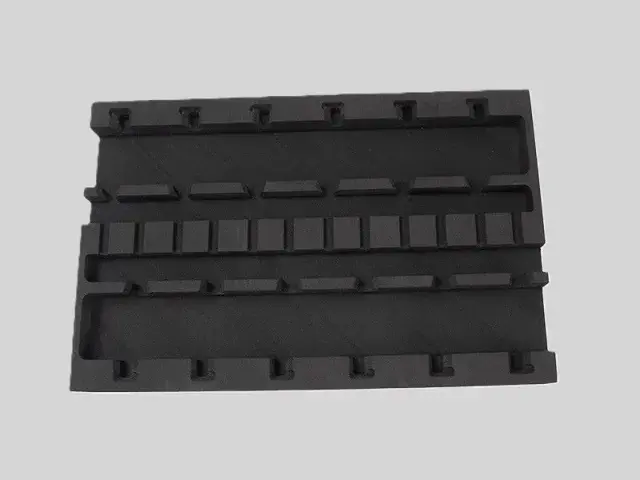

- Material: XPE foam, IXPE foam
- Expansion ratio: 25 times (40 kg/m³), 30 times (33 kg/m³)
- Thickness: 50 mm, 80 mm, 100 mm (thickness can be customized)
- Colour: black, white (colour can be customized)
- Flame retardant grade: UL94 HF-1
Customization
Made to order: density, thickness, colour and shape to your drawing. Die-cutting, CNC routing, lamination to film or fabric, slitting and adhesive coating all run in-house, so the part we quote is a finished part, not just a sheet. How a custom part is cut and routed explains what to send with the drawing.
Regular material: MOQ 1,000 m², lead time 15–20 days from order confirmation. Custom parts are quoted from the drawing. A4 samples are free, shipping included.
Flat glass fails at the edges. A panel will survive a surprising amount of flex, but it chips or cracks the moment an edge takes a localised impact — and one crack makes the whole sheet unusable. A glass packaging foam insert separates panels, cushions the edges and stops sheets sliding against each other. Bofeng cuts these inserts from XPE and IXPE foam in the thicknesses needed to carry the weight of a full pack.
Features
- Edge and corner protection – foam that takes the impact before it reaches the glass edge.
- Panel separation – interleaving layers that keep sheets apart, so surfaces and coatings stay unmarked.
- Load spreading – closed-cell foam distributes the weight of a stacked pack instead of concentrating it at contact points.
- Moisture resistant – absorbs very little water, so it will not hold damp against the glass.
- Clean cutting – die-cut and guillotine-cut to your panel size with a smooth, non-abrasive edge.
- Custom thickness and density – 50–100 mm as standard, with thinner sheets for interleaving.
Applications
- Architectural and decorative glass – panels, splashbacks and mirrors packed for site delivery.
- Furniture glass – table tops, shelves and cabinet doors protected through handling and transport.
- Automotive glass – windscreens, side glass and mirrors held securely before fitting.
- Laboratory and instrument glass – beakers, slides and precision glassware in shaped cavities.
- Display and retail glassware – vases, frames and decorative items in gift and retail packaging.
Specifications for glass packaging foam
A glass foam insert is a die-cut part, so the sheet has to hold a cavity, keep its thickness and cut cleanly.
| Foam | Expansion | Apparent density | Single-layer thickness | Why this grade |
|---|---|---|---|---|
| XPE | 10–20× | 50–100 kg/m³ | 3–15 mm (heat-bonded 15–200 mm) | Use this XPE range as a starting point for supports and separators. Assess edge loading and glass-to-glass clearance on the fully packed stack, then inspect movement, coating marks and deformation after the planned transport tests. |
| IXPE | 20–30× | 33.3–50 kg/m³ | 0.1–15 mm | Fine-cell sheet for the lid liner and for thin interleaving between parts, where a firmer sheet would not close. |
Base material specifications are on the XPE, IXPE and IXPP material pages; finished products are on the XPE foam and IXPE foam pages. Tell us the load, the space available and the service temperature and we will confirm the grade against your drawing.
Why Choose Bofeng Foam
- Cut to your panel size, with edge and corner profiles on request.
- Flame-retardant grade available – UL94 HF-1.
- 50 / 80 / 100 mm as standard, with thin interleaving sheets available.
- Black and white as standard, with further colours on request.
- Samples and specification sheets available before production.
The two numbers to settle before anything is cut — cut-through and retained bottom — are explained in our custom foam insert design guide.
Glass Inserts: Support the Approved Contact Zones and Keep the Pack Identifiable
Distinguish Edge and Face Risks
Provide the actual glass geometry, surface finish and permitted support locations. A flat pane, bottle and curved part need different restraint. Avoid assigning support to a fragile edge simply because its outline is easy to cut. The box, foam and any intermediate facing must be reviewed together for the intended orientation.
Separate Thin Interleaving From Load Support
A thin separator may prevent contact between adjacent parts but may not provide the travel needed for cushioning. A thick retained base performs a different function. Identify both in the drawing instead of describing the entire pack with one thickness. Check whether items can touch after movement or compression.
Trial the Actual Surface
Assess insertion, removal, abrasion and cut debris using the finished glass or an approved representative sample. A smooth foam surface is not a universal non-scratch guarantee. Include coatings and decorative finishes when agreeing contact criteria, and inspect after the intended handling rather than only immediately after packing.
Validate the Complete Pack
Keep component version, carton, layer construction, contact arrangement and test sequence with the result. A foam grade alone cannot establish a safe drop height or a breakage rate. Review changes to glass mass, orientation or box stiffness before relying on a previous validation.
For sample identity, dimensions and the acceptance record, use the first-article review checklist with the application-specific checks above.
Approving a glass pack at its vulnerable interfaces
Map the glass geometry before choosing a cavity
Provide the shape, edge condition, weight distribution and transport orientation of the glass article. A flat panel, a curved part and an assembled glass product should not be represented by the same generic rectangular pocket. Mark the edges, corners, coatings and attached fittings that need particular attention. Identify where support is permitted by the product designer and where the insert must leave clearance.
Review the contact surfaces using the intended article or an agreed representative sample. Confirm whether protective wrapping or an interleaf is part of the pack. If it is, include it when setting cavity dimensions and recording the approved fit. An insert evaluated with wrapping should not later be supplied as evidence for an unwrapped arrangement. Surface appearance and transport damage are separate acceptance questions, and both need an agreed inspection method.
Control the packing and unpacking sequence
Show how the glass is placed into the lower support and how the remaining restraints are fitted. Make sure the operator can complete the sequence without resting the article on an unintended edge. During unpacking, identify the intended grip points and the order in which supports are removed. A fitted cavity that requires bending or levering the glass to release it needs a layout review, rather than an assumption that the foam will always yield safely.
Where several pieces share a box, define their separation and permitted orientation. Include the dividers, end pieces and outer carton in the approved arrangement. Record whether identical looking pieces have different dimensions or coatings. The pack drawing should allow the operator to identify the correct placement without improvising. Any handling marks observed during the trial should be recorded before distribution testing so their cause is not confused with transit damage.
Assess the complete pack
The relevant distribution evaluation must use the intended packed quantity, closures and outer packaging. A foam sample cannot establish the breakage risk of a glass pack on its own. Keep the tested article description and the package revision with the results, including any limitations on orientation or handling. Do not translate a material compression result into an assurance that the glass will never break.
For repeat orders, retain an approved insert sample and the contact surface requirements. Review changes to glass thickness, edge treatment, fittings, wrapping or the outer box before treating them as equivalent. If damage is reported, request the condition and arrangement of the whole package rather than examining only a detached piece of foam. This preserves the information needed for a useful correction.
If a pack will be returned and reused, define the inspection and repacking process separately. An outbound approval does not establish the condition of a returned insert or the suitability of an altered glass arrangement.
Conclusion & Inquiry
Packaging foam covers the wider insert range, and wine packaging foam solves the same problem for heavy rigid containers. Contact us with your panel dimensions and pack weight for a cut layout.