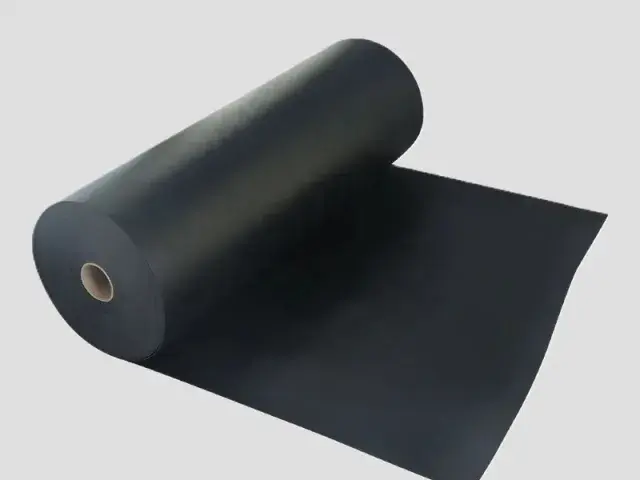
- Material: XPE foam, IXPE foam
- Expansion ratio: 15 times (66 kg/m³), 20 times (50 kg/m³), 25 times (40 kg/m³)
- Thickness: 3 mm, 5 mm, 6 mm (thickness can be customized)
- Colour: white, black, gray (colour can be customized)
- Style: square pattern, grid pattern
Customization
Made to order: density, thickness, colour and shape to your drawing. Die-cutting, CNC routing, lamination to film or fabric, slitting and adhesive coating all run in-house, so the part we quote is a finished part, not just a sheet. How a custom part is cut and routed explains what to send with the drawing.
Regular material: MOQ 1,000 m², lead time 15–20 days from order confirmation. Custom parts are quoted from the drawing. A4 samples are free, shipping included.
Disposable slipper foam is the sheet a single-use slipper is built from – the sole, and on lighter styles the whole upper. Bofeng Foam produces it in XPE or IXPE at 3 mm to 6 mm with an embossed square or grid pattern, which is what gives the sole its grip and its finished look.
Features
- Very light: at these densities a finished slipper weighs almost nothing, which is the point for a product that is worn once and discarded.
- Embossed surface: the square or grid pattern provides grip on a tiled bathroom floor and gives the sole a finished appearance straight off the press.
- Closed-cell and dry: the foam absorbs very little water, so the slipper does not become heavy or unhygienic in a wet bathroom.
- Three densities: 15× (66 kg/m³), 20× (50 kg/m³) and 25× (40 kg/m³), to trade durability against cost.
- Predictable to convert: the sheet die-cuts, embosses and welds consistently, which suits high-volume automated slipper lines.
- Low unit cost: the material is inexpensive at volume, which is what makes a single-use product viable.
Applications
- Hotel guest room slippers
- Hospital wards and operating theatres, where single-use avoids cross-infection risk
- Beauty salons, spas and barber shops
- Airline and rail travel kits
- Guest slippers for the home
Specifications for disposable slipper foam
A disposable slipper is a thin, soft sole that has to be cut cheaply and feel comfortable for a short stay.
| Foam | Expansion | Apparent density | Single-layer thickness | Why this grade |
|---|---|---|---|---|
| IXPE | 30–40× | 26.8–33.3 kg/m³ | 0.1–15 mm | The lightest band, soft underfoot and economical, and it die-cuts cleanly at speed. |
| XPE | 25–35× | 28.6–40 kg/m³ | 3–15 mm | Firmer sole for a reusable slipper or a hotel-grade pair. |
Base material specifications are on the XPE, IXPE and IXPP material pages; finished products are on the XPE foam and IXPE foam pages. Tell us the load, the space available and the service temperature and we will confirm the grade against your drawing.
Why Choose Bofeng Foam
We supply disposable slipper foam at 15×, 20× or 25× foaming in 3 mm, 5 mm and 6 mm, in white, black or gray, with square or grid embossing, and to a colour and pattern made to order. The base materials are described on the XPE foam and IXPE foam pages; XPE is the usual choice where cost drives the decision, IXPE where a finer, softer surface is wanted.
What uncross-linked PE foam gives you, and where it is the cheaper right answer, is covered in our PE foam article.
Slipper Foam Stock: Verify the Walking Surface and the Finished Assembly
Define the Component Being Supplied
State whether the foam forms the sole layer or another part, and identify the upper, facing and adhesive. Material supply does not establish a complete slipper construction or consumer-product approval. Provide the intended environment and finished dimensions so the layer can be reviewed in context.
Evaluate Grip Under the Intended Conditions
An embossed pattern is not a universal slip-resistance result. The actual walking surface, moisture, wear and finished sole all matter to the required evaluation. Ask the responsible product maker to specify the method and acceptance condition rather than relying on a hand-feel comparison.
Inspect Cutting and Bonding
Check outline, edge debris, upper attachment and any laminate on the actual sample. Narrow sections should be reviewed after assembly. A low foam uptake result does not mean the material absorbs water from a floor or behaves as an absorbent sole. Keep the function of each layer explicit.
Use Evidence for Environmental Claims
Do not infer biodegradability or local recyclability from the word disposable. Confirm the complete construction, destination and available documentation. Retain the approved foam, upper and bond arrangement for repeat orders, and review product changes rather than treating colour and thickness as the entire specification.
For sample identity, dimensions and the acceptance record, use the first-article review checklist with the application-specific checks above.
Conclusion & Inquiry
Tell us the slipper style, the thickness and the embossing pattern, and we will quote against your annual volume. Contact us for samples.