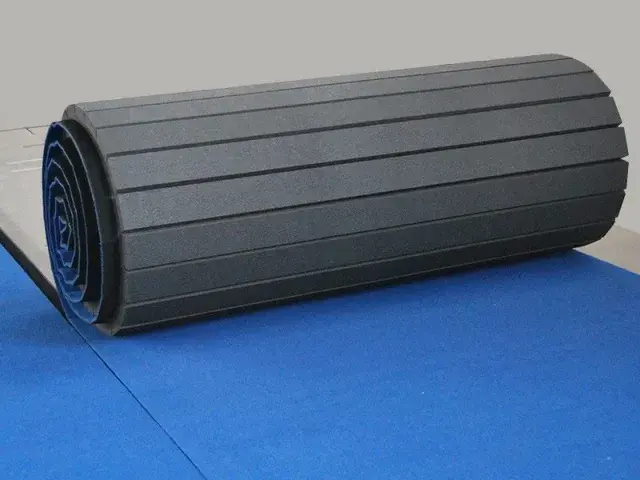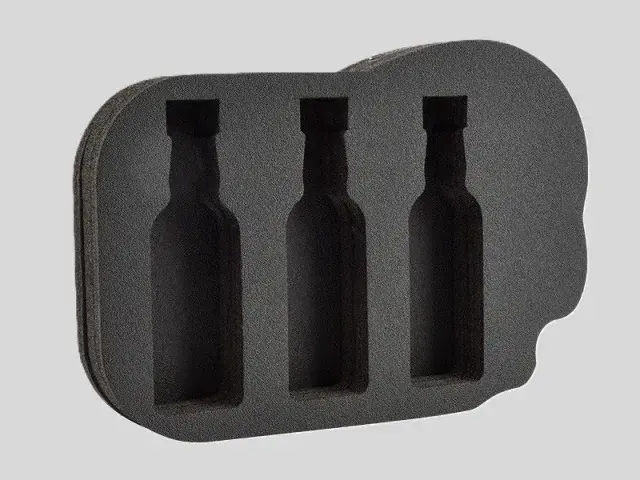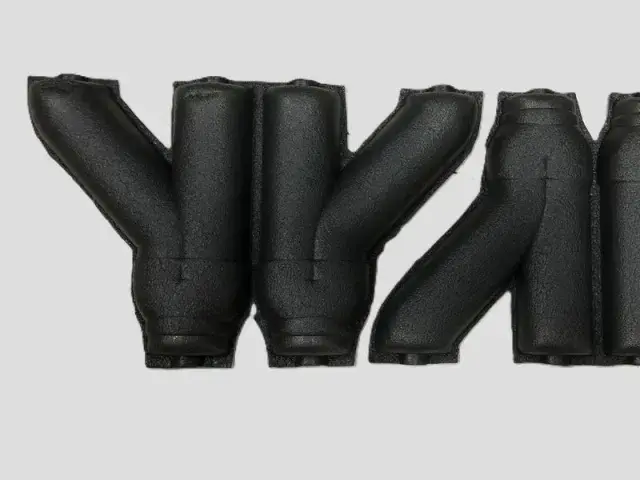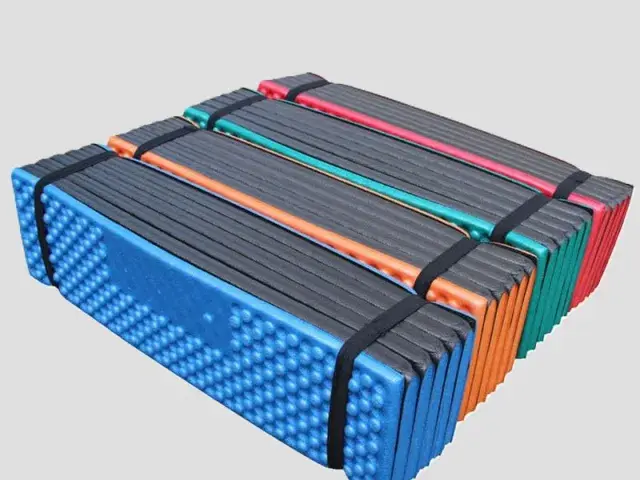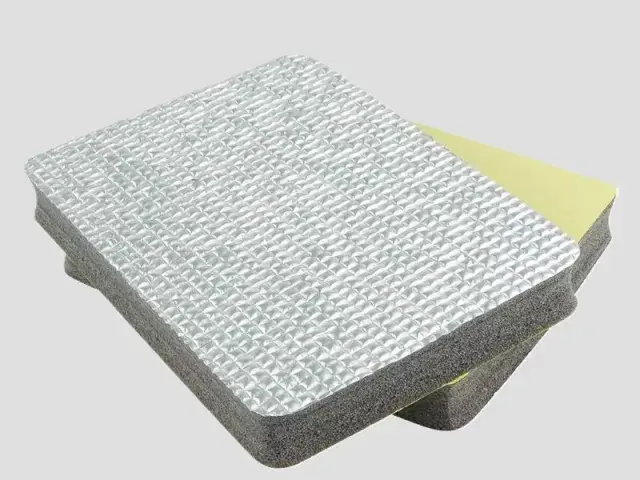

- Material: XPE foam
- Expansion ratio: 30 times (33 kg/m³), 35 times (28 kg/m³)
- Thickness: 30 mm, 40 mm (thickness can be customized)
- Width: 1 m, 1.2 m, 1.5 m (width can be customized)
- Colour: black, white, gray (colour can be customized)
Customization
Made to order: density, thickness, colour and shape to your drawing. Die-cutting, CNC routing, lamination to film or fabric, slitting and adhesive coating all run in-house, so the part we quote is a finished part, not just a sheet. How a custom part is cut and routed explains what to send with the drawing.
Regular material: MOQ 1,000 m², lead time 15–20 days from order confirmation. Custom parts are quoted from the drawing. A4 samples are free, shipping included.
Fitness equipment foam is the padding wrapped around the parts of a machine a person grips or sits on – the handles, the arm pads, the seat and the backrest. It is what turns a steel frame into something usable, and it is also the part of the machine that wears out first. Bofeng Foam produces it in cross-linked polyethylene at 30 mm and 40 mm.
Features
- Grip with cushioning: the foam gives a handle enough give to be comfortable in the hand while still transmitting the force the user applies.
- High resilience: cross-linking means the foam recovers after being compressed, so a seat pad does not flatten into a permanent dent.
- Abrasion resistance: the surface resists the constant rubbing of hands, clothing and gym wear, which is what determines the service life of the pad.
- Two densities: 30× (33 kg/m³) and 35× (28 kg/m³), so the feel can be set from firm to soft.
- Closed-cell and wipe-clean: sweat does not soak in, which matters in a shared facility and for hygiene.
- Easy to fabricate: the sheet can be cut to a pad profile or supplied as a tube for a handle wrap.
Applications
- Treadmill and cross-trainer handles and arm pads
- Weight benches, seats and backrests
- Dumbbell and barbell grips
- Multi-station gym padding
- Boxing and punching bag padding
- Stationary bike and rowing machine seats
Specifications for fitness equipment foam
Foam on fitness equipment is a handle or a guard, so it is judged on how it feels in the hand and how long it lasts.
| Foam | Expansion | Apparent density | Single-layer thickness | Why this grade |
|---|---|---|---|---|
| XPE | 20–30× | 33.3–50 kg/m³ | 3–15 mm | Uniform density so a grip feels the same along its length, and it recovers after being squeezed. |
| IXPE | 30–40× | 26.8–33.3 kg/m³ | 0.1–15 mm | Finer cell for a smoother grip surface. |
Base material specifications are on the XPE, IXPE and IXPP material pages; finished products are on the XPE foam and IXPE foam pages. Tell us the load, the space available and the service temperature and we will confirm the grade against your drawing.
Why Choose Bofeng Foam
We supply equipment foam at 30× or 35× foaming in 30 mm and 40 mm, in widths of 1 m, 1.2 m and 1.5 m, in black, white or gray with colour made to order, cut to the pad profile on request. The base material is described on the XPE foam page, and the related floor products are the exercise mat and the gym mat.
In-house conversion. A pad is a cut part: we die-cut or CNC-route the profile, laminate a wear facing where the handle needs grip, and apply adhesive backing for seats that are bonded rather than wrapped. Regular sheet starts at 1,000 m²; pads are quoted from the drawing.
Compression set under a sustained load — the figure that decides how a pad ages — is explained in our high density XPE foam guide.
Fitness Equipment Pads: Review the Tube, Grip and Replaceable Contact Part
Map the Component on the Equipment
Identify whether the foam covers a tube, contacts a hand or body, separates parts or cushions an accessory. These are not the same loading or surface conditions. Supply the equipment drawing and actual contact substrate. Foam component selection does not qualify the equipment structure or establish a safe load for it.
Trial the Curved Installation
A sheet wrapped around a cylinder develops a seam and an exposed edge. Review the full circumference, adhesive contact and restraint on the real tube. Avoid assuming a flat swatch proves the part stays located when gripped or repeatedly contacted. Include access for replacing a worn cover or pad.
Check the Finished Surface
Texture, textile, adhesive and cleaner all belong in the sample assessment. Check the intended wet or dry contact condition using an agreed method, not a generic non-slip or antimicrobial description. Low core water uptake cannot establish hygiene or resistance of every surface layer.
Define Acceptance and Replacement
Keep grade, dimensions, complete build and the equipment reference. Record the agreed load, contact and cleaning evaluation, and how damaged faces or loose seams are handled. Compression set is not a cycle-life or injury-protection result. We supply the defined foam part rather than certification of a finished machine or its user-safety performance.
For sample identity, dimensions and the acceptance record, use the first-article review checklist with the application-specific checks above.
Developing a foam component for a specific exercise machine
Describe the movement and the contact area
A fitness equipment enquiry should identify the machine and the position of the foam component on it. Distinguish a seat pad, a body contact roller, a grip cover and an isolation component. These parts experience different use arrangements and cannot be approved by the same comfort comparison. Supply the support structure and the complete covered construction where applicable, together with drawings showing how the component is held in place.
Show the intended user contact area and the movement of the equipment through its operating positions. A pad may feel acceptable when the machine is stationary yet be poorly located during the exercise for which it is designed. The equipment developer should define the relevant positions and users for the review. Material hardness and density do not determine that the finished machine is comfortable or suitable for every user.
Review the support and the attachment
Identify the rigid backing, brackets, core or shaft that supports the foam. Mark fasteners and other features that could affect the fitted shape. If the foam is supplied as a separate blank for later covering, specify the geometry needed after that operation rather than evaluating only the uncovered blank. Include the intended upholstery, seams and cover tension in the first article so their effects are visible during the fit review.
For a roller or grip component, provide the mating dimensions and the retention arrangement. Identify whether the foam is expected to remain fixed or move relative to another part. The supplier should not infer the retention requirement from a photograph of the machine. Trial assembly and removal using the intended method, recording any tearing, distortion or difficulty at the interface. These observations help separate a dimensional issue from a material choice.
Keep user comfort and safety evidence distinct
Use the equipment owner's planned evaluation to assess fit and comfort through the relevant movement. Record observations about local pressure, edge contact and interference with other components. Do not translate subjective comfort feedback into a medical, rehabilitation or injury prevention claim. Where the machine is intended for a regulated or specialised use, the equipment owner must define the applicable requirements and evidence for the finished product.
Any structural or safety assessment must address the complete machine and attachment. A foam pad does not establish the strength of its backing, fasteners or supporting frame. Similarly, a material compression result cannot supply a maximum user load or a cycle life for an exercise machine. Keep such finished product requirements in the developer's qualification programme rather than deriving them from the foam table on this page.
Include cleaning and repeated use in the brief
Provide the proposed cleaning materials, frequency and method for compatibility review of the actual construction. The cover, printing, adhesive and seams may need attention as well as the foam core. A claim that PE is closed cell does not establish resistance to every disinfectant or demonstrate hygiene performance of a finished pad. If the component is removable, include its removal, drying and refitting sequence in the sample trial.
Ask the product owner to define the repeated use assessment relevant to the machine. Record the setup, component identity and observations so changes can be reviewed against the intended construction. Do not claim a replacement interval or a service life without the evidence supporting it. A visible mark, cover movement or attachment problem should be described specifically rather than summarised as foam wear when its cause has not been identified.
Release a defined component
Retain the foam grade, converted dimensions, support geometry, covering and attachment arrangement with the approved first article. Identify which machine versions the component is intended to fit. If a common pad is proposed across several models, review the actual mounting and use arrangements rather than assuming that matching bolt positions establish equivalence. Keep the product and component revision references together in the supply schedule.
For repeat orders, confirm whether the construction is an exact repeat or a proposed substitution. A change to a cover, adhesive, backing or fitted thickness may alter the result even if the base foam remains the same. Review such changes with the equipment developer and identify which checks need repeating. This gives the buyer a practical specification for manufacture without presenting the foam supplier's material data as an approval of the complete exercise machine.
Include replacement and maintenance access in the component review. If a cover or pad is intended to be renewed, identify the approved replacement assembly and the method by which it is installed. Check that the operation can be completed without an unplanned change to the support or attachment. The equipment owner should decide which inspection follows replacement. A convenient replacement method does not establish a longer machine life or permit a component to be used on another model without review. Keeping those limits with the supply record supports a reproducible maintenance arrangement. Include the replacement part identification in the equipment maintenance record.
Conclusion & Inquiry
Send the pad profile, the thickness and the density you need, and we will quote against your volume. Contact us for samples.