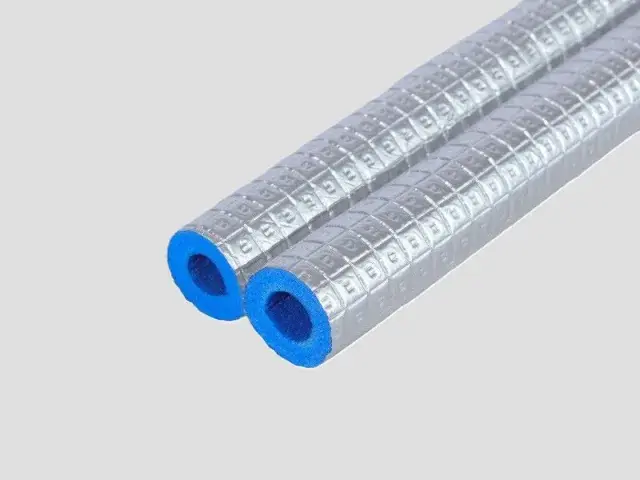
- Material: XPE or IXPE foam, optionally laminated with aluminium foil, non-woven or pressure-sensitive adhesive
- Expansion ratio: XPE 3–40×, IXPE 3–40×, IXPP 5–25×
- Thickness: XPE single layer 3–15 mm, IXPE single layer 0.1–15 mm, IXPP single layer 1–6 mm; thermally laminated multilayer 15–200 mm (XPE / IXPE) and 6–100 mm (IXPP)
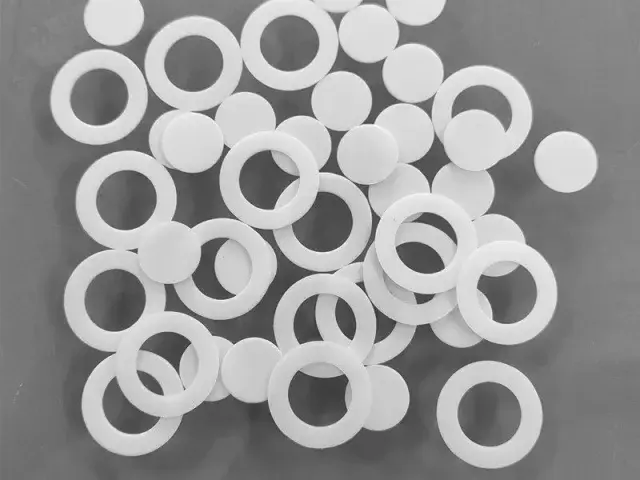
- Form: die-cut panel, gasket, sealing strip, slit roll or laminated sheet
- Flame-retardant grade: LOI 27, GB 8410 A0, UL94 V2 (grade-dependent)
Customization
Made to order: density, thickness, colour and shape to your drawing. Die-cutting, CNC routing, lamination to film or fabric, slitting and adhesive coating all run in-house, so the part we quote is a finished part, not just a sheet. How a custom part is cut and routed explains what to send with the drawing.
Regular material: MOQ 1,000 m², lead time 15–20 days from order confirmation. Custom parts are quoted from the drawing. A4 samples are free, shipping included.
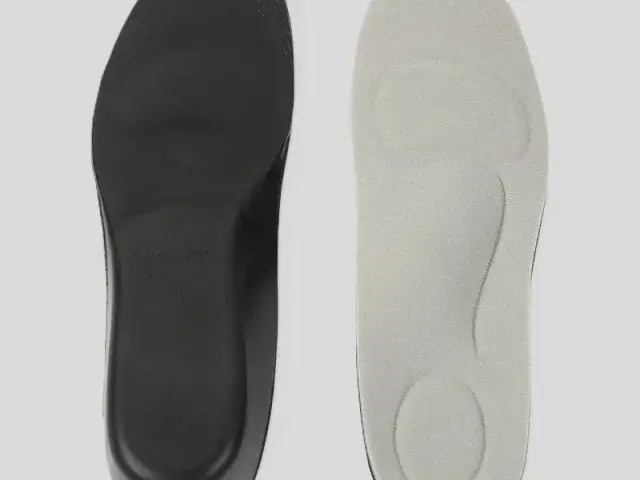
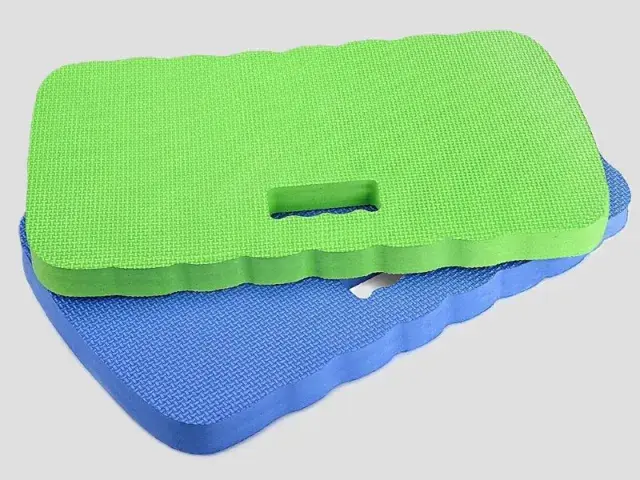
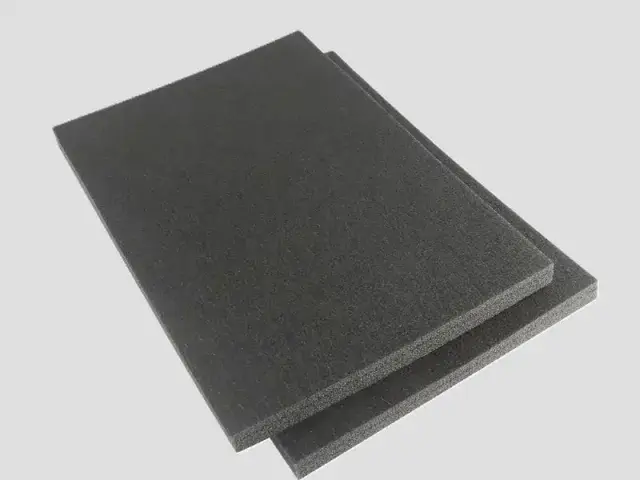
Home appliance foam is a die-cut part, not a roll good. Inside a refrigerator, freezer, air conditioner or washing machine it separates hot and cold, keeps condensation off cold surfaces, seals gaps, damps panel noise and cushions parts during assembly. The material is usually XPE or IXPE sheet; the part is cut to the appliance drawing and fixed by adhesive, clips or screws.
This page is about the part: which foam, which thickness, how it is cut and how it is fixed. It is not about the PU foam that fills a refrigerator cabinet — that is a different material and a different process.
What Appliance Foam Has to Do
An appliance part rarely has one job. The same sheet may be asked to do three or four of these at once:
- Thermal separation. Reduce heat flow between a cold compartment and a warm surface, so the cabinet holds temperature and the compressor cycles less.
- Anti-condensation. Keep the outer surface of a cold panel above the dew point, or interrupt the path that lets moisture reach it.
- Sealing. Close the gap between a panel and a frame, or between two mouldings, against air and moisture.
- Noise and vibration. Absorb airborne noise inside a casing and damp panel vibration from the compressor or fan.
- Cushioning. Take up assembly tolerance and stop hard parts from rubbing or rattling.
Write down which of these is dominant before choosing a grade. A part specified for sealing needs compression set and thickness recovery; a part specified for thermal separation needs the lowest practical thermal conductivity at the available thickness. The two are not always the same foam.
Where the Foam Goes
| Location | Job | Material usually considered | Form |
|---|---|---|---|
| Refrigerator inner liner and covers | Protect the liner, separate the cold side from the cabinet, reduce condensation on the outer skin | XPE or IXPE | Die-cut panel, sometimes foil-faced |
| Refrigerator and freezer door | Gasket backing, anti-condensation strip, panel cushioning | XPE, IXPE for thin sections | Die-cut gasket or strip |
| Compressor compartment | Thermal separation and noise; the area can run hot | IXPP where temperature demands it | Die-cut panel or partition |
| Air-conditioner casing and partition | Thermal separation plus noise absorption | XPE with aluminium foil | Die-cut panel |
| Washing machine top cover and drum surround | Noise and vibration damping, cushioning | XPE or IXPE | Die-cut pad or strip |
| Small appliance housing | Motor mount gasket, housing liner, rattle control | XPE or IXPE | Die-cut gasket |
One boundary matters: XPE and IXPE sheet are not a replacement for the PU foam that fills a refrigerator cabinet. The cabinet insulation is a poured or injected PU system. The polyethylene sheet is used for inner panels, covers, gaskets and partitions around that system. Mixing the two in a specification is a common and expensive mistake.
Material Choice: XPE, IXPE or IXPP
| Material | Single-layer thickness | Expansion | Where it fits | Watch |
|---|---|---|---|---|
| XPE | 3–15 mm | 3–40× | General panels, gaskets, sealing strips, cushioning | Cost-efficient; surface is rougher than IXPE |
| IXPE | 0.1–15 mm | 3–40× | Thin panels, visible inner surfaces, tight tolerances | Higher cost; use where thin or smooth matters |
| IXPP | 1–6 mm | 5–25× | Hot zones such as compressor compartments; stiffer parts | Stiffer and less conformable; max service temperature 140 °C |
Most appliance parts are XPE. IXPE appears where the section is thinner than 3 mm or where the visible surface has to stay smooth and clean. IXPP is the exception for heat: it is the grade to discuss when the part sits next to a compressor or another source of continuous heat. Do not use IXPP simply because it is “better” — it is stiffer, and a stiff part may not seal as well on an uneven panel.
Anti-Condensation: Why Closed Cell Matters
Condensation is a system problem: surface temperature, air humidity and air movement decide whether water forms. Foam helps by reducing the heat flow that makes a surface cold, and by interrupting the path that carries moisture. Closed-cell polyethylene foam does both reasonably well because the cells are not connected.
Our PE foams are specified at water absorption of 0.2% or less to 0.4% or less, depending on the grade (GB/T 1034, method 4). That is low, but it is not zero, and it is not the same as a vapour barrier. A foil facing can act as a vapour retarder only if the foil is continuous and the edges are sealed; a cut edge or a puncture lets moisture past. If the condensation target is tight, treat the foam as one layer in the assembly and seal the joints.
Thermal Performance and Density
Thermal conductivity for these foams is grade-dependent and falls in the range 0.040 to 0.095 W/(m·K) across the density range we supply. Lower density generally means lower conductivity, but it also means lower mechanical strength and less resistance to compression. The right grade is the one that holds its thickness in service, not the one with the best number on a data sheet.
We do not quote a whole-unit energy rating. Cabinet performance depends on the PU insulation, gasket design, compressor, door alignment and the test standard. We supply the material data; the appliance maker models or tests the cabinet.
Die-Cut Panels, Gaskets and Sealing Strips
Appliance parts are made by die cutting, CNC routing, slitting and lamination. The process choice follows the geometry:
- Die cutting for flat panels, gaskets and strips in volume. Holes, notches and outlines can be cut in one or more passes.
- CNC routing for prototypes, low volume and shapes that would need an expensive die.
- Slitting for sealing strips supplied on a roll, with or without adhesive.
- Lamination when the part needs foil, non-woven, film or adhesive on one or both faces.
Tell us the assembly gap, not only the nominal thickness. A part that is 0.5 mm too thick can stop a panel from seating; a part that is too thin will not seal. For a new part, approve a sample before the production run — the cost of one sample is small compared with a rejected moulding.
Lamination: Foil, Non-Woven and Adhesive
A foil facing does three things: it reflects radiant heat, it slows vapour transmission, and it protects the foam surface during assembly and service. The reflective effect only works if the foil faces an air space; pressed flat against a solid surface, it is just a dense film. Non-woven facings improve handling and abrasion resistance. Pressure-sensitive adhesive is the usual fixing method for flat panels; for parts that will be removed for service, use clips or screws instead of adhesive.
Foil is not a water barrier. If the appliance design needs a sealed vapour barrier, the barrier has to be a continuous system, not a foam facing with cut edges.
Specifications We Can Supply
| Property | XPE | IXPE | IXPP |
|---|---|---|---|
| Expansion ratio | 3–40× | 3–40× | 5–25× |
| Single-layer thickness | 3–15 mm | 0.1–15 mm | 1–6 mm |
| Thermally laminated multilayer | 15–200 mm | 15–200 mm | 6–100 mm |
| Apparent density | Grade-dependent, 26.8–300 kg/m³ | Grade-dependent; ask for the data sheet | |
| Water absorption | 0.2% or less to 0.4% or less, GB/T 1034 method 4 | Ask for the grade data | |
| Thermal conductivity | 0.040–0.095 W/(m·K), grade-dependent | Ask for the grade data | |
| Flame retardancy | LOI 27, GB 8410 A0, UL94 V2 (flame-retardant grades only) | ||
What We Do Not Claim
- No appliance-maker approval. We are a foam supplier, not a qualified tier-one supplier to a named appliance brand. If your programme needs PPAP or a customer-specific approval, that has to be agreed separately.
- No food-contact suitability. Refrigerator and freezer parts sit near food, but our standard foam is not supplied as a food-contact material. If the part will touch food directly, say so before quoting; we will decline if we cannot support it.
- No whole-unit energy or condensation guarantee. We provide material data and part geometry; the appliance maker owns the cabinet test.
- No fire-barrier claim. Flame-retardant grades meet UL94 V2 and LOI 27; that is a material flammability result, not a fire barrier.
Ordering, MOQ, Lead Time and Sample
- MOQ: 1,000 m² for standard roll or sheet. Custom die-cut parts are quoted separately against the drawing and annual volume.
- Lead time: 15–20 days from order confirmation for standard material. A new die-cut part includes sample approval and tooling time.
- Sample: an A4 piece is free; we pay the freight.
- What to send: the drawing (2D is enough), assembly gap, service temperature, fixing method, annual quantity and any flame-retardant requirement.
FAQ
Is XPE the same as the PU foam in a refrigerator cabinet?
No. The cabinet is insulated with PU foam, usually poured or injected. XPE and IXPE are polyethylene sheet used for inner panels, covers, gaskets and partitions. They are not interchangeable with the cabinet insulation.
Can the foam sit next to the compressor?
It depends on the surface temperature. XPE and IXPE have a lower continuous temperature ceiling than IXPP. Measure or estimate the temperature at the part, then choose; if the part sees continuous heat near the ceiling, IXPP is the grade to discuss.
Will a foil facing stop condensation?
It helps, but it is not a guarantee. Foil reflects radiant heat and slows vapour transmission when it is continuous and faces an air space. Cut edges, joints and punctures are paths for moisture. The cabinet design still has to control surface temperature and air movement.
Can you die-cut to our drawing?
Yes. Send a 2D drawing or a sample; we will confirm the die, the tolerance and the sample lead time. For a new part, approve the first sample before volume production.
Is the foam suitable for food contact?
Our standard appliance foam is not supplied for direct food contact. If the application requires a food-contact material, tell us before quoting; we will only proceed where we can support the claim.
Related Applications
HVAC insulation foam · Air conditioner panel foam · Laminated foam · Custom foam inserts · Foam lamination: four methods · Cross-linked PE foam materials