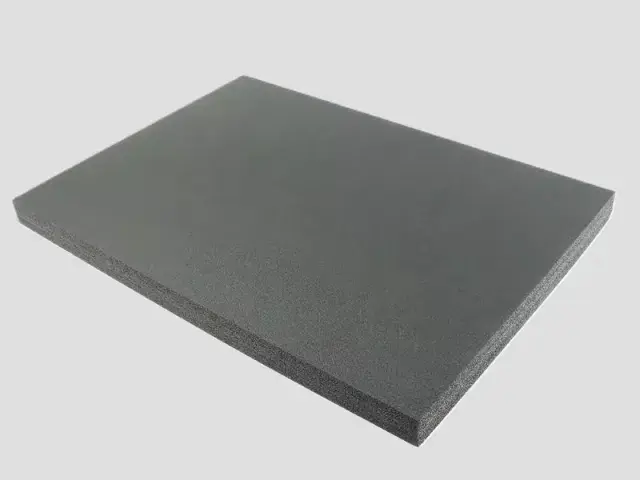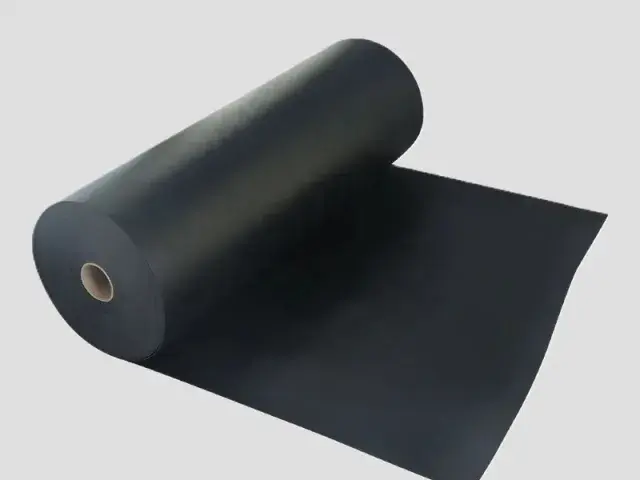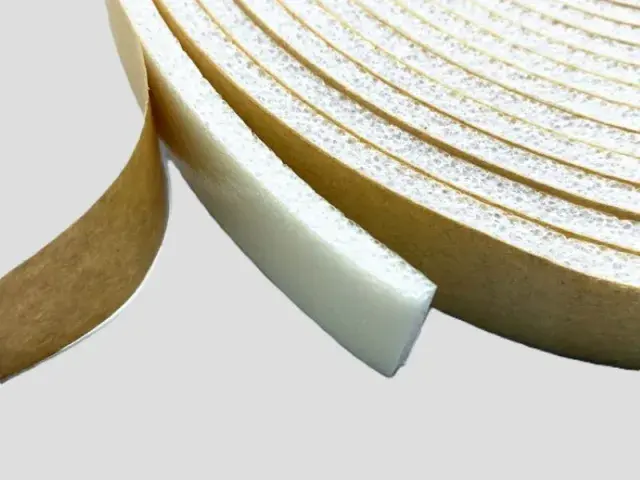

- Material: XPE (chemical cross-linked PE) or IXPE (irradiation cross-linked PE), closed cell
- Expansion ratio: 3–40×; lower ratio gives a denser, firmer protector
- Apparent density: 26.8–300 kg/m³, grade-dependent
- Sheet width: 500–2000 mm; cut to profile
- Thickness: XPE single layer 3–15 mm, IXPE single layer 0.1–15 mm; laminated 15–200 mm
- Profiles: L, U, three-sided corner cap, edge strip, custom outline
- Fixing: pressure-sensitive adhesive, double-sided tape, friction fit
- Colour: black, white, grey, custom
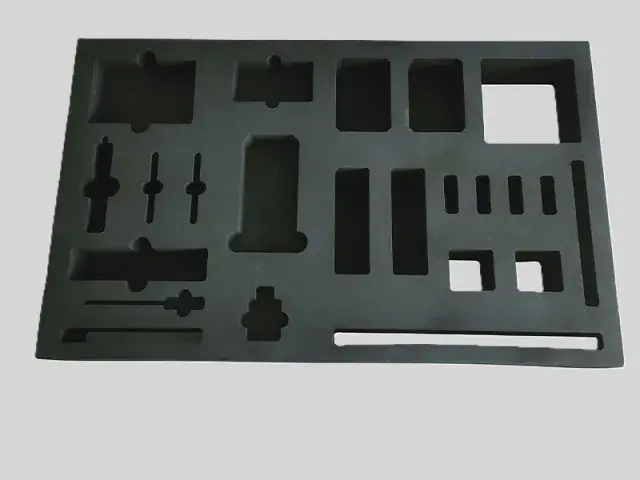
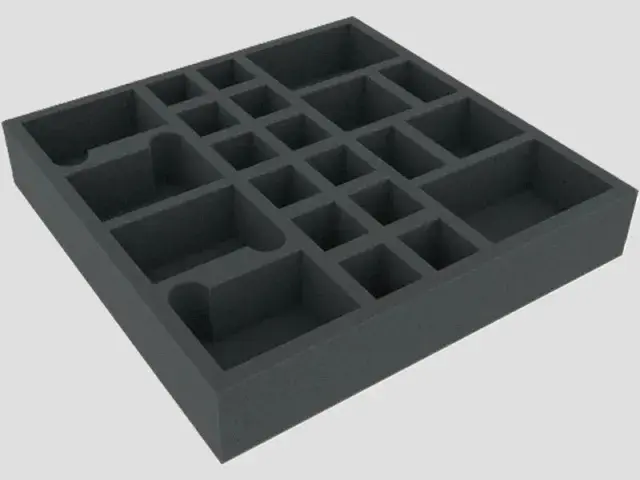
- Conversion: die-cutting, CNC milling, lamination, slitting, adhesive backing
Customization
Made to order: density, thickness, colour and shape to your drawing. Die-cutting, CNC routing, lamination to film or fabric, slitting and adhesive coating all run in-house, so the part we quote is a finished part, not just a sheet. How a custom part is cut and routed explains what to send with the drawing.
Regular material: MOQ 1,000 m², lead time 15–20 days from order confirmation. Custom parts are quoted from the drawing. A4 samples are free, shipping included.
A foam corner or edge protector is a replaceable cushion fitted to the corner or edge of a product or carton. It takes the impact or abrasion that would otherwise reach the product, and it is the first part to be damaged. It is not a structural brace, and it does not make a weak carton strong.
We cut the protectors: closed-cell XPE or IXPE sheet, die-cut or CNC-milled into L, U and corner-cap profiles, with or without adhesive. The pack design, the drop height and the validation test belong to the packaging engineer.
Where Corner and Edge Protection Is Used
- Cartons and cases. Protect the eight corners and twelve edges of a carton from scuffing and crushing.
- Glass, ceramics and panels. Separate and cushion flat or fragile edges in a crate or stillage.
- Furniture and joinery. Guard edges and corners during transport and in storage.
- Appliances and equipment. Cushion the corners of a cabinet or housing inside a carton.
- Reusable packaging. Line a returnable crate or tray where the product touches a hard edge.
Profiles We Cut
| Profile | Shape | Typical use | Note |
|---|---|---|---|
| Corner cap | Three faces meeting at a corner | Carton corners, cabinet corners, panels | Covers all three faces; the fit controls how well it stays on |
| L profile | Two legs at 90° | Edges and rims of panels, doors, boards | Leg length is set by the drawing; longer legs spread the load |
| U profile | Three sides, open on one face | Edges of glass, sheet and board | Holds the edge on both faces; check the opening against the material thickness |
| Edge strip | Narrow strip or slit roll | Long edges, repeated protection along a run | Needs tape or adhesive; less repeatable than a die-cut piece |
| Custom outline | Die-cut to the product outline | Irregular products, recessed corners | Send the drawing or a sample; a new die includes sample approval |
Material Choice: XPE or IXPE
| Material | Thickness | Why it fits | Limit |
|---|---|---|---|
| XPE | 3–15 mm single layer; 15–200 mm laminated | Tough, cost-effective, resists tearing at corners, good for thicker sections | Rougher surface; thicker sections need lamination |
| IXPE | 0.1–15 mm single layer; 15–200 mm laminated | Thin, smooth, clean-looking; tight tolerance for a precise fit | Higher cost; very thin pieces offer little cushioning |
For a carton corner that has to absorb a knock, XPE at a medium density is the usual choice because it is tough and does not split at the fold. For a thin, clean edge guard on a finished product, IXPE is better. Neither material turns a weak carton into a strong one.
Choosing Thickness and Density
Thickness sets how much the protector can deflect before the product feels the load. A thicker protector spreads the same impact over a longer distance, but it also takes up more space in the pack. Density sets how stiff the protector is: a denser board resists compression and stays in shape; a lighter board conforms more but bottoms out sooner.
Our range runs from 26.8 to 300 kg/m³ depending on the expansion ratio. For most carton and furniture protection, a medium density is enough; for a heavy panel or a sharp glass edge, go denser and thicker. Tell us the product weight, the corner radius and the pack size, and we will quote a thickness and density to review against the pack design.
Fixing the Protector
- Friction fit. A die-cut cap or U profile can hold itself on the corner or edge. It is the cleanest option and the easiest to remove, but the fit has to be right.
- Pressure-sensitive adhesive. Fast and secure, but permanent; the protector cannot be repositioned without damage.
- Double-sided tape. A compromise: secure enough for transport, and removable if the tape is chosen for the surface.
- Tape or banding. Useful for edge strips and for a temporary hold that the packer applies by hand.
Whatever the fixing, check that the protector cannot rotate or slide off during handling. A corner cap that falls off in the carton protects nothing.
Design Checklist
- Which corners and edges actually need protection, and which are already protected by the carton?
- What is the product weight and the expected drop or impact?
- What is the corner radius or edge thickness the protector has to fit?
- Does the protector have to be removable, or can it be permanent?
- Does the pack need to be opened and reclosed, or is it single-trip?
- Is the product sensitive to dust or abrasion from the foam surface?
What We Do Not Claim
- No drop-test certification. We do not test or certify a pack to ISTA, ASTM D4169 or any other distribution standard, and we do not issue a cushion-curve or drop-height rating.
- No validated pack. We supply the protector, not a validated packaging system. The pack performance depends on the carton, the product, the internal fitment and the handling.
- No structural strength. The protector cushions; it does not reinforce the carton or carry load.
- No food-contact suitability. Our standard foam is not supplied as a food-contact material. If the protector will touch food directly, say so before quoting.
- No cleanroom or medical claim. We do not supply a cleanroom-qualified or medical-grade protector.
Specifications We Can Supply
| Property | XPE | IXPE |
|---|---|---|
| Expansion ratio | 3–40× | 3–40× |
| Apparent density | 26.8–300 kg/m³, grade-dependent | |
| Single-layer thickness | 3–15 mm | 0.1–15 mm |
| Laminated sections | 15–200 mm | 15–200 mm |
| Sheet width | 500–2000 mm; cut to profile | |
| Water absorption | 0.2% or less to 0.4% or less, GB/T 1034 method 4 | |
| Compression set | 2% or less to 11% or less, GB/T 6669 | |
| Fixing | Pressure-sensitive adhesive, double-sided tape, friction fit | |
Ordering, MOQ, Lead Time and Sample
- MOQ: 1,000 m² for standard sheet. Die-cut protectors are quoted against the drawing and the annual volume.
- Lead time: 15–20 days from order confirmation for standard material; a new die includes sample approval and tooling.
- Sample: an A4 piece is free; we pay the freight. For a die-cut profile, a sample of the die-cut piece is quoted with the first order.
- What to send: the product or carton drawing, the corner radius or edge thickness, the product weight, the fixing method and the annual quantity.
FAQ
What density should a carton corner protector be?
It depends on the product weight and the drop. A medium density is enough for most cartons; a heavy or fragile product needs a denser and thicker protector. Send the product weight, the carton size and the expected drop, and we will quote a starting point for your pack design to review.
Can the protector replace a moulded pulp or plastic corner?
In many packs, yes, for cushioning and edge protection. Foam is lighter and easier to die-cut to an irregular outline. The trade-off is stiffness: a moulded corner can be rigid, and foam is not. Check the pack design before substituting.
Will the adhesive damage the product?
It can. Pressure-sensitive adhesive is permanent on most surfaces. If the protector has to come off cleanly, use a friction fit or a tape chosen for the surface, and test on a sample first.
Can the foam touch food?
Our standard foam is not supplied for direct food contact. If the protector will touch food, tell us before quoting; we will only proceed where we can support the claim.
Can you match a corporate colour?
Yes, within the range we can produce. Send the colour reference with the drawing; a custom colour is confirmed with the sample.
Related Applications
Packaging foam · Glass packaging foam · Ceramic packaging foam · Custom foam inserts · Laminated foam · XPE and IXPE materials