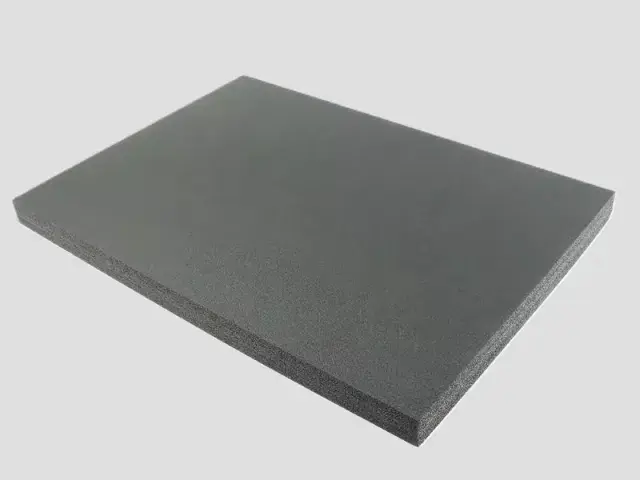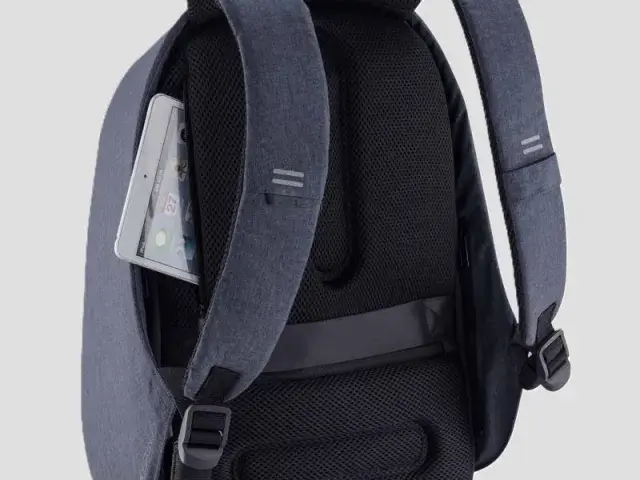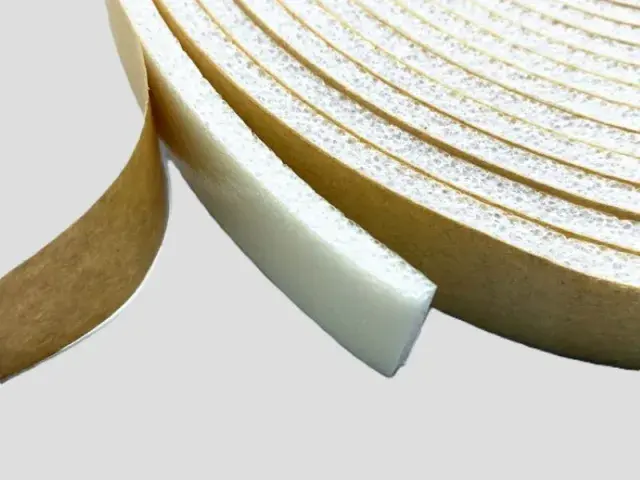
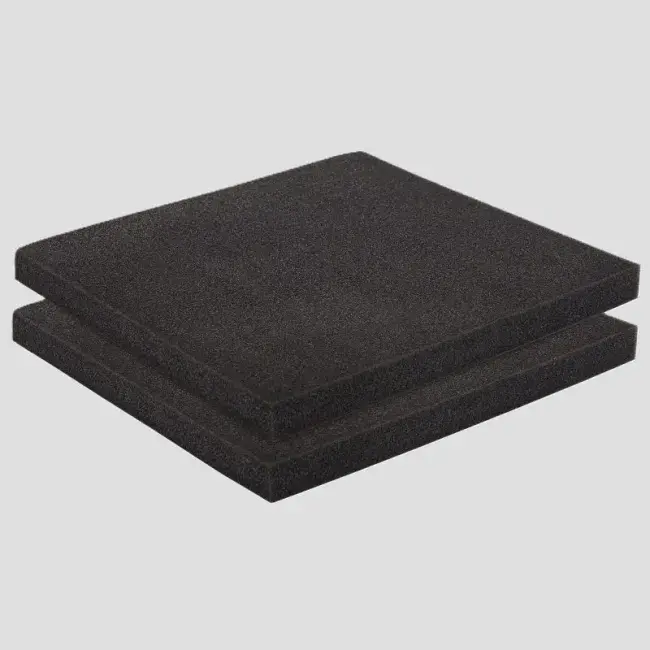
- Material: IXPE (irradiation cross-linked PE) foam; XPE and IXPP also available
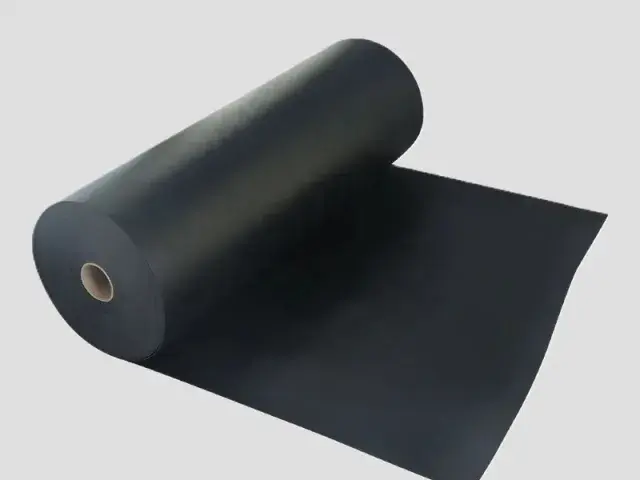
- Range: 3–40× expansion; 26.8–300 kg/m³; single layer 0.1–15 mm; laminated 15–200 mm; width 500–2000 mm
- Cell structure: closed cell; water absorption ≤0.2–0.4% by ratio (GB/T 1034 method 4)
- Compression set: ≤2–11% at 23±2 °C, 22 h (GB/T 6669), ratio-dependent
- Thermal conductivity: ≤0.040–0.095 W/m·K (GB/T 10297)
- Flame-retardant grade: LOI 27, GB 8410 A0, UL94 V2 (material level)
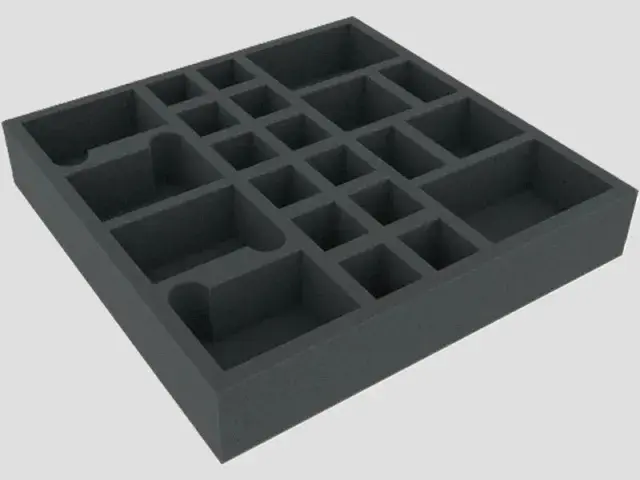
- Forms: transit cushion, cabinet liner, door seal strip, vibration pad, end block, gasket, dunnage
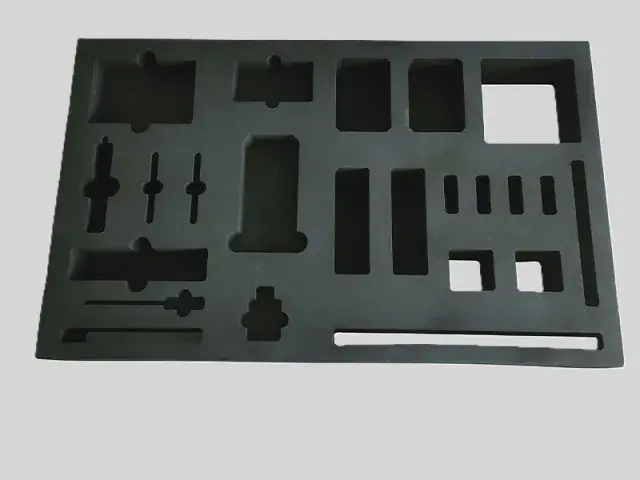
- Conversion: die-cutting, CNC routing, slitting, lamination, adhesive backing, embossing
Customization
Made to order: density, thickness, colour and shape to your drawing. Die-cutting, CNC routing, lamination to film or fabric, slitting and adhesive coating all run in-house, so the part we quote is a finished part, not just a sheet. How a custom part is cut and routed explains what to send with the drawing.
Regular material: MOQ 1,000 m², lead time 15–20 days from order confirmation. Custom parts are quoted from the drawing. A4 samples are free, shipping included.
Electromechanical equipment — motors, pumps, compressors, gearboxes, control cabinets, switchgear — is heavy, often has a rotating part, and is usually shipped or stored in a way that puts shock and vibration through the frame. Foam is used around it for four jobs: transit cushioning, cabinet and door sealing, sound-absorbing liners, and vibration and gap pads. Each job has a different acceptance question, and the foam data that answers one does not answer the others.
Request a quote · Request A4 samples · Ask for selection help
Where the foam is used
- Transit cushions and end blocks. Foam inside the shipping crate or between the machine and the pallet, to take shock before it reaches the frame or the bearings.
- Cabinet liners. Foam on the inside walls of a control cabinet or enclosure, for separation, gap filling and as a sound-absorbing layer.
- Door and panel seals. Closed-cell foam strips on cabinet doors, access panels and inspection covers, to close a gap against dust and splash.
- Vibration and gap pads. Foam pads between a component and a bracket, or between two parts that must not rub.
- Gaskets and dunnage. Die-cut gaskets around openings, and void fill inside the pack.
Cushioning: what has to be defined
A transit cushion is specified by the load it must protect and the shock it must absorb, not by density alone. Define the equipment mass, the drop or shock level from the transport standard, the contact area, the free thickness and the compression the foam will see. IXPE compression set is ≤2–11% at 23±2 °C over 22 h depending on ratio, and the closed-cell structure gives low water absorption (≤0.2–0.4% by ratio).
These are material tests. They do not certify that a packed machine survives a drop test; that is a pack-level test with the actual crate, the actual mass and the actual drop height.
Sealing: closed cell, but not an airtight rating
IXPE’s closed-cell structure resists water uptake and makes it a common choice for door and panel seals. What we do not publish is an airtightness, watertightness or ingress-protection rating for a finished seal. The sealing performance depends on the strip geometry, the compression, the frame flatness, the adhesive and the closing force. If the enclosure must meet an IP rating, test the assembled cabinet; do not infer the rating from the foam.
Sound: a liner, not a measured absorber
Cross-linked PE foam is widely used as a sound-absorbing and decoupling liner inside equipment cabinets. We do not publish acoustic absorption coefficients or transmission-loss data for these grades. Treat the foam as one layer in an acoustic design that the equipment maker validates; do not quote a noise-reduction figure from the material.
Temperature and the rotating part
Motors and compressors produce heat, and the foam near them must tolerate the actual surface and air temperature. Standard IXPE grades and the high-temperature grade (110 °C working environment, shrinkage ≤8%) have different limits; the label-grade IXPE sheet states a recommended constant use maximum of 70 °C. IXPP source data gives up to 140 °C. Confirm the temperature at the foam’s location, not the machine’s rated ambient.
Foam is not a structural mount
A foam pad can isolate, decouple and take up gap. It is not a structural mount and we do not publish vibration transmissibility, dynamic stiffness or a fatigue life for a loaded mount. Where a machine must be held rigidly, or where vibration isolation is a design requirement, the mount is an engineered part and the foam is at most a secondary pad.
What to send for a quote
| Item | What to provide |
|---|---|
| Part | Drawing or sketch with dimensions and tolerance |
| Function | Cushion, seal, liner, gap pad or dunnage |
| Load | Mass carried, contact area, installed compression |
| Environment | Temperature at the part, humidity, oil or coolant exposure, cleaning |
| Seal | Gap width, frame flatness, closing force, IP requirement if any |
| Adhesive | Substrate, surface energy, service temperature |
| Quantity | Annual quantity and pack size |
What this page does not claim
No structural or vibration-isolation rating. No transmissibility, dynamic stiffness or fatigue data is published for a loaded mount.
No acoustic coefficient. The foam is a liner; absorption and transmission-loss values must be measured by the equipment maker if they are needed.
No IP or airtightness rating for a finished seal. Sealing performance is an assembly property.
No dielectric rating. The foam is not electrical insulation for a live conductor.
No lifetime promise. Compression set, dimensions and sealing force change with temperature, time and compression. Define the service conditions and test the assembled part.
Flame rating is material-level only. LOI 27, GB 8410 A0 and UL94 V2 describe the material, not the cabinet or the assembly.
Ordering, MOQ, lead time and samples
Standard material: MOQ 1,000 m². Custom cut parts: minimum quantity confirmed from the drawing. Standard lead time is 15–20 days from order confirmation. A4 material samples are free with freight included; machined samples and tooling are quoted separately.
FAQ
Can the foam be used as a motor mount?
No. It can be a secondary pad or a gap filler. A loaded structural or vibration-isolating mount is an engineered part, and we do not publish the data such a mount needs.
Will the seal keep water out of a cabinet?
The foam is closed-cell and resists water uptake, but we do not publish an IP or watertightness rating for a finished seal. Test the assembled cabinet if an IP rating is required.
How thick should a transit cushion be?
It follows from the mass, the contact area, the drop height in the transport standard and the allowed compression. A cushion sized only by “a few centimetres” is not a design.
Does the foam reduce noise?
It is commonly used as a liner, but we do not publish absorption coefficients or transmission loss. Any noise-reduction claim must come from a test on the assembled equipment.