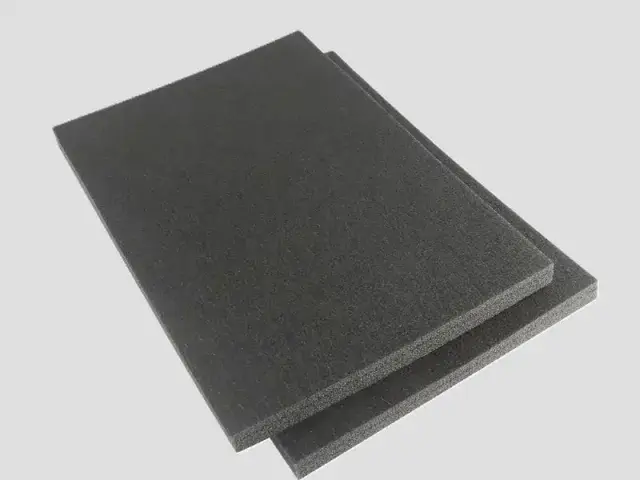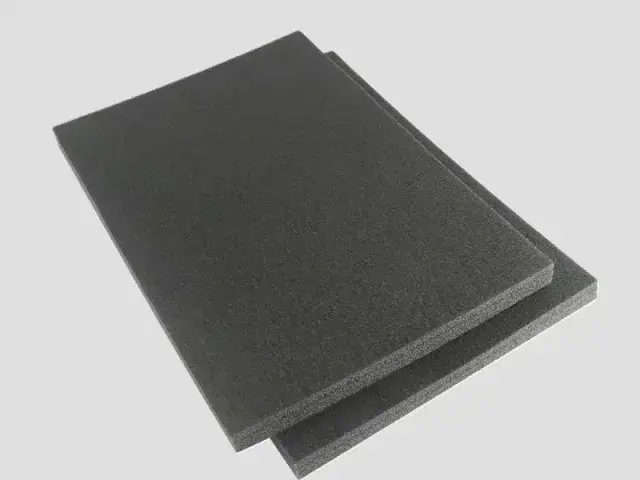
- Material: XPE foam (chemical cross-linked polyethylene)
- Expansion ratio: 3–40 times (26.8–300 kg/m³)
- Thickness: single-layer 3–15 mm; thermally laminated (multi-layer) 15–200 mm
- Width: 500–2000 mm (width can be customized)
- Colour: black, white, gray (colour can be customized)
- Cross-linking: chemical
Customization
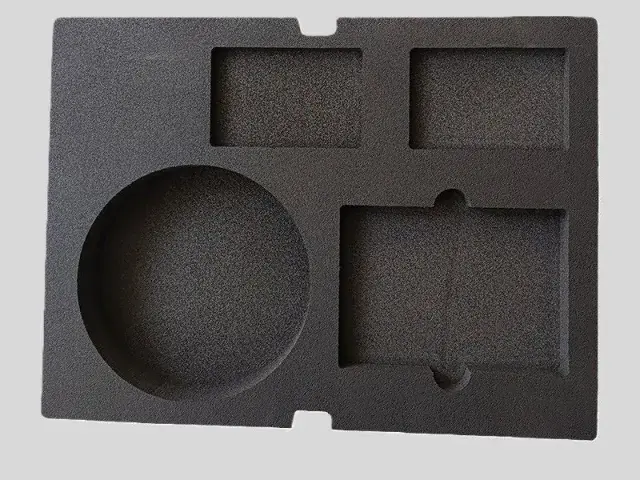
Made to order: density, thickness, colour and shape to your drawing. Die-cutting, CNC routing, lamination to film or fabric, slitting and adhesive coating all run in-house, so the part we quote is a finished part, not just a sheet. How a custom part is cut and routed explains what to send with the drawing.
Regular material: MOQ 1,000 m², lead time 15–20 days from order confirmation. Custom parts are quoted from the drawing. A4 samples are free, shipping included.
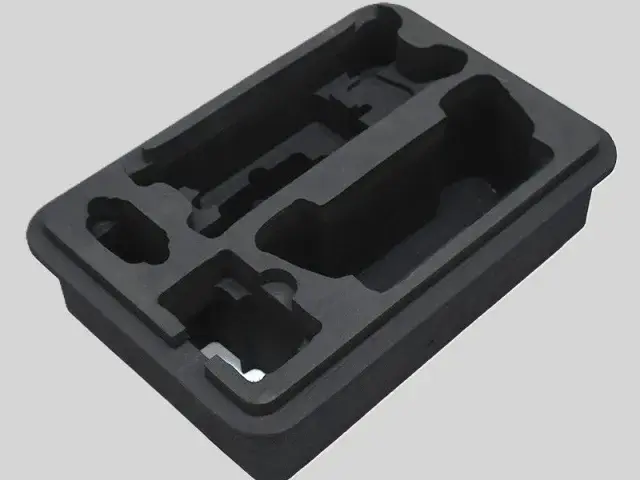
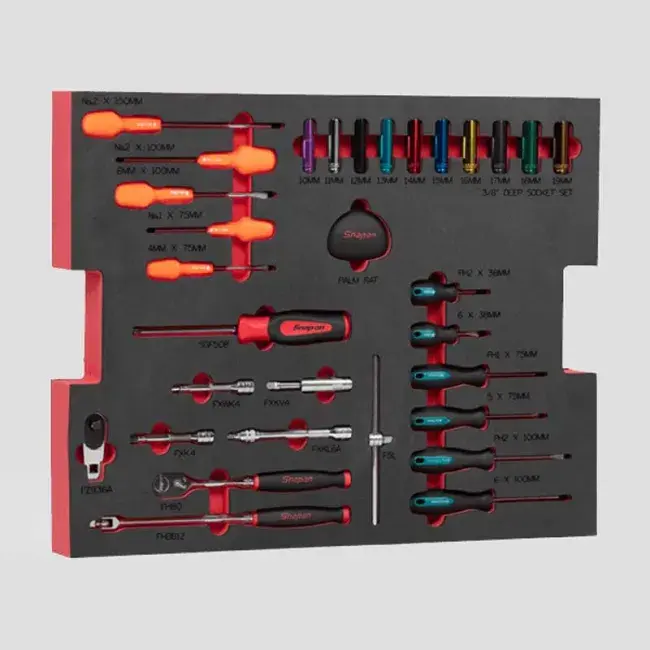
Shadow foam — also called shadow board — gives every tool its own cut-out, so the board itself shows what is missing. Instead of counting items at the end of a shift, a glance at the silhouette tells you whether the kit is complete. Bofeng cuts shadow foam to the outline of your tools, in a coloured top layer over a contrast base so gaps are easy to read.
Features
- Tool control by silhouette – each tool has one cut-out, so a missing item is visible immediately.
- Custom cutting – die-cut or CNC-cut to the outline of your tools.
- Colour contrast – a coloured top layer makes missing tools stand out against the base.
- Cushioning and grip – holds tools in place and protects edges and cutting faces.
- Wear resistant – closed-cell foam keeps its shape under daily use.
- Easy to clean – a non-absorbent surface that wipes clean of oil and swarf.
Applications
- Aviation and aerospace tool control – a standard practice for foreign object debris control.
- Automotive and motorsport workshops – tool boards and trolley drawers.
- Machine shops – gauges and cutting tools held in numbered positions.
- Field service cases – portable kits where a missing tool must be obvious.
- Medical and instrument kits – trays that show at a glance whether a set is complete.
Specifications for shadow foam
Shadow foam is a two-layer tool drawer liner: a firm base that is cut away and a contrasting top layer that shows the shape.
| Foam | Expansion | Apparent density | Single-layer thickness | Why this grade |
|---|---|---|---|---|
| XPE | 8–15× | 66.7–125 kg/m³ | 3–15 mm (heat-bonded 15–200 mm) | Firm and consistent enough that a routed cavity keeps its shape and does not slump. Heat bonding gives the 30–50 mm drawer depths. |
| XPE | 25–35× | 28.6–40 kg/m³ | 3–15 mm | The contrasting top layer, where a different density gives a clean colour break. |
Base material specifications are on the XPE, IXPE and IXPP material pages; finished products are on the XPE foam and IXPE foam pages. Tell us the load, the space available and the service temperature and we will confirm the grade against your drawing.
Why Choose Bofeng Foam
- Cut to your tool outlines from a drawing, a photograph or a physical tray.
- Coloured surface layer over a contrast base.
- XPE foam, with other materials on request.
- Layouts revised until the fit is right before production.
- Samples available before you commit to a run.
Shadow foam is a routed part, and what drives the cost of a routed cavity is explained in our die-cutting and CNC routing guide.
Shadow Foam: Confirm Whether the Part Is Routed, Cut Through or User-Layered
Choose the Tool-Control Format
A contrasting foam layer can make a missing item visible. It does not automatically make the sheet a peel-out product or give it a calibrated removal depth. Describe whether you need a finished routed insert, a die-cut profile or a layered sheet intended for further work. Confirm the actual process and responsibility before comparing quotations.
Keep the Base Under the Deepest Tool
Provide actual tools or their verified geometry, including handles and accessories. State cavity depth, remaining base, finger access and the case. A visible top outline alone cannot define the support below a heavy tool. Check extraction without levering an item against a fragile bridge or delaminating the contrast layer.
Identify Materials and Bonds
Specify the material, colour and thickness of each layer and the bonding arrangement. Processing capability for a customer-specified material does not establish in-house production of that material or its properties. Where an alternative is proposed, confirm its source and specification instead of borrowing XPE or IXPE data.
Approve the Actual Tool Set
Keep the toolbox, tools, drawing and first sample as a controlled reference. Review replacement tools and exposure to oils or cleaners. Tool visibility, easy removal and transit retention are separate acceptance questions; approve each for the intended duty rather than inferring them from colour contrast.
For sample identity, dimensions and the acceptance record, use the first-article review checklist with the application-specific checks above.
Tool-Control Approval Should Include a Change List
Before fixing a cavity drawing, ask which tools may be replaced during the life of the case. A nominally equivalent spanner or powered tool may have a different handle, battery or accessory. Mark which cavities are tied to a specific tool reference and which have an agreed adjustment route. If the insert is supplied finished, confirm who updates the drawing and how the revised sample is approved. If later cutting by another party is intended, distinguish that scope from the supplied part.
Keep the contrast layer and base identifiable in that change record. A new top colour can conceal a changed facing or bond, while a deeper cavity can reduce the remaining support. Compare the revised loaded case with the approved reference and inspect extraction as well as retention. This review defines what was accepted; it does not establish a universal material lifetime or certify transport performance.
Include the intended roll direction in the approved drawing so converted parts can be identified consistently.
Conclusion & Inquiry
Packaging foam covers the wider range of inserts and trays, and tool box foam inserts applies the same cut-to-outline idea inside a closed case. Contact us with your tool list or a photograph of the current tray and we will quote a layout.