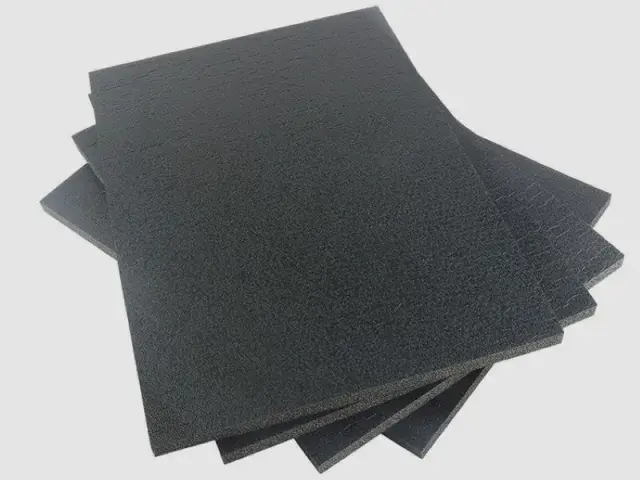
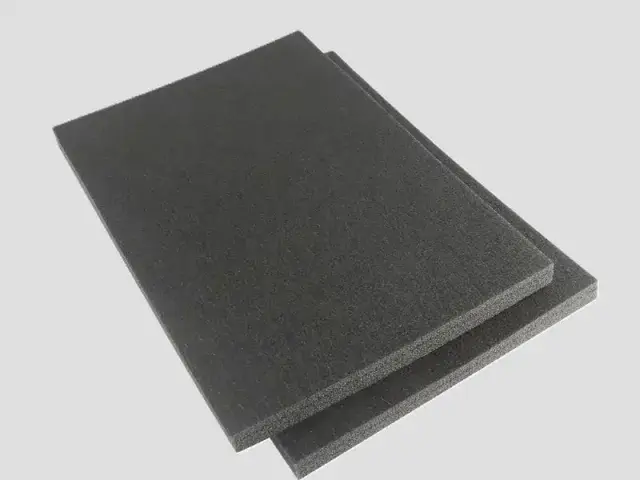
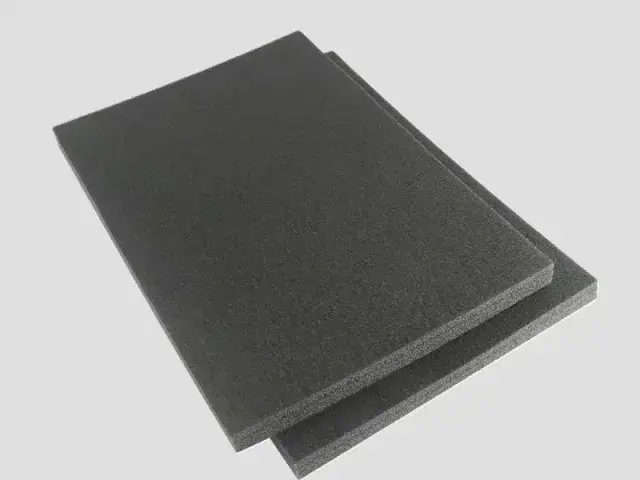
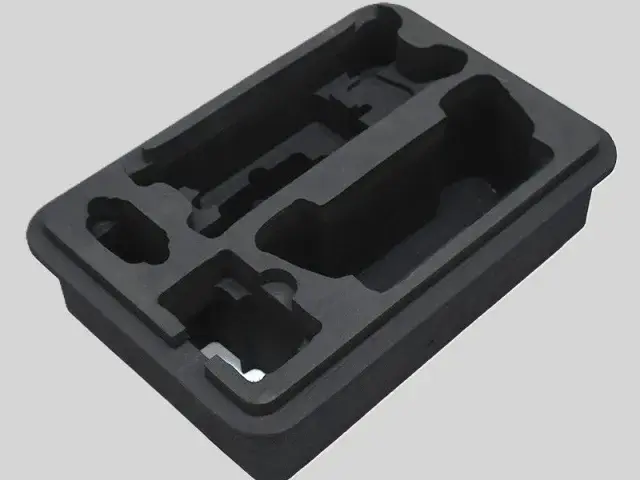
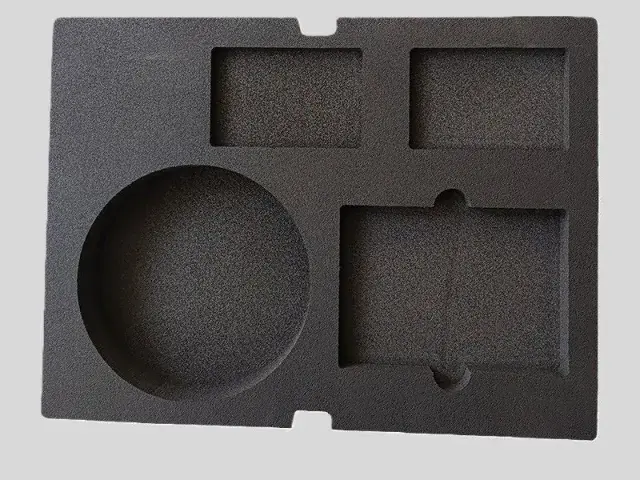
- Material: XPE foam, IXPE foam
- Expansion ratio: 10 times (100 kg/m³) – 15 times (66 kg/m³)
- Thickness: 3 mm, 4 mm, 5 mm (thickness can be customized)
- Width: 1 m, 1.2 m, 1.5 m (width can be customized)
- Colour: custom colours available
Customization
Made to order: density, thickness, colour and shape to your drawing. Die-cutting, CNC routing, lamination to film or fabric, slitting and adhesive coating all run in-house, so the part we quote is a finished part, not just a sheet. How a custom part is cut and routed explains what to send with the drawing.
Regular material: MOQ 1,000 m², lead time 15–20 days from order confirmation. Custom parts are quoted from the drawing. A4 samples are free, shipping included.
Lifejacket foam is the buoyancy material inside a personal flotation device. Bofeng Foam produces it in XPE and IXPE at 10× to 15× foaming, and supplies it to the manufacturers who build and approve the finished device. The foam is the buoyancy element; the approval of the garment around it belongs to the device manufacturer.
Features
- Buoyancy from closed cells: the foam traps air in cells water cannot enter, so it keeps displacing water and supporting the wearer rather than gradually becoming waterlogged.
- Low water uptake: because the cells are closed, the foam absorbs very little water and does not become heavier over a period of immersion.
- Density for a thin section: at 10× (100 kg/m³) to 15× (66 kg/m³) the foam delivers buoyancy in the thin sections a wearable device allows.
- Recovery after compression: cross-linking means the foam returns to thickness after being squeezed, so buoyancy is restored after the device has been sat on or stored flat.
- Tear and abrasion resistance: the material stands up to the handling and the fabric abrasion inside a jacket.
- Water and ageing requirements must be verified for the specified foam component and complete flotation product. No universal seawater or sunlight lifetime is declared.
Applications
- Lifejackets and buoyancy aids
- Marine and fishing workwear flotation
- Swimming and learn-to-swim aids
- Water-sports flotation panels
- Rescue and training equipment
Specifications for lifejacket foam
Lifejacket foam has to stay buoyant and keep its shape through repeated wetting and drying.
| Foam | Expansion | Apparent density | Single-layer thickness | Why this grade |
|---|---|---|---|---|
| XPE | 8–15× | 66.7–125 kg/m³ | 3–15 mm | Closed-cell structure with water absorption under 0.2%, so the jacket does not take on water weight. |
| IXPE | 15–25× | 40–66.7 kg/m³ | 0.1–15 mm | Thin panels for a low-profile vest. |
Base material specifications are on the XPE, IXPE and IXPP material pages; finished products are on the XPE foam and IXPE foam pages. Tell us the load, the space available and the service temperature and we will confirm the grade against your drawing.
Why Choose Bofeng Foam
We supply buoyancy foam at 10× to 15× foaming in 3 mm, 4 mm and 5 mm, in widths of 1 m, 1.2 m and 1.5 m, in colour with colour made to order, in both XPE and IXPE. We produce the foam material to the density and gauge the device manufacturer specifies; the buoyancy rating, the approval and the marking of the finished lifejacket rest with that manufacturer and the standards body it works to. The base material is described on the XPE foam page, and a related buoyancy product is the swimming flotation board.
In-house conversion. Buoyancy panels are thin and often shaped: we slit or die-cut to the pattern the device manufacturer specifies, and heat-bond layers where the vest needs more than a single sheet. The buoyancy rating, approval and marking stay with that manufacturer. Regular material starts at 1,000 m²; cut panels are quoted from the drawing.
Buoyancy per unit volume, and why water uptake decides how long a float stays a float, is set out in our flotation foam guide.
Lifejacket Foam Components: Preserve the Boundary Between Material and Device
Identify the Approved Product Design
Provide the component drawing, panel arrangement, intended material and the finished-device requirements from the responsible maker. Foam material supply is not a lifejacket, personal-flotation or rescue-device approval. Do not select a user-load or flotation category from density alone.
Check the Installed Panels
Evaluate panel fit, retained thickness, joins and the surrounding textile or restraint in the complete construction. Bending and assembly can change the condition of the foam compared with a loose specimen. Keep each layer and location identifiable so test results refer to the actual product.
Do Not Transfer a Short Test Into Service Life
Material water uptake and compression-set results have defined conditions. They do not establish long-term flotation retention, seawater-ageing performance or the number of storage and wearing cycles. Any such requirement needs appropriate evidence for the selected component and assembled device.
Control Materials and Changes
Keep the approved grade, thickness, panel pattern and test reference with the order. A changed adhesive, cover or layout may require review by the finished-device maker. No generic UV lifetime or saltwater durability is promised by this page; request the applicable evidence before making those claims for a product.
For sample identity, dimensions and the acceptance record, use the first-article review checklist with the application-specific checks above.
Supplying flotation foam within a lifejacket development programme
Begin with the finished product specification
A lifejacket foam enquiry should identify the finished product design, intended users and the approval framework selected by its manufacturer. The supplier needs to know where the foam sits in the garment and whether it is supplied as individual cut pieces, layered inserts or another confirmed form. A piece of low density foam is not a lifejacket, and a material description cannot establish the buoyancy, stability or protective performance of the finished article.
Provide the approved or proposed pattern set and identify the location and orientation of each piece. Show the carrier pockets, closures and restraints that hold the foam in place. If the design includes several component sizes, assign them distinct identifiers. The manufacturer's sample and test records should make clear which arrangement was evaluated rather than allowing a visually similar set of inserts to stand in for every version of the garment.
Review fit without substituting it for approval testing
At the first article stage, check that the cut pieces fit the intended pockets and remain in the correct orientation during assembly. Review edges, folds and the interaction with seams or closures. If the foam is difficult to insert, identify whether the issue is the cut pattern, the carrier dimensions or the assembly sequence. Do not solve a fitting problem by informally trimming a component that forms part of an approved product design.
The product manufacturer must define and conduct the appropriate finished article assessments. Material water absorption and density values do not provide the finished lifejacket's buoyancy or its behaviour on a wearer. Comfort observations, dimensional fit and regulatory test results are different kinds of evidence. Keep them separate in the release record so a favourable fit trial is never cited as proof that a safety requirement has been met.
Control substitutions and care information
Identify the foam grade, dimensions, layer construction and any bonding or covering included in the supply. Changes to these features should be reviewed through the finished product manufacturer's change process. A substitute that has the same colour and approximate hand feel is not automatically equivalent. Where reports or approvals refer to a defined construction, preserve that link rather than treating the material family as sufficient traceability.
Give the supplier the proposed cleaning, drying and storage process for compatibility review. The garment maker remains responsible for the instructions supplied with the finished product and the evidence supporting them. Do not infer a replacement interval or a service life from a simple foam recovery result. If the manufacturer defines inspection and retirement criteria, ensure the component identification supports its ability to investigate and control those decisions.
Prepare the order and evidence package together
A production order should reference the pattern revision, component schedule, confirmed material description and approved first article. State the documentation and traceability expected for release before the order is accepted. Retain the relevant sample identification with any finished product test evidence so later questions can be tied to an actual configuration. This is particularly important when one garment design is offered in several sizes or markets.
When discussing an application with customers, distinguish supply capability from finished product certification. Confirm the exact available documents and their scope before describing an insert as approved for a named lifejacket. Foam conversion can support the product developer's work, but it cannot replace the developer's responsibility for the complete safety product. Enquiries are most useful when they include the design, intended assessment and component evidence requirements together.
If the manufacturer's design uses multiple foam pieces in one pocket, record their order and orientation in the component schedule. Check that assembly staff can distinguish them without relying on an informal colour convention that may change between supplies. The finished product approval should remain tied to the defined piece set and construction, including any attachment or covering that forms part of it.
Conclusion & Inquiry
Send the buoyancy requirement, the section thickness available and the standard the device is built to, and we will confirm the density and gauge. Contact us for samples or a quotation.