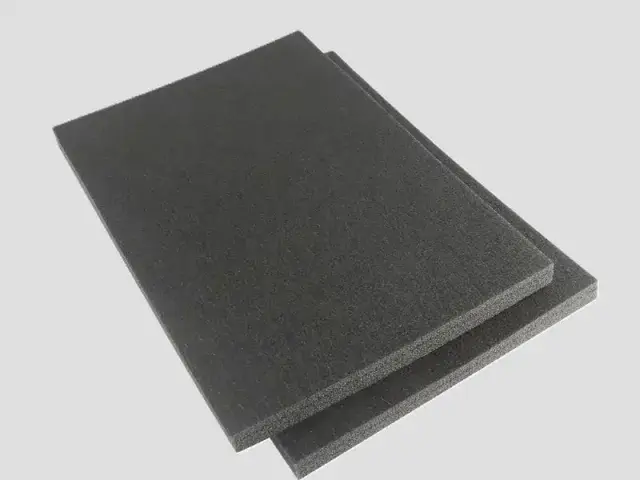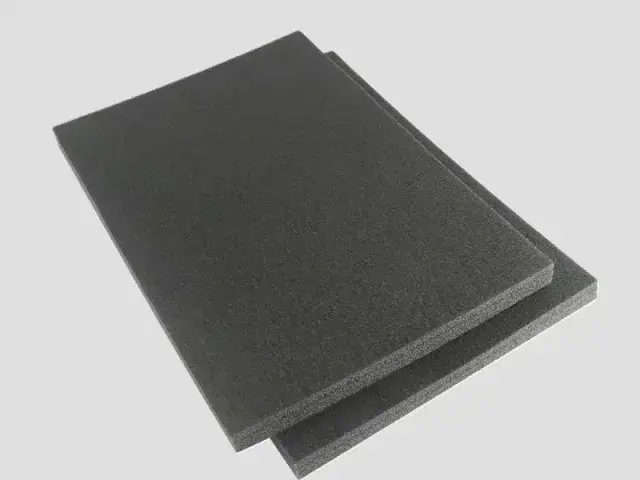

- Material: XPE + PE film
- Expansion ratio: 30 times (33 kg/m³), 35 times (28 kg/m³)
- Width: 1–1.5 m (width can be customized)
- Thickness: 5 mm, 5.5 mm, 6 mm (thickness can be customized)
- Colour: white (colour can be customized)
- Flame retardant grade: UL94 HF-1, GB8624-B1
Customization
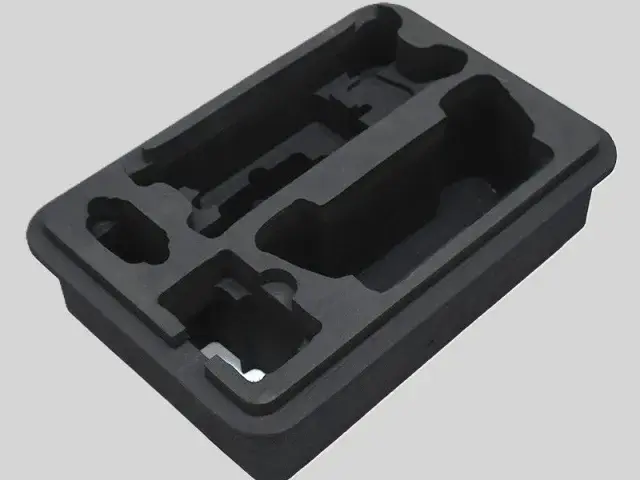
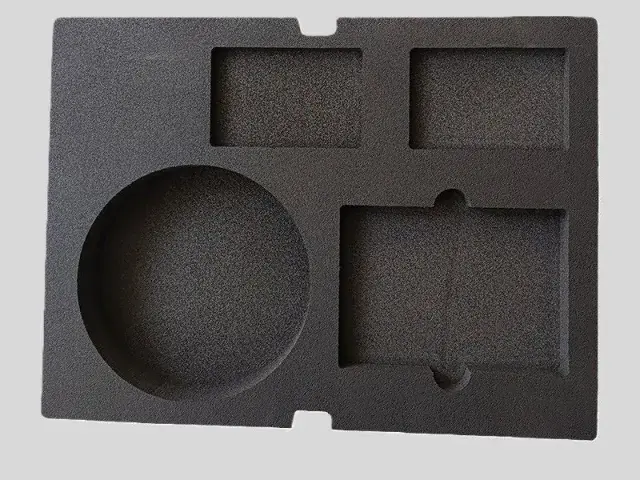
Made to order: density, thickness, colour and shape to your drawing. Die-cutting, CNC routing, lamination to film or fabric, slitting and adhesive coating all run in-house, so the part we quote is a finished part, not just a sheet. How a custom part is cut and routed explains what to send with the drawing.
Regular material: MOQ 1,000 m², lead time 15–20 days from order confirmation. Custom parts are quoted from the drawing. A4 samples are free, shipping included.
Wall decoration foam is an XPE sheet with a specified decorative facing. Surface, print, substrate and bond need approval together. This decorative material description does not declare an acoustic absorption or partition sound rating.
Features
- PE film facing: a smooth, wipe-clean surface that takes print and embossing, so the panel can be supplied in patterns and colours rather than as a plain sheet.
- Thin profile: at 5 mm, 5.5 mm and 6 mm the sheet can be applied over an existing wall without losing meaningful floor area.
- Thermal and acoustic requirements need their own applicable evidence; a decorative closed-cell core does not establish a sound rating.
- Light and quick to fit: the sheet weighs very little and cuts with a knife, so it goes up fast over plaster, board or concrete.
- Two densities: 30× (33 kg/m³) and 35× (28 kg/m³), so firmness can be traded against weight.
- Flame retardant grades: UL94 HF-1 and GB8624-B1.
Applications
- Feature walls in living rooms, bedrooms and children's rooms
- Office partition walls and reception areas
- Hotel rooms and corridors
- Studios and rehearsal rooms, where some absorption is wanted without full acoustic treatment
- Retail fit-outs and display walls
Specifications for wall decoration foam
Decorative foam panels are judged on surface finish and colour as much as on the foam itself.
| Foam | Expansion | Apparent density | Single-layer thickness | Why this grade |
|---|---|---|---|---|
| XPE | 20–30× | 33.3–50 kg/m³ | 3–15 mm | Smooth enough to take printing and embossing, and available in black, white, grey or a custom colour. |
| IXPE | 30–40× | 26.8–33.3 kg/m³ | 0.1–15 mm | Finer cell structure for a finer surface finish on a visible panel. |
Base material specifications are on the XPE, IXPE and IXPP material pages; finished products are on the XPE foam and IXPE foam pages. Tell us the load, the space available and the service temperature and we will confirm the grade against your drawing.
Why Choose Bofeng Foam
We foam the XPE core and apply the PE film in-house, at 30× or 35× foaming, in 5 mm, 5.5 mm and 6 mm, in widths of 1 m to 1.5 m and to UL94 HF-1 and GB8624-B1. Colour, embossing and printed finishes are made to order, and the same core can be laminated to other facings where a different look is needed. Where the priority is sound control rather than appearance, the same material is used as wall acoustic foam.
A decorative wall panel is a laminated part, and the four ways the layers can be bonded — with the qualification each one needs — are compared in our lamination guide.
Decorative Wall Foam: Approve the Visible Joint, Not Just the Colour
Identify the Finish Construction
Specify the foam, printed or plain facing, adhesive and substrate separately. Texture, gloss and colour belong to the visible face; core density alone does not define them. Approve a sample large enough to show the proposed joint and print orientation. A small swatch cannot establish how repeats, seams or a wall return will appear.
Prepare the Wall Before Hiding It
Check flatness, loose coatings, moisture conditions and cleanliness using the agreed installation method. A soft finish can make substrate irregularities visible rather than repair them. Trial adhesion on the actual coating and confirm removal expectations. Treat sockets, corners and openings as details in the layout rather than cutting around them without a plan.
Keep Decoration Separate From Acoustic Treatment
A decorative closed-cell sheet has no automatic absorption or partition sound rating. Room acoustics and sound transmission require different assessments; an added air space is not by itself a quantified improvement. If an acoustic target is part of the order, obtain suitable system evidence before approving the decorative layer for that function.
Approve the Batch and Maintain Access
Keep the approved colour reference, print direction, joint arrangement and edge finishing with the order. Check a complete trial area for appearance, cleaning and accessible maintenance. Flame classification and substrate suitability must match the intended construction. We supply the specified foam and converting, without promising a room acoustic result or universal wall-adhesive compatibility.
For sample identity, dimensions and the acceptance record, use the first-article review checklist with the application-specific checks above.
Make the Decorative Mock-Up Representative of the Finished Wall
Use a trial area that includes the proposed substrate, seam and return. A printed swatch can establish a colour reference but not how the pattern repeats across a join or how the face bends around an external corner. Identify the direction of the print and texture on the layout. Confirm which visible edges are factory finished and which are cut during installation.
Assess the actual adhesive and preparation on the substrate finish. A bond to an ideal board cannot establish compatibility with peeling paint, dust or a damp surface. Resolve the substrate condition first. If the finish is intended to be removable, agree and trial what residue or surface change is acceptable rather than assuming a soft wall covering removes cleanly.
Check cleaning on the complete face-and-bond construction. Keep the cleaner and process with the approved sample so a later product change can be reviewed. Low core uptake does not determine whether a printed film, fabric or joint is suitable for repeated cleaning. Establish appearance and damage criteria appropriate to the finished covering.
Any acoustic, fire or thermal requirement needs the evidence applicable to that construction. A decorative profile or an added cavity is not a declared room rating. Retain the pattern, material stack, substrate and accepted details with the order. If the face film, adhesive or backing changes, treat it as a reviewable construction change rather than merely approving a familiar colour. This gives the buyer a repeatable finish without inventing performance that has not been demonstrated.
For temporary building protection, state how the padding will be removed and whether the underlying finish must remain unmarked. Evaluate the proposed fixing and removal method on a representative surface. Approval of the foam core alone does not establish compatibility of adhesive or restraint with every painted or finished wall.
Conclusion & Inquiry
Send the wall area, the finish you want and the substrate, and we will confirm the sheet and the adhesive. See the XPE foam page for the base material data, or contact us for samples and a quotation.