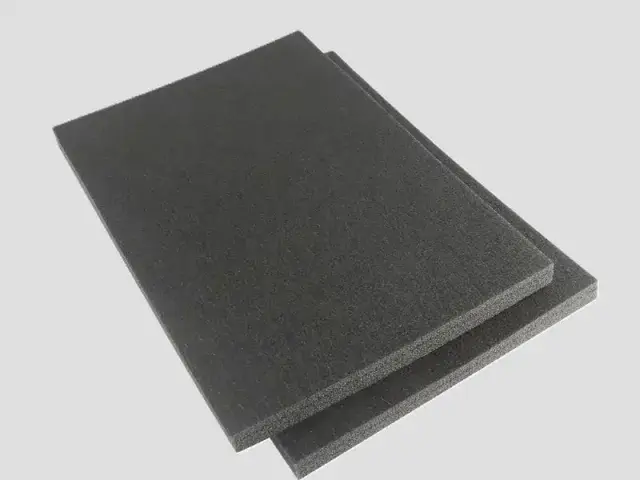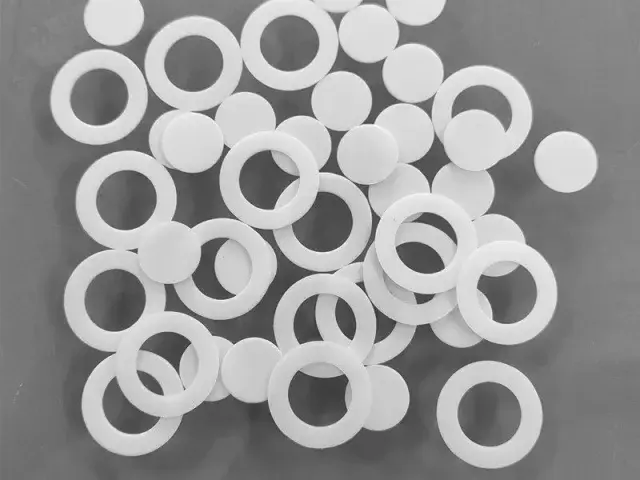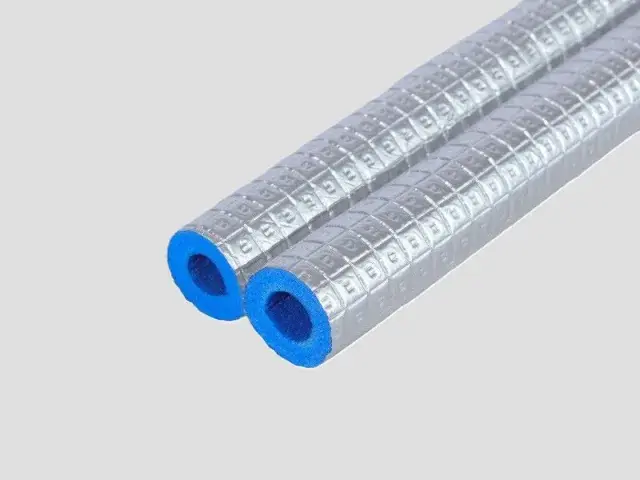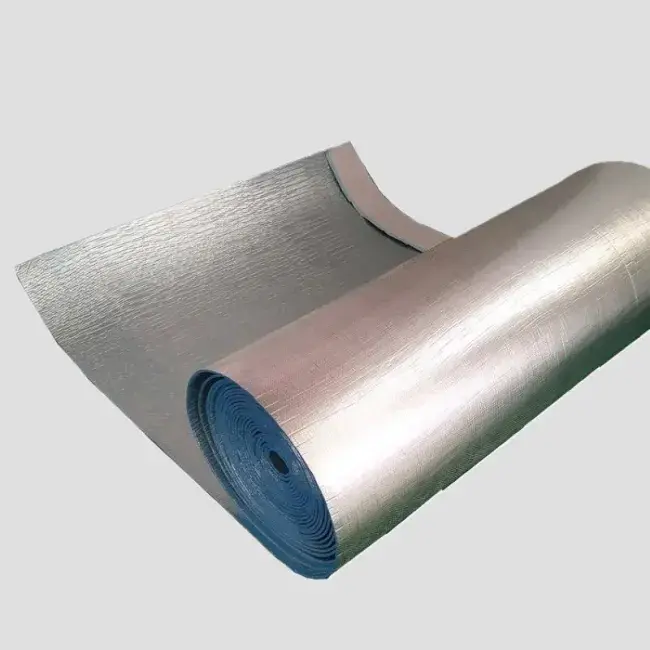
- Material: XPE or IXPE foam liner, optionally laminated with aluminium foil, non-woven or film
- Expansion ratio: XPE 3–40×, IXPE 3–40×
- Thickness: XPE single layer 3–15 mm, IXPE single layer 0.1–15 mm; laminated multilayer 15–200 mm
- Form: die-cut liner set (walls, lid, base), partition, pad or slit roll
- Assembly: pressure-sensitive adhesive, hook-and-loop, tape or mechanical fit
Customization
Made to order: density, thickness, colour and shape to your drawing. Die-cutting, CNC routing, lamination to film or fabric, slitting and adhesive coating all run in-house, so the part we quote is a finished part, not just a sheet. How a custom part is cut and routed explains what to send with the drawing.
Regular material: MOQ 1,000 m², lead time 15–20 days from order confirmation. Custom parts are quoted from the drawing. A4 samples are free, shipping included.
A cold-chain foam liner is a thermal buffer, not a refrigerator. It slows heat passing through the box wall long enough for the payload and the refrigerant to do their job. The liner does not create cold, and it cannot compensate for a box that is too small, a refrigerant load that is too low, or a journey that is too long.
We supply the foam: XPE or IXPE sheet, cut into wall sets, lids, base pads and partitions, optionally laminated with foil or film. The shipper design and the validation test belong to the packaging engineer.
What the Liner Has to Do
- Slow heat ingress. Reduce conduction through the box wall and limit radiant heat from a warm surface.
- Hold the refrigerant in place. Keep ice packs or gel packs from sitting directly against the payload, and keep them from shifting.
- Protect the payload mechanically. Cushion the product and stop it touching the box wall.
- Manage condensation. Keep melt water away from the payload and from the outer box.
- Survive handling. Resist tearing, compression and repeated opening in a reusable shipper.
These jobs pull in different directions. A thicker, denser liner slows heat better but reduces the internal volume and adds weight. A foil facing helps with radiant heat but creases and punctures. The right liner is the one that meets the duration target at the lowest cost and volume, not the thickest sheet available.
Box Formats
| Format | Pieces | Typical use | Note |
|---|---|---|---|
| Full liner set | Four walls, lid, base | Reusable shippers, repeated journeys | Edges must overlap or interlock; gaps are thermal bridges |
| Base and lid only | Two pieces | Short-duration shipments where the payload fills the box | Cheapest, but wall loss is higher |
| Partition and pad | One or more pieces | Separating refrigerant from payload, or separating products | Often combined with a liner set |
| Slit roll | Roll | Wrapping irregular shapes, lining a rigid container | Needs tape or adhesive; less repeatable than die-cut |
Material Choice
| Material | Thickness | Why it fits | Limit |
|---|---|---|---|
| XPE | 3–15 mm single layer; 15–200 mm laminated | Good thermal buffer, tough, cost-effective, easy to die-cut | Rougher surface; thicker walls reduce internal volume |
| IXPE | 0.1–15 mm single layer; 15–200 mm laminated | Thin, smooth, clean-looking liners; tight tolerances | Higher cost; thin sheets alone are not enough for long durations |
| Foil-faced XPE / IXPE | As base material | Adds radiant barrier and a vapour-retarding surface | Foil must face an air space; cut edges and creases leak |
| IXPP | 1–6 mm single layer | Stiffer structural parts, higher temperature | Not a thermal-buffer material; usually the wrong tool for a liner |
For a reusable shipper, XPE is usually the base material because it survives handling and repeated assembly. For a single-use liner where thin walls matter, IXPE is the option. Lamination is a design decision: foil helps against radiant heat, film helps against moisture and abrasion, and non-woven helps with handling.
Thickness, Duration and Payload
There is no universal “hours per millimetre” figure. Duration depends on the box size, the liner thickness, the refrigerant mass and phase-change temperature, the starting temperature of the payload, the ambient profile and how often the box is opened. A liner that holds 2–8 °C for 24 hours in one shipper may fail in another with the same foam.
The practical approach is to fix the box and the refrigerant first, then test the liner. Start with a wall thickness that fits the box and the duration target, run a thermal test with the real payload and the real ambient profile, and adjust from the result. Do not specify a duration from a data sheet; specify it from a test report.
Condensation and Melt Water
Closed-cell PE foam absorbs very little water — our grades are specified at 0.2% or less to 0.4% or less (GB/T 1034, method 4), depending on grade. That helps with a wet environment, but it does not stop condensation forming on a cold surface, and it does not make the liner a water barrier.
Ice packs and gel packs produce melt water. Keep the refrigerant in a sealed bag, put a partition or pad between the refrigerant and the payload, and make sure the base of the box can take the water without weakening. A foil or film facing helps with surface moisture but is not a substitute for a sealed bag.
Reusable vs Single-Use
- Reusable shipper: choose a denser, tougher XPE; design the liner set so it can be removed and refitted without tearing; use mechanical fits or hook-and-loop rather than permanent adhesive; plan for cleaning and drying between trips.
- Single-use liner: thinner IXPE or XPE is often enough; adhesive is acceptable; the liner can be packed flat and assembled at the packing station.
Reusable does not automatically mean lower cost. A reusable liner that is thrown away after one trip costs more than a single-use liner, and a single-use liner that is reused without cleaning can be a contamination source. Decide the return loop before choosing the material.
Assembly and Fixing
Cold-chain liners are usually die-cut and assembled at the packing station. The common methods are pressure-sensitive adhesive, double-sided tape, hook-and-loop, and a mechanical fit where the liner is folded or interlocked. Adhesive is fast but permanent; hook-and-loop and mechanical fits are better for reusable shippers.
Pay attention to the corners and edges. A liner set with open corners has a thermal bridge at every corner, and a lid that does not overlap the walls leaks heat at the seam. If the design allows, overlap the lid over the wall and close the corners with a folded tab rather than a butt joint.
Specifications We Can Supply
| Property | XPE | IXPE |
|---|---|---|
| Expansion ratio | 3–40× | 3–40× |
| Single-layer thickness | 3–15 mm | 0.1–15 mm |
| Laminated multilayer | 15–200 mm | 15–200 mm |
| Apparent density | Grade-dependent, 26.8–300 kg/m³ | |
| Water absorption | 0.2% or less to 0.4% or less, GB/T 1034 method 4 | |
| Thermal conductivity | 0.040–0.095 W/(m·K), grade-dependent | |
| Lamination | Aluminium foil, non-woven, film, pressure-sensitive adhesive | |
| Flame retardancy | Optional; LOI 27, GB 8410 A0, UL94 V2 (flame-retardant grades) | |
What We Do Not Claim
- No validated shipper. We do not certify that a box made with our foam holds a temperature for a stated number of hours. That claim comes from a thermal test of the assembled shipper, and the test belongs to the packaging engineer.
- No food-contact suitability. Cold-chain boxes often carry food. Our standard foam is not supplied as a food-contact material. If the liner will touch food directly, say so before quoting.
- No pharmaceutical qualification. We do not provide a pharma-grade or cleanroom-qualified liner, and we do not support a regulatory filing. If the payload is a regulated product, the qualification is the customer's responsibility.
- No water-barrier claim. Low water absorption is not a water barrier; melt water still has to be managed by the box design.
Ordering, MOQ, Lead Time and Sample
- MOQ: 1,000 m² for standard roll or sheet. Die-cut liner sets are quoted against the drawing and annual volume.
- Lead time: 15–20 days from order confirmation for standard material; a new die-cut set includes sample approval and tooling.
- Sample: an A4 piece is free; we pay the freight.
- What to send: the box internal dimensions, the liner drawing or a sample, the duration target, the refrigerant type, the ambient profile and the annual quantity.
FAQ
How many hours will the liner hold?
That is a property of the assembled shipper, not of the foam alone. Box size, liner thickness, refrigerant mass, payload temperature, ambient profile and opening frequency all change the result. We supply the material data; the duration has to come from a thermal test.
Can XPE replace PU in a cold-chain box?
It depends on the duration and the box design. PU foam has a lower thermal conductivity and is often used for long-duration shippers. XPE and IXPE are used as liners, partitions and pads, and for shorter or medium-duration boxes where the design allows. Do not substitute one for the other without a test.
Does the foam stop water?
No. It has low water absorption, but it is not a water barrier. Melt water from ice packs has to be contained by a sealed bag and managed by the box design.
Can the liner touch food?
Our standard foam is not supplied for direct food contact. If the application needs a food-contact liner, tell us before quoting; we will only proceed where we can support the claim.
Can you make a reusable liner set?
Yes. For reusable shippers we recommend a denser XPE, mechanical fits or hook-and-loop instead of permanent adhesive, and a design that can be cleaned and dried. Send the assembly drawing and the expected number of trips.
Related Applications
Packaging foam · Laminated foam · Custom foam inserts · Cross-linked PE foam materials · What is XPE foam?