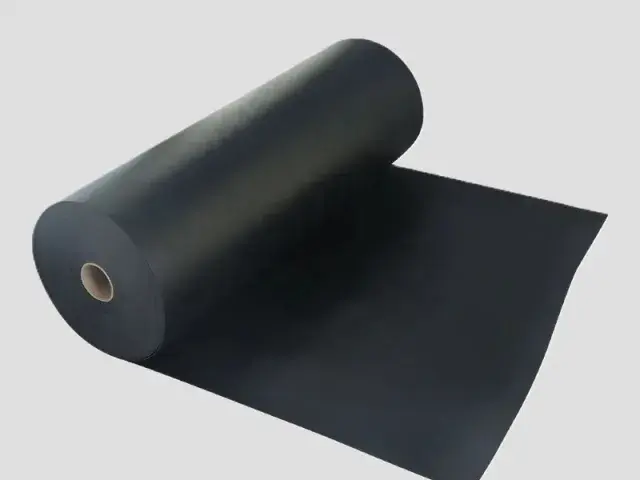

- Material: XPE foam + aluminum foil
- Expansion ratio: 30 times (33 kg/m³)
- Thickness: single-layer 3–15 mm, thermally laminated (multi-layer) 15–200 mm; one-side adhesive backing available
- Width: 1 m, 1.2 m, 1.5 m (width can be customized)
- Flame retardant grade: UL94 HF-1, GB8624-B1
Customization
Made to order: density, thickness, colour and shape to your drawing. Die-cutting, CNC routing, lamination to film or fabric, slitting and adhesive coating all run in-house, so the part we quote is a finished part, not just a sheet. How a custom part is cut and routed explains what to send with the drawing.
Regular material: MOQ 1,000 m², lead time 15–20 days from order confirmation. Custom parts are quoted from the drawing. A4 samples are free, shipping included.
Underfloor heating works by pushing heat up through the floor build-up. Anything that lets that heat escape downwards is wasted energy, and the harder the system has to work the longer it takes to reach temperature. Underfloor heating insulation foam sits between the pipe or heating mat and the structural slab, reflecting heat back up and cutting the downward loss.
Features
- Reflective barrier – the aluminium foil face turns radiant heat back toward the room instead of letting it pass into the slab.
- Closed-cell insulation – the XPE core blocks conductive heat loss and resists moisture at the same time.
- Cushioning – the foam layer takes the point loads that would otherwise sit on the pipe or mat.
- Soft and conformable – lies flat over an uneven or slightly irregular subfloor without bridging.
- Easy to cut – trimmed with a knife on site, so it fits around pipe runs and room shapes.
- Flame retardant – UL94 HF-1 and GB8624-B1 grades available.
Applications
- Residential – new-build housing and renovation, particularly in colder regions where the heat load matters most.
- Commercial – hotels and shopping centres, where comfort and running cost both count.
- Industrial – process and workspace floors that need controlled surface temperature.
- Agricultural – greenhouses and growing rooms that must hold a steady soil or air temperature.
Specifications for underfloor heating insulation foam
Underfloor heating foam sits between the pipe or heating mat and the subfloor, where it must hold the pipe, take the floor load and keep heat from escaping downwards.
| Foam | Expansion | Apparent density | Single-layer thickness | Why this grade |
|---|---|---|---|---|
| XPE | 10–20× | 50–100 kg/m³ | 3–15 mm | Closed-cell sheet with a thermal conductivity of 0.055–0.073 W/m·K in this band, and firm enough to hold pipe clips without crushing. |
| IXPE | 20–30× | 33.3–50 kg/m³ | 0.1–15 mm | Thinner and more flexible, so it follows a screed or a retrofit floor without adding build height. |
Base material specifications are on the XPE, IXPE and IXPP material pages; finished products are on the XPE foam and IXPE foam pages. Tell us the load, the space available and the service temperature and we will confirm the grade against your drawing.
Why Choose Bofeng Foam
- XPE foam with aluminium foil lamination, 30× (33 kg/m³).
- Single-layer 3–15 mm; thermally laminated multi-layer 15–200 mm.
- Widths of 1 m, 1.2 m and 1.5 m.
- One-side adhesive backing available.
- UL94 HF-1 and GB8624-B1 flame-retardant grades.
- Samples and specification sheets available before production.
Thermal conductivity by expansion ratio, and what changes as the ratio rises, is tabulated in our XPE foam insulation guide.
Underfloor Heating: Confirm the Position Relative to the Heat Source
Separate Below-Pipe and Above-Pipe Layers
Identify the heating system and the exact position of this foam. A layer below a heating pipe and an underlay above it affect different heat paths. Include the screed, floor covering, substrate and contact surfaces in the drawing. Do not select a layer from a photograph of a different heating system; confirm the permitted build with its designer or manufacturer.
Treat Foil as Part of a Construction
A reflective facing needs suitable adjacent conditions, including an air space for its radiant function. Foil in direct contact with another layer must not automatically be credited with the same reflective benefit. Vapour control also depends on seams, edges and penetrations. State which function is required and how the complete construction will provide it.
Review Load and Temperature Together
The specified operating condition concerns the temperature at the material, not just the nominal water setting. Record construction loads and service loads, and keep the adhesive or facing in the assessment. A foam conductivity figure does not establish the energy saving of a heating installation. The floor designer must assess heat distribution and the consequences of adding thermal resistance.
Inspect Before Covering
Check continuity, damaged areas, perimeter details and penetrations before laying the next layer. Use the fixing and joint arrangement approved for the particular system; the material supplier does not replace its installation instructions. Send the build-up, expected material temperature, loading and available space to obtain a material quotation.
For sample identity, dimensions and the acceptance record, use the first-article review checklist with the application-specific checks above.
Conclusion & Inquiry
Flooring foam gathers the acoustic and thermal underlayment range, and roof insulation foam uses the same foil-faced build for the building envelope. Contact us with your pipe spacing and target U-value and we will quote a supply.