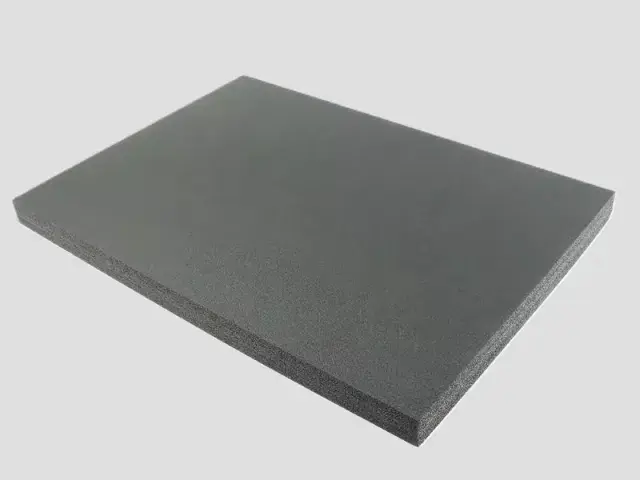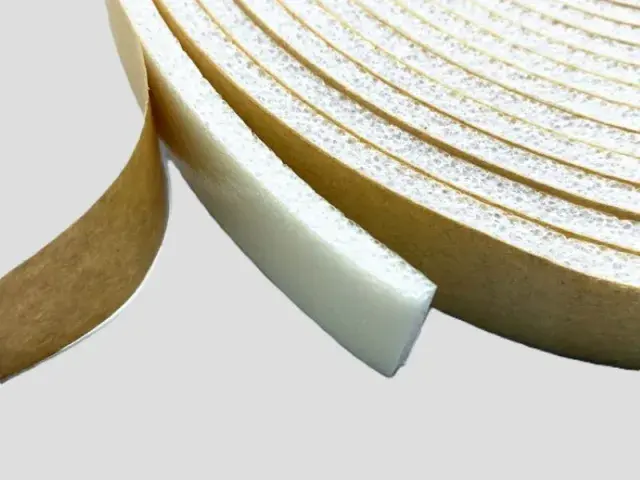

- Material: XPE (chemical cross-linked PE) or IXPE (irradiation cross-linked PE), closed cell
- Expansion ratio: 3–40×; a lower ratio gives a denser, stiffer board
- Apparent density: 26.8–300 kg/m³, grade-dependent
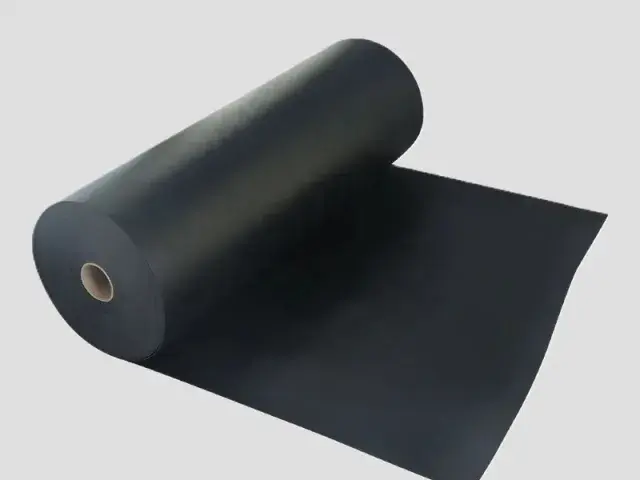
- Width: 500–2000 mm
- Thickness: XPE single layer 3–15 mm, IXPE single layer 0.1–15 mm; laminated sections 15–200 mm
- Compression set: 2% or less to 11% or less (GB/T 6669, 22 h at 23 °C)
- Water absorption: 0.2% or less to 0.4% or less (GB/T 1034, method 4)
- Thermal conductivity: 0.040–0.095 W/(m·K), grade-dependent
- Colour: black, white, grey, custom
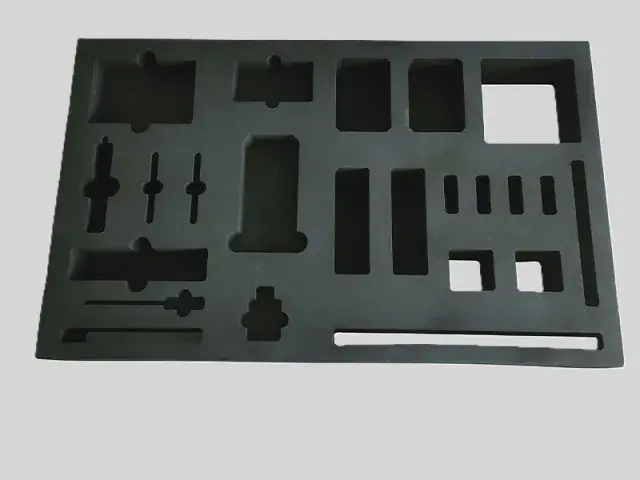
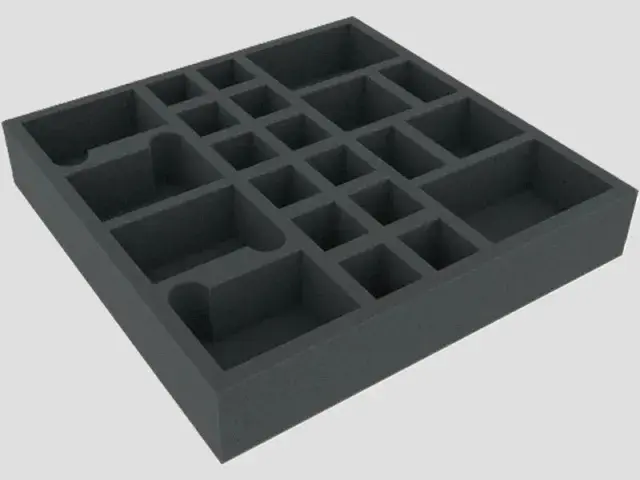
- Conversion: die-cutting, CNC milling, lamination, slitting, adhesive backing
Customization
Made to order: density, thickness, colour and shape to your drawing. Die-cutting, CNC routing, lamination to film or fabric, slitting and adhesive coating all run in-house, so the part we quote is a finished part, not just a sheet. How a custom part is cut and routed explains what to send with the drawing.
Regular material: MOQ 1,000 m², lead time 15–20 days from order confirmation. Custom parts are quoted from the drawing. A4 samples are free, shipping included.
An expansion joint filler is a compressible board that sits in the gap between two concrete sections and keeps that gap open while the structure moves. It is not a sealant, and it is not a structural element. Its job is to hold the joint width, give the sealant a uniform backing, and stop debris from packing into the gap before the sealant goes in.
We supply the filler: closed-cell XPE or IXPE board, cut to width and thickness for the joint. The joint layout, the movement allowance and the sealant system belong to the engineer who designs the joint.
What the Filler Has to Do
- Stay compressible. Absorb movement between the two sides of the joint without pushing the concrete apart.
- Recover. Return toward its original thickness when the joint opens again.
- Resist water and frost. Closed-cell foam does not soak up water and does not break down when it freezes.
- Provide a uniform backing. Give the joint sealant a flat, consistent surface at a controlled depth.
- Keep debris out. Prevent grit and gravel from packing into the gap and restricting movement.
These requirements pull against each other. A denser board resists compression better but recovers less; a softer board follows movement more closely but can be displaced by traffic or water. The right board matches the joint width and the expected movement, not the thickest or the cheapest sheet available.
Forms We Supply
| Format | Description | Typical use | Note |
|---|---|---|---|
| Board or plank | Flat closed-cell board cut to width and thickness | Concrete pavements, slabs, retaining walls | Most common; thickness chosen against the joint width |
| Strip | Narrow board or slit roll for shallow joints | Kerbs, precast panels, small gaps | Check that the strip stays in contact through the movement range |
| Laminated block | Several layers heat-laminated to a thicker section | Wide joints where a single sheet is too thin | Lamination bond must hold under compression |
| Adhesive-backed board | Board with a pressure-sensitive adhesive on one face | Vertical joints where the board must stay in place | Adhesive is a handling aid, not a structural fixing |
Material Choice: XPE or IXPE
| Material | Thickness | Why it fits | Limit |
|---|---|---|---|
| XPE | 3–15 mm single layer; 15–200 mm laminated | Tough, cost-effective, easy to cut to width, good compression set at higher density | Rougher surface; thicker sections need lamination |
| IXPE | 0.1–15 mm single layer; 15–200 mm laminated | Thin, smooth, tight thickness tolerance; clean edges | Higher cost; very thin sheets are not stiff enough for wide joints |
For a typical movement joint, XPE at a higher density is the usual starting point because it holds its shape and cuts cleanly to width. IXPE is the better choice where the joint is narrow, the finish matters, or the board has to be thin. Neither material is a substitute for a load-bearing element.
Choosing Thickness and Density
Match the board thickness to the joint width. The filler is normally sized so that it stays in contact with both faces through the full movement range, which in practice means a board slightly thicker than the minimum joint width, compressed on installation. The exact allowance is part of the joint design and should not be taken from a catalogue.
Density follows the load. Our range runs from 26.8 to 300 kg/m³ depending on the expansion ratio, and a lower ratio gives a denser, stiffer board. A pedestrian pavement joint and a bridge deck joint do not need the same board. Tell us the joint type, the expected movement and whether the joint carries traffic, and we will quote a density and thickness to review against the design.
Compression Set, Not “Recovery %”
We publish compression set: 2% or less at the dense end of the range, up to 11% or less at the light end (GB/T 6669, 22 h at 23 °C). Compression set is the thickness permanently lost after a compression cycle; the lower the number, the better the board returns toward its original thickness.
We do not publish a “compression recovery” percentage. Recovery figures are quoted against different test methods by different suppliers, and a number without its method is not comparable. If a project specification calls for a recovery value, send the method and we will tell you whether we can support it.
Installation Notes
- Cut to width. Cut the board so it fills the joint across its full depth, not just at the face.
- Keep it continuous. Butt joints in the filler should be tight; a gap in the filler becomes a void behind the sealant.
- Set the depth. Leave the recess the sealant needs. The filler is the backing, not the seal.
- Fix vertical boards. On a vertical joint, use an adhesive-backed board or a mechanical fixing so the board does not slump before the sealant is applied.
- Protect the face. Keep the board clean and dry before sealing; dust and water on the face weaken the sealant bond.
What We Do Not Claim
- No joint-filler standard. We do not certify the board to ASTM D3575, ASTM D5249 or any other joint-filler or backer-rod standard, and we do not issue a movement-capacity rating.
- No structural function. The filler does not carry load and does not replace a dowel, a shear key or reinforcement.
- No waterstop. Low water absorption is not a water barrier. The joint still needs a sealant or waterstop designed for the application.
- No fire-barrier rating. Flame-retardant grades are tested as materials (LOI 27, and GB 8410 A0 or UL94 V2 where applicable), not as a fire-barrier joint system.
- No design approval. Joint layout, width, sealant and movement allowance remain the engineer’s responsibility.
Specifications We Can Supply
| Property | XPE | IXPE |
|---|---|---|
| Expansion ratio | 3–40× | 3–40× |
| Apparent density | 26.8–300 kg/m³, grade-dependent | |
| Single-layer thickness | 3–15 mm | 0.1–15 mm |
| Laminated sections | 15–200 mm | 15–200 mm |
| Width | 500–2000 mm; cut to joint width | |
| Compression set | 2% or less to 11% or less, GB/T 6669 | |
| Water absorption | 0.2% or less to 0.4% or less, GB/T 1034 method 4 | |
| Thermal conductivity | 0.040–0.095 W/(m·K), grade-dependent | |
| Flame retardancy | Optional; LOI 27, GB 8410 A0, UL94 V2 (flame-retardant grades) | |
Ordering, MOQ, Lead Time and Sample
- MOQ: 1,000 m² for standard sheet. Cut-to-width boards are quoted against the drawing and the annual volume.
- Lead time: 15–20 days from order confirmation for standard material; a new cut size or lamination includes sample approval.
- Sample: an A4 piece is free; we pay the freight.
- What to send: the joint width, the joint depth, the expected movement, the traffic or load condition, the cut size and the annual quantity.
FAQ
What thickness do I need for a 20 mm joint?
A board in the 20 mm range is the starting point, but the correct thickness depends on the movement range and how the joint is detailed. Tell us the joint width, the expected movement and how the board is fixed, and we will quote a thickness; the final choice should be confirmed against the joint design.
Can the foam replace a rubber waterstop?
No. The filler is a compressible backing; a waterstop is a separate component that seals the joint against water. Low water absorption does not make the board a water barrier.
Is the foam fire rated?
Flame-retardant grades carry LOI 27 and, where applicable, GB 8410 A0 and UL94 V2 as material properties. We do not supply a tested fire-barrier joint system, and we do not rate the joint assembly.
Will it degrade outdoors?
Closed-cell PE foam is normally used in joints that are covered by a sealant. Where the board is left exposed to sunlight, confirm the grade and the exposure with us; we do not publish a UV service-life figure.
Can you cut to width?
Yes. Boards and strips are cut to the width and thickness on the drawing. Send the drawing or a sample and the annual quantity.
Related Applications
Tunnel seam splicing foam · Construction foam · Roof insulation foam · Laminated foam · XPE and IXPE materials · What is XPE foam?