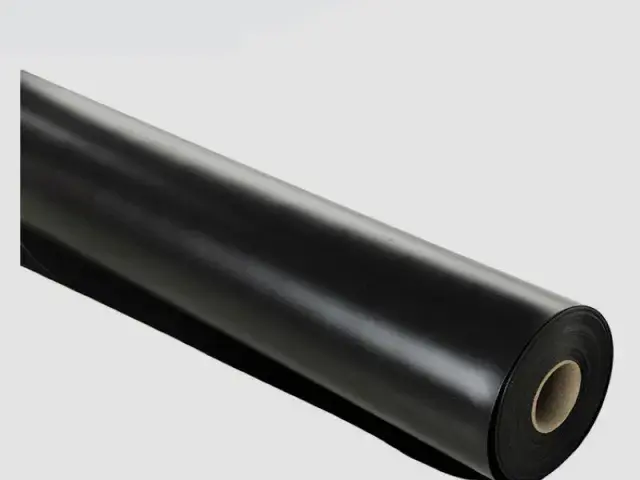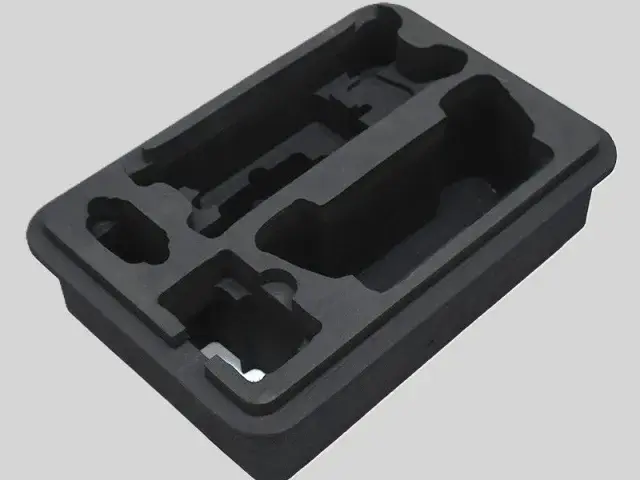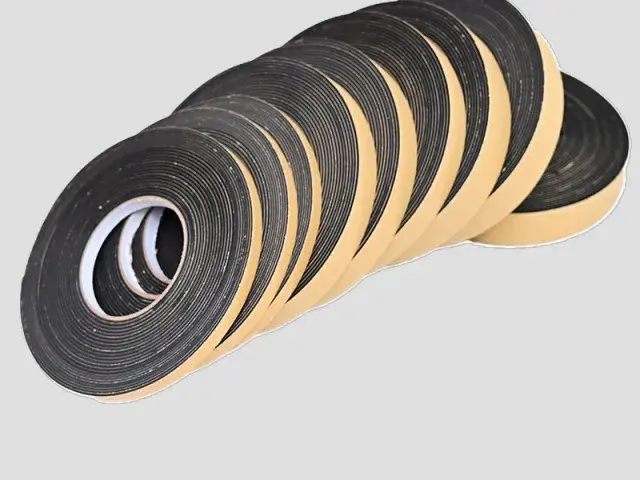

- Material: IXPE (polyethylene foam)
- Expansion ratio: 8 times (125 kg/m³), 10 times (100 kg/m³), 15 times (66 kg/m³)
- Thickness: 0.5 mm, 1 mm, 2 mm (thickness can be customized)
- Colour: black, white, skin tone (colour can be customized)
- Flame retardant grade: UL94 HF-1
Customization
Made to order: density, thickness, colour and shape to your drawing. Die-cutting, CNC routing, lamination to film or fabric, slitting and adhesive coating all run in-house, so the part we quote is a finished part, not just a sheet. How a custom part is cut and routed explains what to send with the drawing.
Regular material: MOQ 1,000 m², lead time 15–20 days from order confirmation. Custom parts are quoted from the drawing. A4 samples are free, shipping included.
PV tape foam is a material component for a specified module interface. Confirm the actual location and manufacturing exposure with the module maker; this page does not approve foam as cell encapsulant or assign it a module lifetime.
Features
- Holds the cell stack in place: the foam fixes cells between glass and backsheet through the lamination cycle, keeping the array aligned while the encapsulant cures.
- Cushioning against mechanical damage: the closed-cell structure absorbs the handling and transport impacts that would otherwise crack a cell.
- Weathering qualification must apply to the specified component and completed module; no lifetime or UV result follows from the generic IXPE name.
- Dielectric strength: the backing has a high resistivity, which is what keeps the frame and the junction box electrically isolated from the cell string.
- Thin and uniform: 0.5 mm to 2 mm in a controlled gauge, so the lamination stack height stays predictable.
- Flame retardant grade: UL94 HF-1 available.
Applications
- Module lamination – cell fixing between glass and backsheet
- Frame sealing, to keep water and dust out of the module edge
- Junction box mounting on the backsheet
- Mounting and rail interfaces, where a gap has to be filled and isolated
Specifications for PV module tape, where the backing has to survive outdoor exposure on a panel
Tape foam is a backing material: the sheet has to be uniform in thickness, hold an adhesive coat and conform to the surface it is applied to.
| Foam | Expansion | Apparent density | Single-layer thickness | Why this grade |
|---|---|---|---|---|
| IXPE | 25–35× | 28.6–40 kg/m³ | 0.1–15 mm | The usual backing grade, because the fine cell structure gives a uniform thickness across a wide web and single layers down to 0.1 mm. |
| XPE | 20–30× | 33.3–50 kg/m³ | 3–15 mm | Firmer backing where the tape also has to fill a gap or take a compression load. |
Base material specifications are on the XPE, IXPE and IXPP material pages; finished products are on the XPE foam and IXPE foam pages. Tell us the load, the space available and the service temperature and we will confirm the grade against your drawing.
Why Choose Bofeng Foam
We supply the IXPE backing at 8×, 10× or 15× foaming in 0.5 mm, 1 mm and 2 mm, in black, white or skin colour, to UL94 HF-1 where required, and laminated to the adhesive system your process uses. The base material is described on the IXPE foam page. The same dielectric and thermal requirements appear in battery packs – see EV battery foam – and the general industrial backing is under industrial tape foam.
Carrier selection, and how an adhesive is qualified for a permanent bond, are covered in our foam tape guide.
PV Tape Components: Identify the Location Before Claiming Module Durability
Distinguish the Tape Positions
A frame joint, junction-box interface and other specified location have different conditions. Show the actual module detail and permitted materials. Do not assume a foam used at an external interface is approved inside the encapsulated cell stack or performs the function of encapsulant. Confirm the component role before selecting its gauge or adhesive.
Assess Manufacturing Exposure
Record temperature, pressure, time and assembly sequence. Core, adhesive, liner and facing must each suit their role. A foam maximum-use temperature does not qualify a lamination process. Confirm the actual grade through representative evidence rather than transferring generic IXPE claims to an entire manufacturing cycle.
Separate Electrical and Bond Requirements
An insulating material description is not approval of the module insulation system. Adhesion needs the actual substrate and preparation, and environmental requirements need a defined sequence and result. Identify who validates each requirement and which report applies to the finished module.
Keep the Qualified Construction
Module life cannot be inferred from a thin sheet. Retain material, tape build, installation location, process and test evidence together. A replacement adhesive or grade needs review by the module maker. We supply a specified component without a module lifetime, output warranty or blanket weathering approval.
For sample identity, dimensions and the acceptance record, use the first-article review checklist with the application-specific checks above.
Qualifying a PV tape interface within the module design
Define the tape's intended function
A photovoltaic assembly contains several interfaces, so a PV tape enquiry should show exactly where the proposed foam tape sits. Identify whether its role is spacing, temporary location, sealing or another function confirmed by the module developer. Provide the section drawing and identify the components on both sides. Do not allow the general term PV tape to imply that the construction is approved for every position in a module or for every manufacturing process.
State which component carries the structural load and whether the tape has any role before a separate attachment or sealant reaches its intended condition. If another product shares the interface, identify it for compatibility review. A favourable result for the foam core cannot approve its adhesive or its interaction with a sealant. Keep the responsibilities of the tape converter, adhesive supplier and module owner clear in the qualification plan.
Use representative module surfaces
Provide production examples of the bonded surfaces, including their coatings and preparation process. Describe any cleaning agents and process residues the module owner expects at that point in manufacture. Material names alone do not reproduce the bonding conditions. If samples are prepared on substitute panels, record the substitution and its limits. The approval should state which actual surface and tape construction the evidence covers.
Show the application direction, joints, corners and any interruptions in the tape path. For supplied strips or die cut pieces, review the intended liner removal and positioning method on the actual assembly. Check whether the operator can apply the specified pressure consistently and whether a fixture introduces local stretching or misalignment. Record these process details with the sample so a later production issue can be compared with the evaluated method.
Ask the module owner to set the exposure programme
The product owner should identify the environmental and durability assessments relevant to the intended module design and markets. Supply samples of the complete tape construction for that programme, rather than treating a generic foam property as outdoor qualification. Claims about weathering, moisture exposure, long term adhesion or electrical insulation need evidence appropriate to the claimed function. This page does not provide a module approval or a stated service life.
Keep observations on edge lift, layer separation, movement and the condition of neighbouring materials distinct from the final pass or fail decision. Record the test arrangement and exposure conditions with each observation. A result for one bonding geometry should not be extrapolated automatically to a different joint width, substrate finish or assembly constraint. Where a result is inconclusive, identify the missing information rather than replacing it with a broad durability statement.
Make the release traceable
An approved tape description should identify the foam grade, thickness, adhesive construction, converted dimensions and relevant supplier references. Retain the surface preparation and application process alongside the sample identification. Define which changes require the module owner's review, including substitutions that leave the overall appearance unchanged. A reorder should reproduce the evaluated interface, not merely a roll of the same colour and nominal thickness.
When requesting a quotation, include the proposed use, representative surfaces, drawing and the evidence package required for qualification. Identify any certification or project documentation the product owner expects so its availability can be confirmed before an order. Do not describe a component as certified for photovoltaic use unless the actual document and its scope support that statement. Component supply and finished module approval remain separate decisions.
For converted tape sets, include a placement drawing that distinguishes different lengths or shapes used in the same module. Review how the operator identifies each piece and removes the liner without confusing similar parts. If pieces are supplied on a common liner, approve that presentation with the application process. Packaging and identification are part of a reproducible supply arrangement, even though they do not demonstrate outdoor performance. Record any handling requirement arising from the approved process so a reorder cannot remove it as a cosmetic feature. This gives a later production investigation a clear comparison with the actual first article arrangement. Record liner presentation and placement direction on the approved supply drawing.
Conclusion & Inquiry
Send the lamination cycle temperatures, the adhesive you are using and the thickness tolerance you need, and we will confirm the backing grade. Contact us for samples.