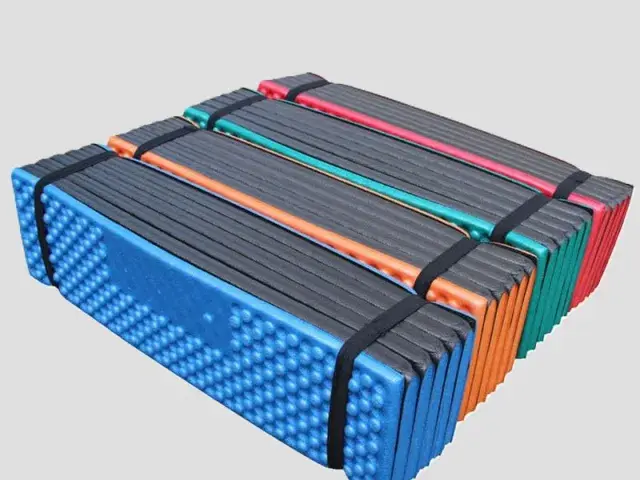
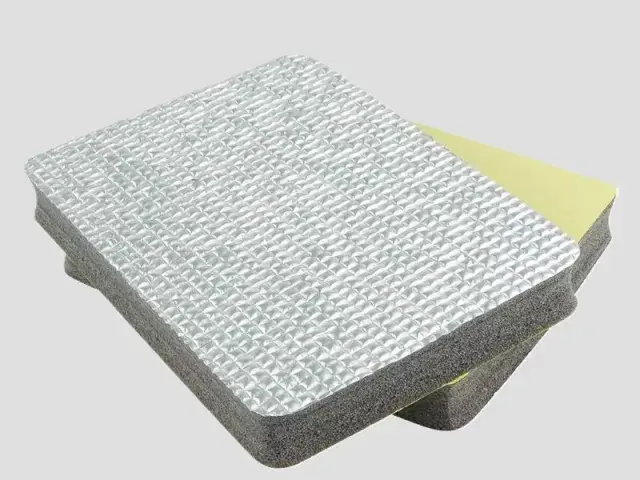
- Material: XPE foam, IXPE foam
- Expansion ratio: 10 times (100 kg/m³) – 15 times (66 kg/m³)
- Thickness: 3 mm, 4 mm, 5 mm (thickness can be customized)
- Width: 1 m, 1.2 m, 1.5 m (width can be customized)
- Colour: custom colours available
Customization
Made to order: density, thickness, colour and shape to your drawing. Die-cutting, CNC routing, lamination to film or fabric, slitting and adhesive coating all run in-house, so the part we quote is a finished part, not just a sheet. How a custom part is cut and routed explains what to send with the drawing.
Regular material: MOQ 1,000 m², lead time 15–20 days from order confirmation. Custom parts are quoted from the drawing. A4 samples are free, shipping included.
Surfboard foam is the sheet laminated over the deck of a soft-top board. It is the layer a surfer actually touches, and it is what makes a soft-top safe for a beginner: instead of a hard shell that can strike the rider, the board presents a resilient foam surface. Bofeng Foam produces it in XPE and IXPE at 10× to 15× foaming.
Features
- Safer than a hard shell: a foam deck gives on impact instead of transferring the blow, which is the main reason soft-tops are used for teaching.
- High density for a thin skin: at 10× (100 kg/m³) to 15× (66 kg/m³) the sheet is dense enough to resist tearing at 3 mm to 5 mm.
- Tear and abrasion resistance: the surface stands up to wax, sand, board bags and the general handling a board receives.
- Grip: the foam deck can be textured or embossed to give the traction a rider needs without wax.
- Light: low density keeps the finished board easy to carry and paddle.
- Easy to maintain: the closed-cell surface absorbs very little water, so a ding does not turn into a waterlogged board.
Applications
- Soft-top surfboards for beginners and schools
- Recreational and rental boards
- Bodyboards and paipo boards
- Children's boards
- Stand-up paddleboard deck padding
Specifications for surfboard foam
A surfboard blank or deck pad has to be light, water resistant and stable under a board that flexes.
| Foam | Expansion | Apparent density | Single-layer thickness | Why this grade |
|---|---|---|---|---|
| XPE | 15–25× | 40–66.7 kg/m³ | 3–15 mm | Low density with water absorption under 0.3%, so the board stays light and does not take on water through a ding. |
| IXPE | 25–35× | 28.6–40 kg/m³ | 0.1–15 mm | Softer deck pad with a finer surface for grip. |
Base material specifications are on the XPE, IXPE and IXPP material pages; finished products are on the XPE foam and IXPE foam pages. Tell us the load, the space available and the service temperature and we will confirm the grade against your drawing.
Why Choose Bofeng Foam
We supply surfboard foam at 10× to 15× foaming in 3 mm, 4 mm and 5 mm, in widths of 1 m, 1.2 m and 1.5 m, in colour with colour and surface texture made to order. Both XPE and IXPE are available; the difference between the two is set out on the IXPE foam page, and the base grade on the XPE foam page.
How density converts to buoyancy, and why water absorption decides long-term performance, is worked through in our flotation foam guide.
Surfboard Deck Foam: Identify the Contact Layer Rather Than the Structural Core
Define the Part on the Board
Show whether the foam is a deck contact layer, a local pad or another non-structural component. Do not assume a sheet supplied for a deck surface is a shaped structural board core. Provide the substrate, curvature, adhesive and finished outline so the intended interface can be reviewed.
Check Wet Contact on the Complete Surface
Texture, facing and the actual use condition affect surface grip. An embossed pattern is not by itself a verified wet-slip result. Agree the required evaluation for the finished deck surface and inspect edges after the exposure. Bare-core softness cannot demonstrate adhesion to the board skin.
Review Bond and Edge Details
Curvature can place peeling stress at the perimeter. Trial the proposed adhesive and surface preparation on the actual board material, then retain the exposure and failure observations. Low foam water uptake does not establish seawater resistance of the complete bond or prevent water being trapped at an opened edge.
State the Exposure Requirement
Specify the expected water, cleaning, temperature and sunlight exposure. No UV lifetime, board approval or fixed traction value is implied. Retain the approved grade, surface and adhesive arrangement, and review any change to the board coating before repeat orders.
For sample identity, dimensions and the acceptance record, use the first-article review checklist with the application-specific checks above.
Check the Edge After the Intended Removal Process
If the deck pad is intended to be replaceable, trial removal as well as initial bonding. Confirm what residue or surface change is acceptable on the actual board finish. Keep that decision with the adhesive and preparation reference; easy installation does not establish easy or damage-free removal later.
Conclusion & Inquiry
Send the board dimensions, the thickness and the surface finish you want, and we will confirm the density. Contact us for samples or a quotation.