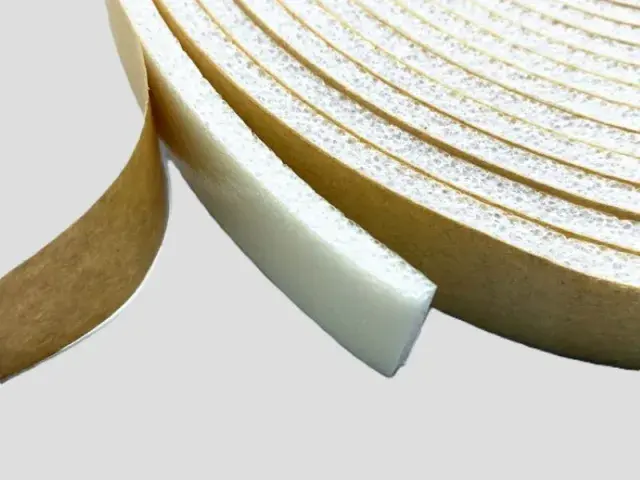
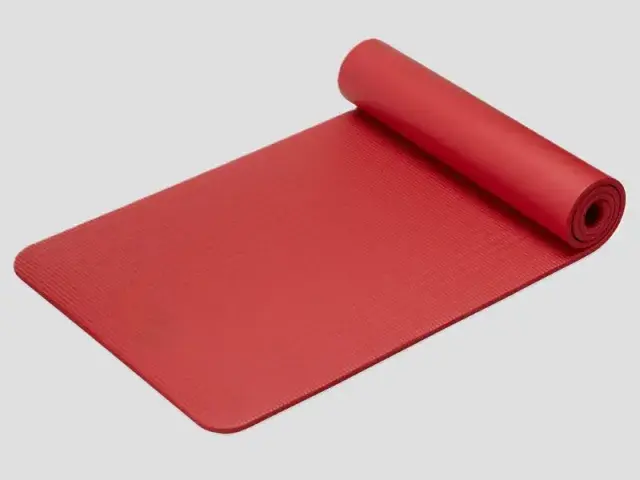
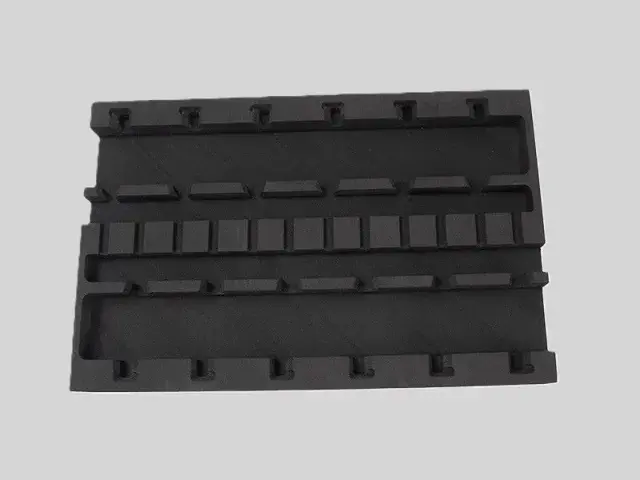
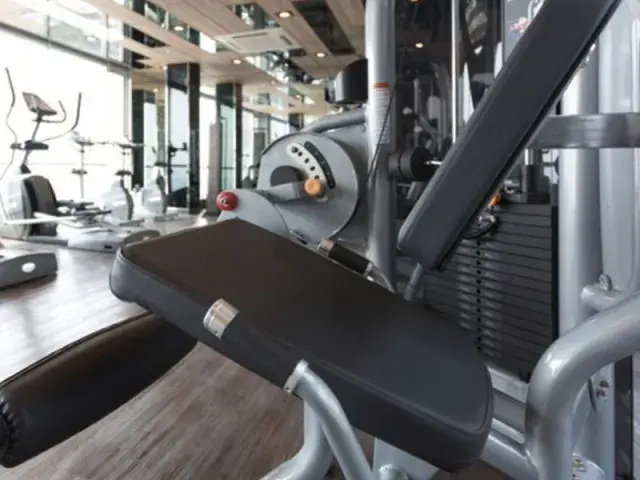
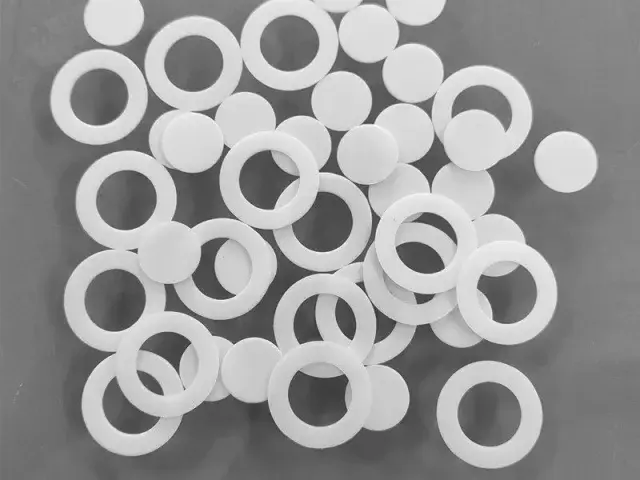
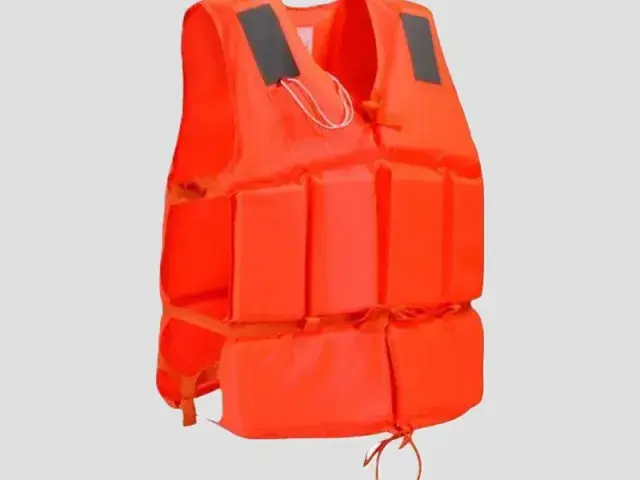
- Material: XPE foam
- Expansion ratio: 30 times (33.3±3 kg/m³)
- Thickness: 6 mm, 8 mm, 10 mm (thickness can be customized)
- Width: 1 m, 1.5 m, 1.8 m (width can be customized)
- Colour: white (colour can be customized)
Customization
Made to order: density, thickness, colour and shape to your drawing. Die-cutting, CNC routing, lamination to film or fabric, slitting and adhesive coating all run in-house, so the part we quote is a finished part, not just a sheet. How a custom part is cut and routed explains what to send with the drawing.
Regular material: MOQ 1,000 m², lead time 15–20 days from order confirmation. Custom parts are quoted from the drawing. A4 samples are free, shipping included.
An outdoor foam cushion is a seat pad carried to wherever the seating is – a bench, a stadium step, a rock, or the ground itself. The requirement is simple and unforgiving: it must stay dry when the surface under it is not, and it must not weigh anything worth mentioning. Bofeng Foam produces the sheet in cross-linked polyethylene at 6 mm to 10 mm.
Features
- Closed-cell, so it stays dry: the foam absorbs very little water, so a cushion put down on a wet bench comes up dry and does not become heavy.
- Insulates against cold surfaces: the foam layer breaks the conduction path between a cold seat and the person on it.
- Light and packable: the cushion rolls or folds and adds almost nothing to a bag.
- Durable surface: resists the abrasion that comes from being sat on, folded and carried, and does not fray the way a fabric pad does.
- Three thicknesses: 6 mm, 8 mm and 10 mm, so the pad can be tuned from a stadium seat to something closer to a mattress.
- Wide sheet: widths of 1 m, 1.5 m and 1.8 m, so a bench-length cushion can be cut in one piece.
Applications
- Stadium and event seating
- Picnics, camping and outdoor dining
- Garden and patio bench cushions
- Fishing and hunting seats
- Outdoor meditation and exercise
Specifications for outdoor foam cushions
Outdoor cushions have to keep their shape through rain and sun without holding water.
| Foam | Expansion | Apparent density | Single-layer thickness | Why this grade |
|---|---|---|---|---|
| XPE | 30× | 33.3±3 kg/m³ | 3–15 mm (heat-bonded 15–200 mm) | Water absorption ≤0.4% (GB/T 1034) and dimensional change within 6% across and 8% along the sheet (GB/T 8811, 70 °C 22 h), so the cushion keeps its size and does not stay wet. |
| IXPE | 30× | 33.3±3 kg/m³ | 0.1–15 mm | Softer facing for a seat cushion over a firmer core. |
Base material specifications are on the XPE, IXPE and IXPP material pages; finished products are on the XPE foam and IXPE foam pages. Tell us the load, the space available and the service temperature and we will confirm the grade against your drawing.
Why Choose Bofeng Foam
We supply outdoor cushion foam at 30× foaming (33.3±3 kg/m³) in 6 mm, 8 mm and 10 mm, in widths of 1 m, 1.5 m and 1.8 m, in white or to a specified colour, cut to the cushion size required. The base material is described on the XPE foam page, and the lighter version of the same product is the camping mat.
In-house conversion. A cushion is cut and built up: we die-cut the pad outline, heat-bond layers to the cushion thickness, and laminate a facing where the seat meets skin or clothing. Regular sheet starts at 1,000 m²; cut cushions are quoted from the drawing.
Measured water absorption, and why an outdoor cushion should be specified on it, is set out in our water absorption guide.
Outdoor Cushion Sheets: Assess the Cover and Water Traps With the Core
Define the Finished Cushion
Provide the dimensions, seat or support, facing and whether the part is loose, strapped or bonded. A thin portable pad and a fixed outdoor seat are different constructions. Review the installed sample under the intended contact rather than choosing only by free-sheet softness.
Keep Water Uptake Separate From Drying
A closed-cell core has stated laboratory uptake limits. Water can still be retained by a fabric, seam, opened bond or the space underneath a cushion. Identify the intended drainage and drying route, and check the complete construction after the agreed exposure. Do not call the whole cushion waterproof from a core test.
State Sunlight and Cleaning Requirements
Temporary use outside does not establish permanent weathering life. Ask for evidence applicable to the grade and facing if exposure is a requirement. Trial the actual cleaner and contact surfaces. Thermal conductivity describes the material test, not a guaranteed perceived seat temperature under changing weather.
Retain the Approved Construction
Keep colour, layers, dimensions and exposure requirements with the sample. Agree acceptable deformation, surface change and bond condition without inferring a fixed service life. Supply the intended support and care conditions with the enquiry.
For sample identity, dimensions and the acceptance record, use the first-article review checklist with the application-specific checks above.
Approving an outdoor cushion as a covered assembly
Define the furniture and the cushion construction
Provide the seat or support geometry and identify where the cushion is intended to be used. Show the foam core, cover, seams, closures and any attachment straps as one construction. State whether the foam is removable and identify the intended orientation. A bare piece of closed cell foam does not establish how a finished cushion will fit the furniture or behave when water reaches a seam or closure.
Check the proposed outline and fitted thickness on the actual support. If the cushion has several sections, show how they meet and whether they can move independently. Record any points where a strap, zip or seam sits against the user or furniture. Comfort observations should describe the complete article in its intended position rather than relying on the hand feel of an uncovered foam sample.
Review exposure and care together
Identify the outdoor conditions and storage instructions proposed by the product owner. Provide the cover and printing materials for compatibility review where relevant. Foam water absorption data does not establish weather resistance, colour retention or the absence of mould in a finished cushion. Claims about those outcomes require evidence for the actual materials and construction under the stated conditions.
Trial the intended cleaning, draining, drying and refitting process with the first article. If the core is removable, confirm it can be returned to the correct orientation without damaging the cover or folding the foam. Inspect seams, attachments and bonded layers separately. A simple wipe clean demonstration should not be used to claim that the cushion tolerates every household cleaner or can be left outside indefinitely.
Retain the approved combination
The production specification should identify the core grade, dimensions, cover construction and attachment method. Keep any exposure or care evidence linked to that combination. Review changes to the cover, closure, printing or adhesive before treating the revised cushion as an equivalent reorder. If a buyer requests environmental or contact safety documents, confirm the actual scope of available evidence rather than inferring a certification from the use of PE foam.
If cushions are stacked or compressed for shipment, include that supply arrangement in the sample review and inspect them after unpacking. Record the agreed presentation and any recovery observations separately from the use evaluation. A result from a newly unpacked sample should not be presented as a claim about every storage duration or shipping condition.
Conclusion & Inquiry
Send the cushion dimensions, the thickness and the colour, and we will quote against your volume. Contact us for samples.