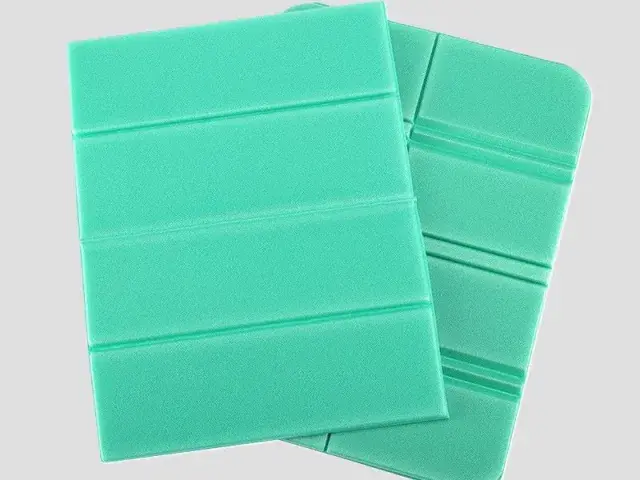
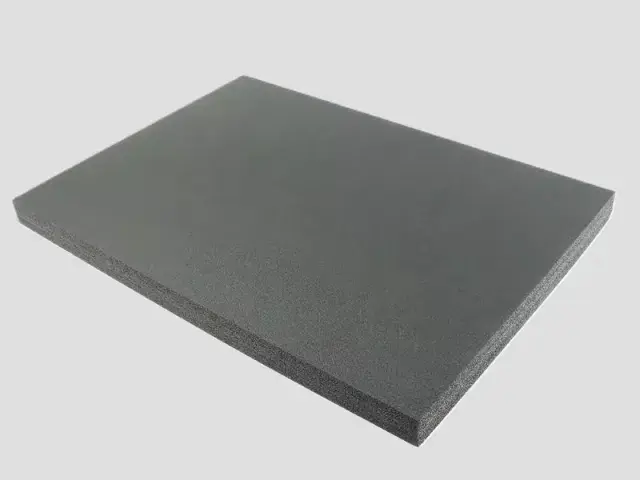
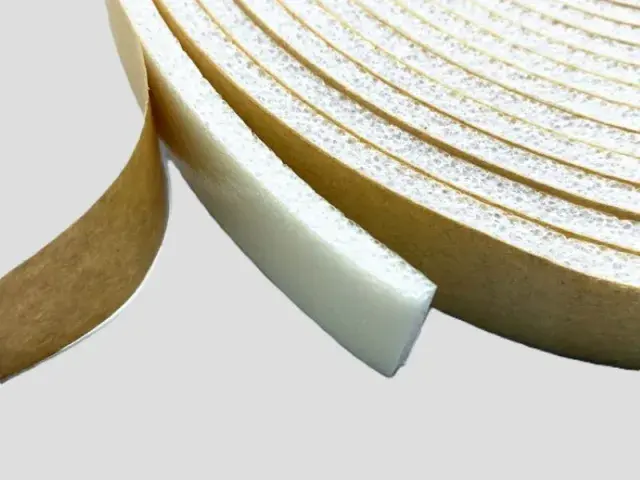
- Material: IXPE foam
- Expansion ratio: 5 times (200 kg/m³), 8 times (125 kg/m³), 10 times (100 kg/m³)
- Thickness: 2 mm, 3 mm (thickness can be customized)
- IXPE hardness for sheet up to 3 mm, GB/T 2411: 55–65° at 5x, 45–55° at 8x, 35–45° at 10x.
- Colour: white, black (colour can be customized)
Customization
Made to order: density, thickness, colour and shape to your drawing. Die-cutting, CNC routing, lamination to film or fabric, slitting and adhesive coating all run in-house, so the part we quote is a finished part, not just a sheet. How a custom part is cut and routed explains what to send with the drawing.
Regular material: MOQ 1,000 m², lead time 15–20 days from order confirmation. Custom parts are quoted from the drawing. A4 samples are free, shipping included.
Clothing and hat lining foam is a thin IXPE sheet used inside garments and headwear – between the shell and the inner lining of a jacket, or behind the front panel of a cap. It adds a layer of warmth and body without the weight or bulk of conventional wadding, and because it is closed-cell it does not hold moisture the way a fibrous fill does.
Features
- Light for the warmth it gives: at 2 mm to 3 mm the sheet adds very little weight, so a jacket or cap keeps its shape rather than becoming bulky.
- Closed-cell, so it does not absorb sweat: the foam will not wick or hold water, which keeps the lining from becoming heavy and cold when the wearer perspires.
- Three densities: 5× (200 kg/m³), 8× (125 kg/m³) and 10× (100 kg/m³), so the hand can be tuned from firm and structured to soft and pliable.
- Shore hardness 45°–60°: firm enough to hold a shape in a structured cap, soft enough to drape in a garment.
- Clean to convert: the sheet cuts, dies and bonds predictably, which suits automated cutting tables and high-volume garment production.
- Two standard colours: white and black, with colour made to order.
Applications
- Sports jackets, ski wear and softshell garments
- Caps and hats – front panel stiffening and crown lining
- Children's outerwear and gloves, where a soft, safe lining matters
- Workwear and uniform garments
- Protective and high-visibility clothing
Specifications for clothing and hat lining foam
A lining foam is worn against skin or fabric, so surface feel and thickness consistency matter more than load bearing.
| Foam | Expansion | Apparent density | Single-layer thickness | Why this grade |
|---|---|---|---|---|
| IXPE | 30–40× | 26.8–33.3 kg/m³ | 0.1–15 mm | Very soft with a fine, smooth cell structure, and thin enough to laminate behind a fabric without adding bulk. |
| XPE | 25–35× | 28.6–40 kg/m³ | 3–15 mm | Firmer structured layer for a hat brim or a shoulder pad. |
Base material specifications are on the XPE, IXPE and IXPP material pages; finished products are on the XPE foam and IXPE foam pages. Tell us the load, the space available and the service temperature and we will confirm the grade against your drawing.
Why Choose Bofeng Foam
We produce the IXPE at 5×, 8× or 10× foaming in 2 mm and 3 mm, in white or black, at Shore hardness 45° to 60°, with thickness, colour and hardness made to order. Because irradiation cross-linking gives a finer, more uniform cell than chemical cross-linking, the sheet is well suited to thin gauges where a consistent hand matters. The base material is described on the IXPE foam page, and the same sheet is used for shoe and boot lining.
How XPE, EPE and EVA differ in softness, recovery and cost, and where the difference shows up in service, is set out in our XPE versus EPE versus EVA comparison.
Clothing and Hat Liners: Check the Curve, Seam and Contact Textile
Locate the Foam in the Garment
Identify the panel, brim, crown or other location and how it joins the textile. A thin support layer and a cushioning pad do different jobs. Provide the finished contour and available space, including seams. A flat sheet sample does not establish the appearance or flexibility of the sewn or bonded part.
Assess the Complete Laminate
Fabric, adhesive and foam determine total build and bending. Trial the intended seam or bond, inspect the edge and check whether the liner forms a crease at the required curvature. Agree thickness measurement and any appearance-critical feature before approving the material.
Describe Moisture and Contact Honestly
Closed-cell foam does not automatically provide air passage through the sheet. Comfort may depend on textile, openings and garment design. Low material uptake is not evidence for odour control, antimicrobial behaviour or every skin-contact use. Require documentation for any product claim and the actual layer in contact.
Retain the Finished Reference
Keep textile, foam, adhesive, contour and colour reference with the sample. Evaluate the intended cleaning or care process on that construction. Changes to fabric or bond can matter even with unchanged foam. Send the use, drawing and required finish with the enquiry rather than specifying softness alone.
For sample identity, dimensions and the acceptance record, use the first-article review checklist with the application-specific checks above.
Conclusion & Inquiry
Tell us the garment, the thickness you have in mind and the hand you want, and we will confirm the density and hardness. Contact us for samples or a quotation.