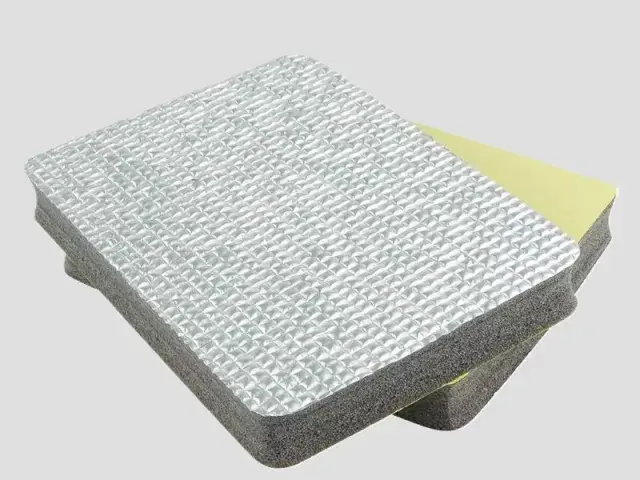
- Material: XPE foam, IXPE foam
- Expansion ratio: 15 times (66.7±8 kg/m³), 20 times (50±6 kg/m³)
- Thickness: 3 mm, 4 mm, 5 mm (thickness can be customized)
- Width: 1 m, 1.2 m, 1.5 m (width can be customized)
- Colour: black, white, gray (colour can be customized)
Customization
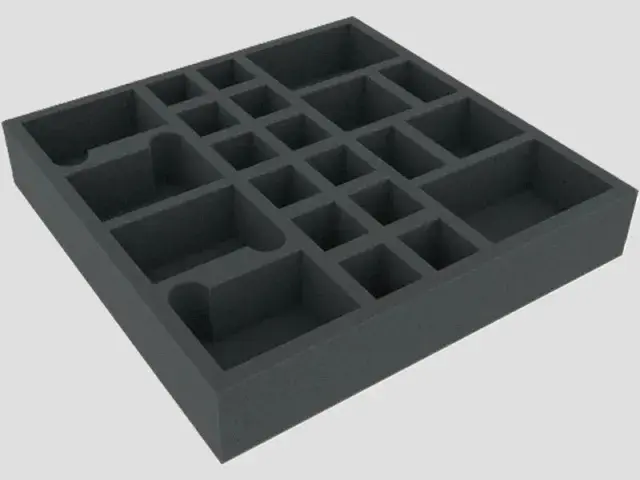
Made to order: density, thickness, colour and shape to your drawing. Die-cutting, CNC routing, lamination to film or fabric, slitting and adhesive coating all run in-house, so the part we quote is a finished part, not just a sheet. How a custom part is cut and routed explains what to send with the drawing.
Regular material: MOQ 1,000 m², lead time 15–20 days from order confirmation. Custom parts are quoted from the drawing. A4 samples are free, shipping included.
An insole has to do three things at once: absorb the impact of every step, return to shape afterwards, and stay thin enough to fit inside the shoe. Bofeng supplies XPE and IXPE foam sheet for insole manufacturers, in the 3–5 mm range and the higher densities that hold up under repeated loading rather than flattening out after a few weeks of wear.
Features
- High resilience – recovers quickly after compression, so the cushioning does not fade over the life of the shoe.
- Shock absorption – takes the ground reaction force before it reaches the knee and ankle.
- Light weight – provides support without adding weight to the finished shoe.
- Consistent sheet – even density and thickness across the sheet, so die-cut insoles match from pair to pair.
- Cut and mould friendly – die-cuts, laminates and thermoforms into shaped footbeds.
- Density and colour options – 15× (66.7±8 kg/m³) and 20× (50±6 kg/m³) grades in black, white or gray.
Applications
- Performance footwear – running, basketball and football insoles built for repeated impact.
- Casual and everyday shoes – comfort layers for standing and walking.
- Orthotic and rehab – foam layers used in custom and corrective footbeds.
- Children's footwear – cushioning layers sized for growing feet.
- Work and safety boots – insoles for long shifts on hard floors.
Specifications for athletic insole foam
An insole has to be thin, take a repeated point load and stay flat inside a shoe.
| Foam | Expansion | Apparent density | Single-layer thickness | Why this grade |
|---|---|---|---|---|
| IXPE | 15–20× | 40–66.7 kg/m³ | 0.1–15 mm | The fine-cell end of the range: single layers down to 0.1 mm, which is what an insole needs, with a uniform surface a shoe upper will not feel through. |
| XPE | 15–20× | 40–66.7 kg/m³ | 3–15 mm | Firmer midsole grade where the insole also has to support the arch. |
Base material specifications are on the XPE, IXPE and IXPP material pages; finished products are on the XPE foam and IXPE foam pages. Tell us the load, the space available and the service temperature and we will confirm the grade against your drawing.
Why Choose Bofeng Foam
- 15× (66.7±8 kg/m³) and 20× (50±6 kg/m³) grades.
- 3 / 4 / 5 mm thickness as standard, other gauges on request.
- Sheet widths of 1 m, 1.2 m and 1.5 m.
- Black, white and gray as standard, further colours on request.
- Samples and specification sheets available before production.
The four numbers on a foam data sheet — density, hardness, compression set and resilience — and what each one answers, are set out in our density and hardness guide.
Conclusion & Inquiry
Automotive foam gathers the related cushioning, sealing and NVH applications in this range, and luggage liner foam uses the same material for bag construction. Contact us with your insole spec and we will quote sheet or die-cut supply.