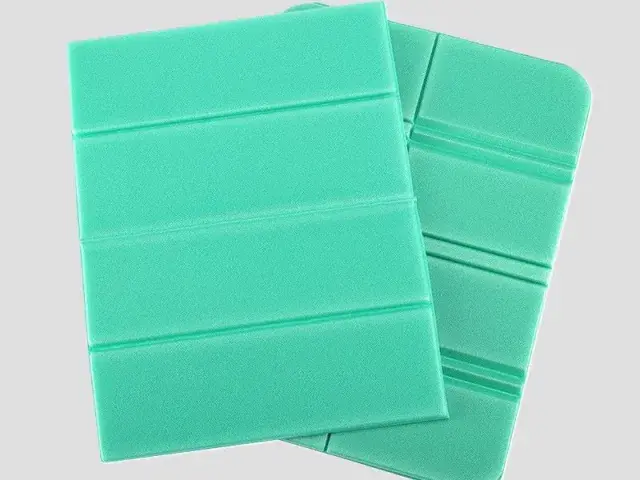
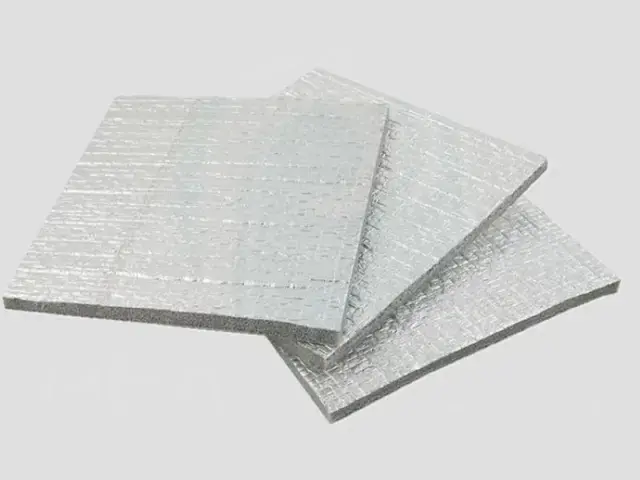
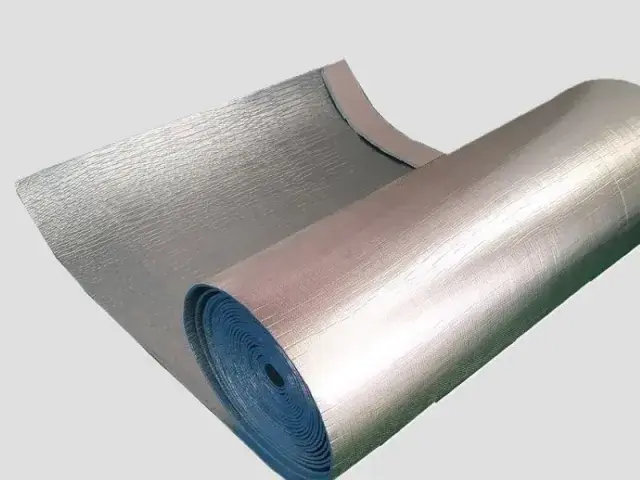
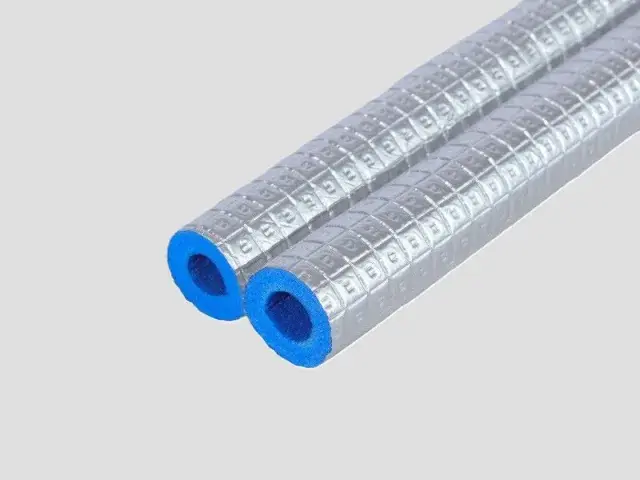
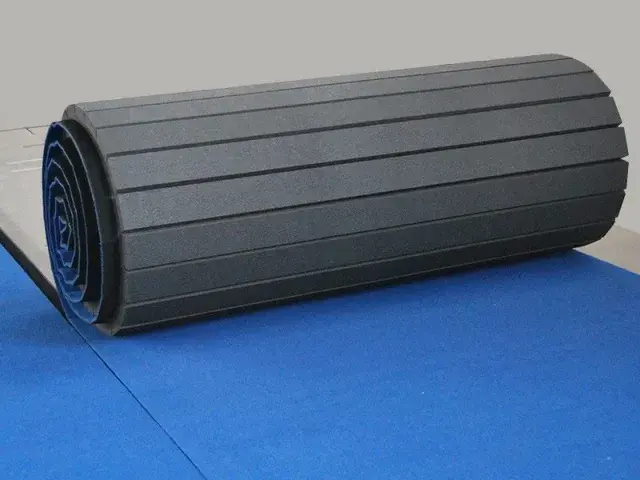
- Material: XPE foam (chemical cross-linked polyethylene)
- Expansion ratio: 3–40 times (26.8–300 kg/m³)
- Thickness: single-layer 3–15 mm; thermally laminated (multi-layer) 15–200 mm
- Width: 500–2000 mm (width can be customized)
- Colour: black, white, gray (colour can be customized)
- Cross-linking: chemical
- Conductive grade: permanent, 10³–10⁶ Ω. Anti-static grade: permanent, 10⁶–10⁹ Ω.
Customization
Made to order: density, thickness, colour and shape to your drawing. Die-cutting, CNC routing, lamination to film or fabric, slitting and adhesive coating all run in-house, so the part we quote is a finished part, not just a sheet. How a custom part is cut and routed explains what to send with the drawing.
Regular material: MOQ 1,000 m², lead time 15–20 days from order confirmation. Custom parts are quoted from the drawing. A4 samples are free, shipping included.
An anti-static injection moulded tray is the rigid end of the ESD packaging range. Where a blister is formed from sheet and a foam tray is cut, a moulded tray is injected to a fixed geometry, which gives the dimensional stability and the repeated-use life that high-value component handling needs.
Features
- Conductive filler throughout: carbon black or an equivalent conductive additive is compounded into the material, so charge drains from the tray surface to ground through the tray body rather than sitting on it.
- Dimensional stability: a moulded tray holds its pocket geometry through repeated handling and cleaning, so automated equipment sees the same tray every cycle.
- Abrasion and scratch resistance: the surface stands up to repeated loading and to sliding contact with components.
- Long service life: the higher tooling cost is recovered over a long working life and low maintenance, which makes a moulded tray the economical choice on a long programme.
- Made to drawing: pocket layout, pitch and size are produced to the customer's specification, including colour.
- Light and stackable: lighter than a wooden equivalent, easier to handle, and designed to stack loaded and nest empty.
Applications
- Semiconductor chip and integrated circuit handling
- Electronics assembly lines – material transport and line-side storage
- Medical device assembly, where cleanliness and static control combine
- Laboratory storage of samples and reagents
- Optical lenses and precision mechanical parts
Specifications for anti-static injection moulded tray
An ESD part is specified on two axes at once: the mechanical grade that holds the component, and the surface resistance that drains static.
| Foam | Expansion | Apparent density | Single-layer thickness | Why this grade |
|---|---|---|---|---|
| IXPE, conductive grade | 8–20× | 50–125 kg/m³ | 0.1–15 mm | A permanent conductive or anti-static grade, so the tray is a formed, rigid nest that still has to drain static. Surface resistance: conductive 10³–10⁶ Ω; dissipative 10⁶–10⁹ Ω. |
| XPE | 15–25× | 40–66.7 kg/m³ | 3–15 mm | The mechanical base layer, where the part also has to hold a shape or take a load rather than simply cushion. |
| IXPE | 8–20× | 50–125 kg/m³ | 0.1–15 mm | Thin, fine-cell IXPE sheet, and the plain base of the conductive grade above: the conductive grade is the same sheet with a conductive filler added, so the expansion range is the same. |
Base material specifications are on the XPE, IXPE and IXPP material pages; finished products are on the XPE foam and IXPE foam pages. Tell us the load, the space available and the service temperature and we will confirm the grade against your drawing.
Why Choose Bofeng Foam
We supply anti-static trays produced to the customer's drawing, in conductive grades and in the size, colour and pocket arrangement the application needs. Where the requirement is a foam cavity rather than a moulded pocket, the same function is served by a conductive foam tray, and the base foam range is on the ESD foam hub. The resistivity bands are explained in the conductive foam and ESD guide.
Conclusion & Inquiry
Send the tray drawing, the component weight and the annual volume, and we will confirm the material and tooling route. Contact us for a quotation.