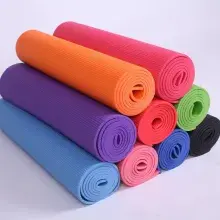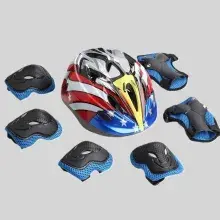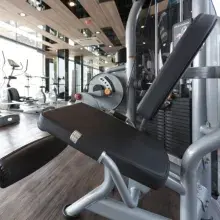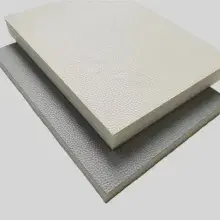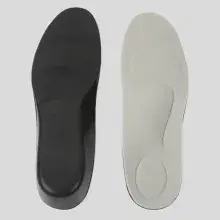
High resilience foam is a low-density, highly expanded cross-linked polyethylene foam that deforms easily under light load and returns to its original thickness quickly when the load is removed. Bofeng Foam manufactures high resilience foam in Zhuhai, China, with expansion ratios up to 40× and densities down to 26.8 kg/m³.
Resilience and softness are not the same thing. A soft foam that stays compressed after the load is gone has poor resilience; it feels flat and stops cushioning. What makes cross-linked PE foam useful in repeated-contact applications is that it combines a low modulus with a cross-linked structure, so it gives easily and comes back.
What is high resilience foam?
Two mechanisms decide whether a foam springs back. The first is the cell structure: in a closed-cell foam the trapped gas pushes the cells back open when the load is released. The second is the polymer network: cross-linked polyethylene has covalent bonds between chains, so the material behaves elastically instead of flowing.
A thermoplastic foam compressed for a long time will creep and take a permanent set, because nothing prevents the chains from sliding past each other. A cross-linked foam resists that, which is why a high-ratio XPE mat or pad keeps its loft through thousands of cycles where an uncross-linked foam would flatten.
Expansion ratio is the practical lever. Expanding the polyethylene further leaves less polymer in the cell walls, so the foam is lighter and softer and deflects under a lighter load — and because the network is cross-linked, it still returns.
- Fast recovery — the cross-linked network and the closed cells both drive the foam back to its original thickness.
- Low density — expansion ratios to 40×, giving densities down to 26.8 kg/m³ in our range.
- Low compression set — repeated loading does not progressively flatten the foam, unlike a thermoplastic material.
- Soft but load bearing — deflects under body weight or a light part while still holding the load off the surface beneath.
- Closed cells — water absorption of 0.2% or less, so mats and pads used outdoors or in wet areas do not become waterlogged.
Foam materials used for high resilience foam
High resilience is achieved by choosing a high expansion ratio on a cross-linked base material, so any of the three materials can be specified soft — the choice follows what else the part has to do.
- XPE foam — chemically cross-linked polyethylene foam. Closed-cell, produced at 3–40× expansion with a density range of 26.8–300 kg/m³, in single layers of 3–15 mm. The general-purpose grade for most industrial work. View XPE foam →
- IXPE foam — radiation (electron-beam) cross-linked polyethylene foam. The finer cell structure allows single layers down to 0.1 mm with a smoother, more uniform surface. View IXPE foam →
- IXPP foam — radiation cross-linked polypropylene foam. Stiffer and more heat resistant than PE foam, with a maximum service temperature up to 140 °C. View IXPP foam →
| Material | Cross-linking | Expansion ratio | Width | Single-layer thickness | Heat-bonded multi-layer |
|---|---|---|---|---|---|
| XPE foam | Chemical (peroxide) | 3–40× | 500–2000 mm | 3–15 mm | 15–200 mm |
| IXPE foam | Radiation (electron beam) | 3–40× | 500–2000 mm | 0.1–15 mm | 15–200 mm |
| IXPP foam | Radiation (electron beam) | 5–25× | 500–1500 mm | 1–6 mm | 6–100 mm |
XPE is the standard choice for mats, pads and body-contact products. IXPE gives a smoother, more uniform surface, which is why it is preferred where the foam is also the visible face or has to be laminated. IXPP is used where the part needs more stiffness or has to survive higher temperature.
Choosing a resilience grade
The specification follows from three questions: how heavy is the load, how often is it applied, and how much recovery matters after each cycle.
- Body-contact products — mats, kneeling pads and cushions are usually in the high expansion range so they compress under a person’s weight without feeling boardy.
- Repeated cycling — where the foam is loaded and released many times an hour, low compression set matters more than low density. Cross-linking is what provides it.
- Permanent compression — if the foam is held compressed for its whole service life, resilience is irrelevant and a denser grade is the better choice.
- Visible faces — where the foam is also the finished surface, IXPE gives a more uniform appearance and takes lamination and printing better.
For the full density and hardness progression across our expansion ratios, see the XPE foam density guide.
High resilience foam products we manufacture
- Yoga mat — body-contact matting that must recover after every session
- Gym mat — high-cycle resilient flooring for training areas
- Exercise mat — resilient matting for home and studio use
- Baby play mat — soft yet resilient surface for crawling areas
- Camping mat — lightweight sleeping and sitting cushioning
- Garden kneeling pad — repeated-load cushioning in wet outdoor use
- Foam roller — high-cycle foam that must keep its shape under body weight
- Outdoor foam cushions — resilient cushioning for outdoor furniture
Typical applications
- Yoga, exercise and gym matting
- Baby play mats and crawling surfaces
- Camping and outdoor sleeping pads
- Kneeling pads and gardening cushions
- Seat and back cushioning for furniture
- Repeated-load padding in fitness equipment
Why choose Bofeng Foam?
Bofeng Foam is a direct factory manufacturer of cross-linked polyethylene foam in Zhuhai, China, with more than 10 years of experience in the foam industry. We run both chemical and radiation cross-linking in house, which means the material grade, density and surface finish can all be matched to your application rather than picked from a fixed catalogue.
- Both cross-linking routes in house — chemical (XPE) and electron-beam radiation (IXPE, IXPP), so you are not pushed towards one material for supply reasons.
- Wide grade coverage — expansion ratios from 3× to 40× and densities from 26.8 to 300 kg/m³, with single-layer thickness from 0.1 mm and heat-bonded multi-layer stock up to 200 mm.
- Converting under the same roof — die-cutting, CNC contouring, lamination, adhesive coating and slitting, so a finished part arrives instead of a roll.
- Functional grades when the application demands it — flame retardant (limiting oxygen index 27, meeting GB 8410 A0 and UL94 V2 requirements), heat resistant (110 °C, shrinkage ≤8%) and conductive (10³–10⁶ Ω) or anti-static (10⁶–10⁹ Ω).
- Engineering-led specification — send a drawing or a sample and our team will recommend the material, density, thickness and surface treatment that fit the load case, then confirm it against the GB/T test standards published on our material pages.
Request a quote for high resilience foam →
Tell us the load, the cycle rate and the thickness you have room for, and we will recommend an expansion ratio. Because we produce from 3× to 40× in one plant, the grade can be tuned rather than chosen from a short catalogue list.
High resilience foam FAQ
What is the difference between high resilience and high density foam?
They are close to opposites in cross-linked PE foam. High resilience means a low density, highly expanded foam that deflects under light load and springs back. High density means a lightly expanded, firmer foam that resists deflection and is chosen for load bearing or durability. A resilient mat and a dense protective pad are at opposite ends of the same expansion-ratio range.
How long will a high resilience foam mat last?
The limiting factor is compression set, and cross-linked PE foam has low compression set because the cross-linked network stops the polymer chains from flowing. That is what allows a mat to keep its thickness through thousands of load cycles. Actual service life depends on the load, the cycle rate and the thickness, so we size the ratio against the application.
Is high resilience foam the same as memory foam?
No, they behave in opposite ways. Memory foam is open-cell and slow to recover — that is the point of it. High resilience foam recovers quickly, because it is a closed-cell cross-linked material whose trapped gas and cross-linked network both push it back. See slow rebound foam for the memory-foam case.
Can high resilience foam be used outdoors?
Yes. The closed-cell structure means water absorption of 0.2% or less, so rain and ground moisture do not soak in and the foam does not become heavy or lose its resilience. UV exposure over long periods affects the surface appearance of unfaced foam, so for permanent outdoor installations we normally recommend a laminated or faced construction.
What thicknesses are available?
The same range as our standard material. XPE is produced in single layers of 3–15 mm and IXPE from 0.1–15 mm, and heat-bonded multi-layer stock reaches 200 mm where a thicker cushion is required. For matting, thickness is chosen against the load and the compression the user should feel.
Related reading
See also: XPE foam density guide · How to choose foam density and thickness · Closed cell vs open cell foam.