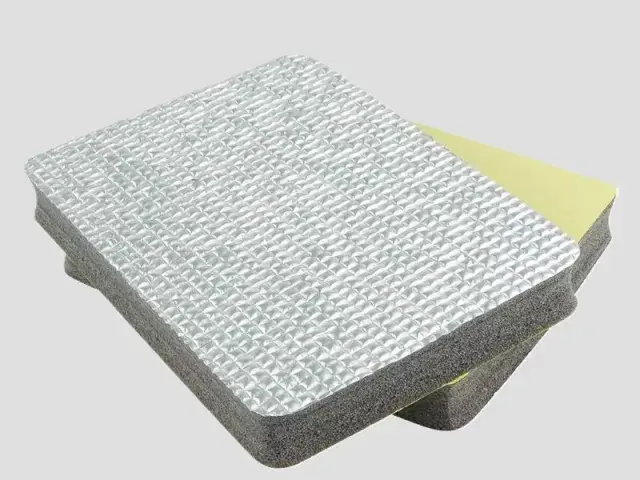
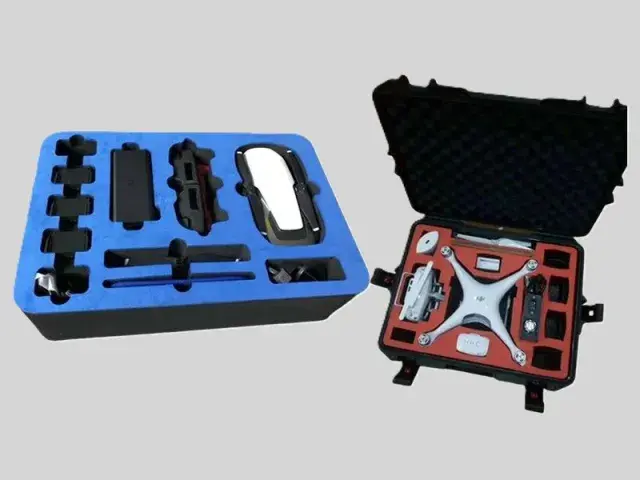
- Material: XPE foam, IXPE foam
- Expansion ratio: 25 times (40 kg/m³), 30 times (33 kg/m³)
- Thickness: 50 mm, 80 mm, 100 mm (thickness can be customized)
- Colour: black, white (colour can be customized)
- Flame retardant grade: UL94 HF-1
Customization
Made to order: density, thickness, colour and shape to your drawing. Die-cutting, CNC routing, lamination to film or fabric, slitting and adhesive coating all run in-house, so the part we quote is a finished part, not just a sheet. How a custom part is cut and routed explains what to send with the drawing.
Regular material: MOQ 1,000 m², lead time 15–20 days from order confirmation. Custom parts are quoted from the drawing. A4 samples are free, shipping included.
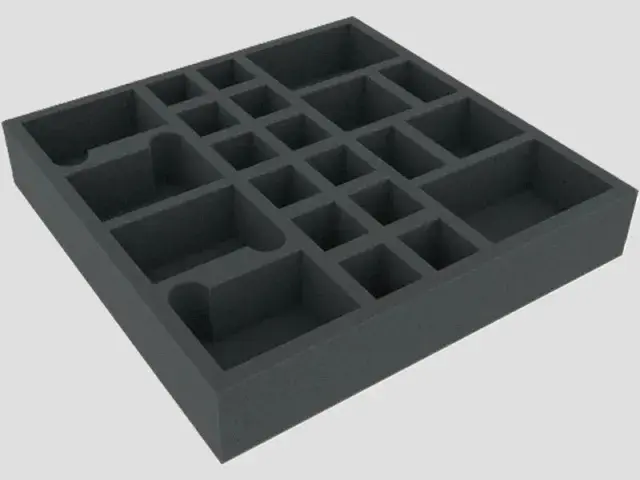
Flat glass fails at the edges. A panel will survive a surprising amount of flex, but it chips or cracks the moment an edge takes a localised impact — and one crack makes the whole sheet unusable. A glass packaging foam insert separates panels, cushions the edges and stops sheets sliding against each other. Bofeng cuts these inserts from XPE and IXPE foam in the thicknesses needed to carry the weight of a full pack.
Features
- Edge and corner protection – foam that takes the impact before it reaches the glass edge.
- Panel separation – interleaving layers that keep sheets apart, so surfaces and coatings stay unmarked.
- Load spreading – closed-cell foam distributes the weight of a stacked pack instead of concentrating it at contact points.
- Moisture resistant – absorbs very little water, so it will not hold damp against the glass.
- Clean cutting – die-cut and guillotine-cut to your panel size with a smooth, non-abrasive edge.
- Custom thickness and density – 50–100 mm as standard, with thinner sheets for interleaving.
Applications
- Architectural and decorative glass – panels, splashbacks and mirrors packed for site delivery.
- Furniture glass – table tops, shelves and cabinet doors protected through handling and transport.
- Automotive glass – windscreens, side glass and mirrors held securely before fitting.
- Laboratory and instrument glass – beakers, slides and precision glassware in shaped cavities.
- Display and retail glassware – vases, frames and decorative items in gift and retail packaging.
Specifications for glass packaging foam
A glass foam insert is a die-cut part, so the sheet has to hold a cavity, keep its thickness and cut cleanly.
| Foam | Expansion | Apparent density | Single-layer thickness | Why this grade |
|---|---|---|---|---|
| XPE | 10–20× | 50–100 kg/m³ | 3–15 mm (heat-bonded 15–200 mm) | The standard insert grade, because the pack has to isolate glass from glass and from the carton wall. The 50–100 kg/m³ band holds a die-cut cavity and does not fatigue in a repeating transit cycle. |
| IXPE | 20–30× | 33.3–50 kg/m³ | 0.1–15 mm | Fine-cell sheet for the lid liner and for thin interleaving between parts, where a firmer sheet would not close. |
Base material specifications are on the XPE, IXPE and IXPP material pages; finished products are on the XPE foam and IXPE foam pages. Tell us the load, the space available and the service temperature and we will confirm the grade against your drawing.
Why Choose Bofeng Foam
- Cut to your panel size, with edge and corner profiles on request.
- Flame-retardant grade available – UL94 HF-1.
- 50 / 80 / 100 mm as standard, with thin interleaving sheets available.
- Black and white as standard, with further colours on request.
- Samples and specification sheets available before production.
The two numbers to settle before anything is cut — cut-through and retained bottom — are explained in our custom foam insert design guide.
Conclusion & Inquiry
Packaging foam covers the wider insert range, and wine packaging foam solves the same problem for heavy rigid containers. Contact us with your panel dimensions and pack weight for a cut layout.